








Of Altaf & Army’s exemplary services
Those claiming to be his followers, and ascended to authority, are there by a dint of chance or perhaps by sheer luck. They won votes, hardly on merit, but vastly in Bhutto’s name. And now look at their conduct in the government. Instead of picking a leaf from his life and his style of working to be guided in their endeavour to help the people, they floundered, plunging the country into chaos, disorder and dismay, wasting the atmosphere of goodwill, zeal and the enthusiasm, with which the voter had brought them to power. When the country descended into mess, in a state of shock and dismay, stories of corruption and mismanagement began to fly. Even if these stories were to be discarded as fabrication,and product of perverted minds, successive actions of the administration, lent them credibility. They began to gain in strength and get new dimensions. Given that fabrications are figments of imagination, their veracity needed to be double checked, defending the present PPP government from allegations of mismanagement, incompetence, and inability to comprehend problems and finding their solutions, is well nigh impossible. Because of the apathy of the administration to present solutions to the multitude of problems, each more grimmer in severity than the other, the people not only lost hope, but fell into despair. The state of deep depression, despondency, hopelessness and disillusionment kept multiplying. The flood scene, made it worse.
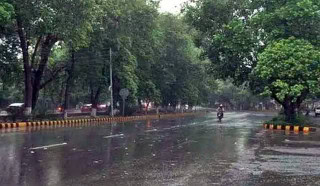
Even average intelligence demanded that rains and the resultant river fury, could be anticipated well ahead of the time they begin to spell disaster. Technology has advanced far too speedily than had been imagined some 25 years ago, yet some of the most developed countries, fell prey to storms and their disastrous aftermath. Predictions about their severity are often misjudged, but weather pundits in Pakistan had been accurate this time in their warnings of an impending disaster. River fury in the wake of season’s extraordinary torrential rains, could have been easily gauged and measures taken to minimize the damage, if not controlled totally. That this was not done in our case, and the administration, kept sitting tight on an important subject, then will have to bear the blame. The repeated warnings from the met office was ignored.
The disaster struck in all its monstrous form, unleashing miseries on the hapless people. Damage to property, standing crops, communication networks was enormous, beyond comprehension. In such a situation, when civilian authorities even in Khyber Pukhtoonkhawa, and later in the Punjab found themselves in the midst of a crisis, suffering from trained manpower and resources etc, they could have minimized the damage with a little bit of insight. Their failure to do so evoked a natural sympathy in the army. They were equipped, and trained to operate in such situations. A built in system was there with them. Army started the rescue and relief operation without being asked, operating boats, helicopters, transportation planes to come to the rescue of their brethren crying for help, for saving their lives from flood ravages, and from shortage of medical supplies. Army once again rose to the occasion, portraying a different picture of themselves— of relief givers, life savers, rescue operators, and also feeding the hungry humanity. People trapped in flood fury, rendered shelterless, abandoning their homes or seeing it go down into the onrushing water. Figures for rescue, relief, supplies of medicine, temporary hospitals, medical aid, doctors, nurses, ration, drinking water, all were rushed in a systematic manner.
Army’s role was indeed great. It was enormous. General Kayani himself supervised the operation. While the prime minister and the president and their ministers, parliamentarians, appeared nowhere, perhaps struck by fear of floods, or interested more in protecting their own property, rather than their voters or the general public, they disappeared from the scene of such a huge disaster. This was criminal. Worst was seen in Sindh, where big landlords,including cabinet ministers whether federal or provincial, began to save their own property and bungalows, diverting flood waters to poor farmers fields by breaching the “bunds”( small dams). The Thori dam breach which caused untold damage in Jacoababd,Tando Allah and Naseerabad was a classical example of vested self interests, protecting their own interests rather serving the humanity. What they did was criminal.
Had army not acted in time and through a coordinated approach with the help of the air force and navy, the damage could have been immense. Government ministers were rarely visible at the scene of the tragedy, and if they went there, they merely were interested in photo session. Army’s role especially when it was fighting terrorism and sacrificing its men and material for last six months in Taliban areas, had already won accolade from the world, USA and NATO coalition forces , and European Union especially. Had kayani not taken intiative, Pakistan today would have been in much grimmer situation than it is today, Army’s relief and rescue operations, supervised by General Kayani himself, helped save the country.General Kayani was seen all over the country, from major to minor points. He showed great leadership. What the civilians, or the civilian government could not do, Army did it. The countrymen are grateful to our armed forces, navy and air force included.
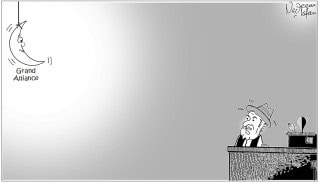
If in this situation, where civilian administration failed to rise to occasion, and suffered from paralysis, army showed that it is not always hankering for power. It is imbued with the service of the country, had a sympathetic heart for its people. its own people. Now if Altaf Hussain appealed to some “patriotic army Generals” to act in a martial law-like operation and clean the country of feudal lords, corrupt politicians and tyrant tribal chieftains, he articulated the sentiments of the people, He never called for martial law. After all when army virtually was involved in a killing operation against MQM from 1992 to 1996, why did all these political leaders and so-called sympathizers of ordinary and poor people, kept silent. Not a word of opposition to army was spoken then. Why? Let these politicians answer. Those recalling May 12 incident of 2007, forgot that MQM never started the firing or killing incident. It in fact checked its workers from retaliation. Where was the sympathy for civilian rule and democracy from these so-called politicians, portraying themselves as sympathisers of peoples’ cause then.
Altaf Hussain never asked for martial law but just asked the patriotic Generals to do their duty and rid the country of the menace of feudal lords and tyrants, who keep their people in yoke of slavery. It is the 21st century and those nations have progressed who have done away with feudal and tyrants, done away with archaic system of tribalism. In Pakistan, Is democracy safe from these menacing factors? Let the critics of Altaf Hussain answer.


Comments