


ISLAMABAD – Pakistanis are facing another blow as petrol and high-speed diesel prices surge, while escalating Middle East conflict threatens to trigger a much larger global energy crisis.
The government has increased petrol prices by Rs5.58 per litre, taking the price to a staggering Rs364.35 per litre. Diesel has also become more expensive, rising Rs4.18 per litre to Rs385.95 per litre. The latest increase threatens to put even greater pressure on already struggling households.
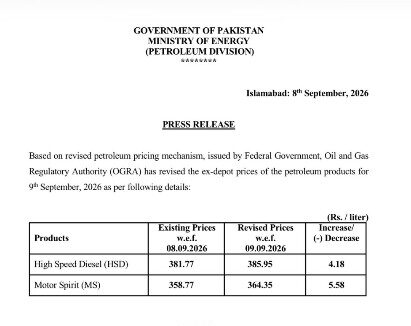
Higher fuel costs could drive up transport fares, freight charges and the prices of essential commodities, potentially unleashing another wave of inflation across the country.
But Pakistan’s latest fuel shock comes as global oil markets face an even more dangerous situation. International crude prices have climbed to their highest levels in around six weeks after Houthi attacks targeted energy facilities in Saudi Arabia.
The attacks have intensified fears that the Middle East conflict could spread further and disrupt global oil supplies on an even larger scale.
Brent crude jumped 0.7% to $97.70 a barrel, while WTI surged 1.3% to $92.69 a barrel. Houthis reportedly attacked four cities in southern Saudi Arabia, injuring more than 70 people. Saudi Arabia reportedly responded with four airstrikes in Yemen, adding another dangerous escalation to an already volatile regional conflict.
The latest attacks come as oil shipments through the Strait of Hormuz are already severely disrupted. Iranian attacks on energy infrastructure and shipping around the strategic waterway have created major uncertainty in global oil markets following US-Israeli strikes in late February.
Tanker traffic through Hormuz has fallen far below normal levels, raising concerns about the physical availability of crude in international markets. Saudi Arabia has attempted to bypass the Strait of Hormuz by moving oil westward toward the Red Sea.
But the latest attacks have raised concerns that this alternative export route — designed to reduce the country’s exposure to Hormuz — could also come under threat. That has transformed the crisis from a shipping problem into a broader threat to energy infrastructure and global oil supplies.
New Petrol Price in Pakistan hits Rs358.77 after Rs12.90 Hike
Traders are also paying more because they fear the conflict could escalate further, potentially damaging additional energy infrastructure and shipping routes. Together, these forces are creating a dangerous cocktail for global energy markets. The crisis is increasingly being treated as something that could last much longer than initially expected.
Financial markets are now preparing for the possibility that shipping disruptions could continue into 2027. Major financial institutions have also raised their outlook for crude prices.





