


ISLAMABAD — A fresh fuel-price shock for Pakistanis, with petrol soaring by Rs12.90 per litre as mounting turmoil in global oil markets adds new pressure to consumers already struggling with rising costs.
The Oil and Gas Regulatory Authority (OGRA) has revised the ex-depot prices of petroleum products under the federal government’s newly revised petroleum pricing mechanism. The new rates will take effect September 8, 2026. Petrol has seen the biggest blow, with its price climbing from Rs345.87 to Rs358.77 per litre, with an increase of Rs12.90.
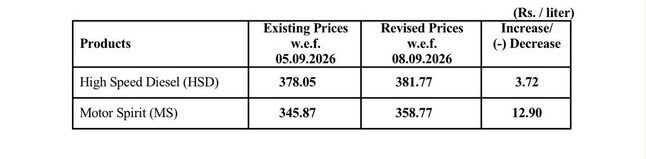
Diesel has also become more expensive, though the increase is considerably smaller. Its price has risen by Rs3.72 per litre, moving from Rs378.05 to Rs381.77. The revised rates were formally notified by OGRA following the federal government’s updated pricing mechanism.
The latest increase comes against the backdrop of intensifying Iran-U.S. tensions, particularly around the Hormuz, where the security situation has deteriorated and shipping activity faces heightened risks.
Tehran warned that U.S. energy infrastructure in the Gulf could be vulnerable, adding another layer of uncertainty to global energy markets. The geopolitical tensions have already rattled oil prices. Brent crude has climbed to around $97.50 a barrel, up approximately 35% since February.
That surge is raising fresh fears over a renewed inflationary wave, with higher energy costs threatening to push up expenses across transportation, manufacturing and other sectors. Global stock markets have also come under pressure as investors assess the economic fallout from more expensive oil and escalating geopolitical risks.
For Pakistan, the timing of the increase could prove particularly painful. Higher petrol prices directly raise motorists’ fuel bills, while more expensive diesel can feed into transportation and logistics costs across the economy.
No increase in petrol price for consumers using up to 110 litre per month





