A chronicle of Bani Gala’s beautiful decay
Urban Bystander
They say Bani Gala was born when a man who could split atoms decided to build a house by the lake.
The bulldozers arrived eventually, as they always do in this city — late to the party, early to the obituary. Two fell dead, the mist mourned them, and a parchment from the Court floated in. The mansion stayed. The bulldozers left. A lesson was learnt: in this valley, enough public adoration or judicial paperwork could shield anything from the law.
That house became prophecy. Villas soon mushroomed across pine ridges without maps, drains, or guilt. The Islamabad High Court called them “constructed in violation… without lawful authority.” But no one had the heart, or the plans, to do anything about it.
By the time the Supreme Court took suo motu, the lake had turned green with secrets. “Have you seen the state of Rawal Lake?” thundered the honourable Justice. “Your performance is disappointing. You must have received your plot.” No one disagreed; they were too busy choosing curtains. The CDA, undeterred by embarrassment, formed the Zone-IV Lakefront Oversight and Advisory Committee, which meets annually to review the minutes of the previous meeting, then adjourns due to “insufficient seating.” A subcommittee was created to resolve seating; it hasn’t met since, pending upholstery consensus.
By 2024, Mirza Chughal Khor, broker of whispers with ink-stained patience, claimed to have intercepted a report from a young man. His protest was blunt: no pizzas, burgers, karahis, lattes, and no wrong-side riders to prove civilisation had arrived. His ledger read: no planning, dangling wires, goat tracks, qabza clans concreting Lakhwal’s last farms. Mirza sold one version to a ministry, another to a rival office, and a note to the qabza fraternity, who thanked him with a corner plot and view of the next grab.
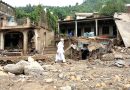
Below the lake, Bani Gala decays elegantly. The main road turns Venetian in monsoon; schoolchildren in flip-flops navigate canals. Electricity is a polite guest. Supply of natural gas is a seasonal rumour. In 2024, half the kitchens smoked with charcoal. Residents adapted. They laughed at regularisation notices that never ended, environmental agencies that arrived only for photo-ops, candlelit dinners during heatwaves, and wild boars clever enough to open refrigerators.
Babloo continued to log his aerial reports, and Mirza continued to sell both versions to rival ministries. Above them, the House on the Hill remained both sanctuary and spectacle. Policemen materialise with every political tremor. A goat once broke the cordon; elite tactical units were scrambled. A man came with a rabbit for luck. The rabbit vanished into the shrubbery and has been running free since, now rumoured to be the Bunny Gala mascot.
Just above this unfolding chaos, some said there lived a woman who counted jasmine blossoms instead of manholes. Somewhere, she planted jasmine along the paths where dirty water once ran, the Lady of Eternal Optimism. Friend to Babloo and all things broken. While others counted illegal plots, she counted blossoms. She insisted every house had a lake view if you stood in the right spot, and that every downpour left the air fresher. She painted benches where no bus would stop and waved cheerfully at CDA inspectors, who nodded as if they meant to return, but turned left at the first U-turn.”
At dusk, the lake glows gold, a mirror that neither forgets nor forgives. Bani Gala is not a suburb; it is a stage, part court case, part wildlife sanctuary, part political buffer zone, part national metaphor, where the serious and the ridiculous share a boundary wall. And the reflection in the lake just keeps on winking!
The writer can be reached at by [email protected]