
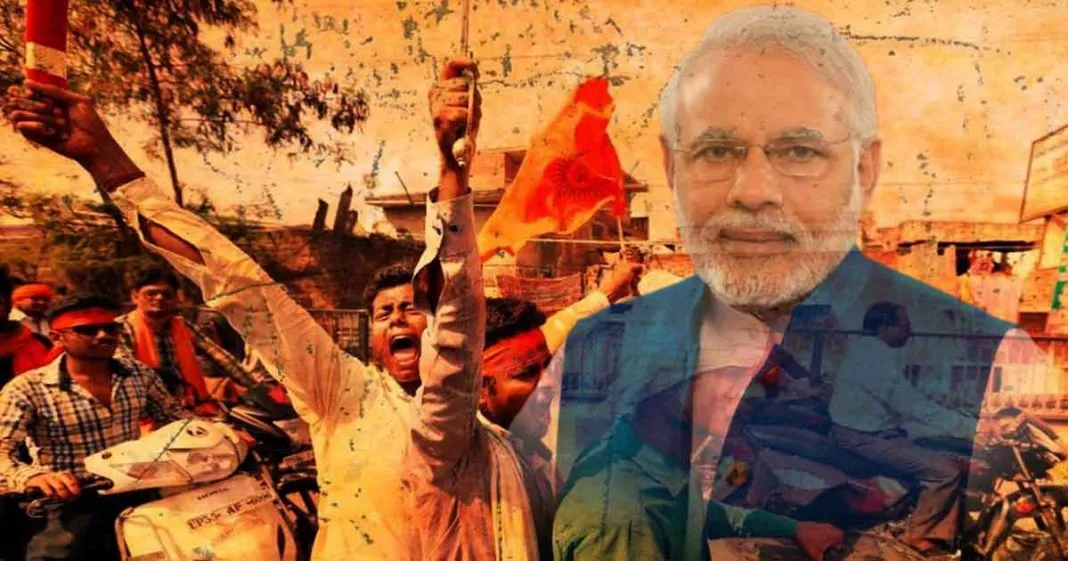

ISLAMABAD – The year 2025 turned out to be nightmare for India’s foreign policy, exposing Narendra Modi government’s lofty claims of global power as hollow and leaving its international ambitions in tatters.
According to detailed analysis by Indian newspaper The Hindu, 2025 has been the “year of broken promises” for India, with symbolic diplomacy, personal relationships, and narrative-building failing to replace real economic, military, and diplomatic strength.
The publication noted that New Delhi made grand promises to global community and its partners, promises that it lacked the influence or capability to deliver. These failures have highlighted a stark gap between rhetoric and reality. India’s relations with the US faced their most challenging year in decades.
From 25% tariff, additional restrictions on Russian oil, to tighter H-1B visa regulations, US made clear that India’s partnership is conditional and interest-driven. Compared to 2017, India’s role in the 2025 US National Security Strategy has been sharply downgraded, marking a diplomatic blow to Modi’s vision of India as a global player.
Despite high-level meetings with China and Russia, Modi government failed to secure any tangible progress on critical issues such as the Line of Actual Control, while investment barriers remained unresolved. India’s engagement remained largely symbolic, exposing the limits of its global influence. In the energy sector, US pressure forced India to backtrack on its stance regarding Russian oil, highlighting its diplomatic vulnerability.
Pulwama Drama was described by newspaper as a serious security failure. India’s subsequent military operations failed to gain international support, while silence over aircraft losses during the actions further damaged its global credibility.
New Delhi faced another blow as Saudi-Pakistan defense agreement highlighted its diplomatic isolation. Analysts now recognize Pakistan’s leadership as capable and organized, while Modi led government struggles to assert its regional influence. Ties with Bangladesh have also plunged to their most strained level in history, leaving India increasingly diplomatically cornered.
India is moving from presenting itself as a Vishwaguru (global leader) toward a Vishwavictim (global victim). Blaming others rather than implementing reforms is now seen as the biggest obstacle to effective policy-making.
International experts highlighted that India’s diplomacy is now largely performative, with optics and show-based strategies failing to deliver results. India is no longer an indispensable strategic partner for the US, and its deterrence narrative has failed to convince the world.
Some countries’ support for Pakistan’s military actions is being interpreted as direct evidence of India’s diplomatic failures, while recognition of Pakistan’s leadership abilities contradicts India’s narrative of Pakistan being weak or isolated.
Finally, experts warned that India, which voices concerns over minority rights in Bangladesh, must address violence against minorities within its own borders to maintain any credibility on the international stage.





