DEPUTY Prime Minister and Foreign Minister Ishaq Dar on Monday held his second phone call within a week with US Secretary of State Marco Rubio, signaling deepening diplomatic ties in the wake of Dar’s recent visit to Washington.
In a statement issued on X, the Foreign Office said that Pakistan and US top diplomats discussed a “range of bilateral matters and exchanged views on current regional and international issues.” Both sides agreed to remain in contact and continue cooperation on areas of mutual interest.
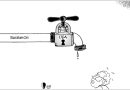
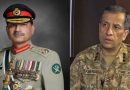
There has been unusual personal and telephonic interaction between the leadership of the two countries for the last several months. The frequency of such high level contacts is surely indicative of renewed warmth in bilateral relations between Pakistan and the United States, which remained somewhat lackluster until recent past prompting analysts to point out that the US has lost interest in Pakistan following its withdrawal from Afghanistan. A reset in relations is apparently underway but what we know publically and through official statements of the accounts of bilateral engagements is not enough to form a clear picture of what is going on and where would it lead to. There have been lavish praises of Pakistan by President Donald Trump but practically the country is not getting the kind of treatment it expects. The President was all praise about the leadership qualities of Pakistan’s civilian and military authorities for the sagacity they displayed during short war with India; views Pakistan’s contribution, role and sacrifices in the war against terror in a positive frame and claims he can play a role in finding a negotiated settlement of the longstanding issue of Jammu and Kashmir, besides hosting Pakistan’s Chief of Army Staff (COAS) Field Marshal Syed Asim Munir at the White House, which is considered as an extraordinary gesture towards Pakistan. However, so far there is nothing tangible to suggest what the US intends to gain from this fresh embrace and what Pakistan is going to achieve except sentiments of goodwill. Of course, Pakistan has clinched a comparatively favourable trade deal from the United States but it is not as favourable as Pakistan had been expecting despite the fact that in return Islamabad has offered the most favourable tariff on the US goods to be imported. In addition, Pakistan has also opened its lucrative mining and hydrocarbon sectors for US investment. Pakistan is in the midst of a renewed counter-terrorism campaign and would surely want the United States to provide necessary support for the purpose as it would help eradicate the menace in the shortest possible time and with minimum losses and collateral damages. However, so far, no such meaningful cooperation was in sight despite confirmation of Pakistan’s position by independent reports that it has become a victim of terrorism sponsored by two of its neighbours. It is also pertinent to point out that substantial cooperation in the realm of counter-terrorism also becomes a must for peace, security and stability of the regions that the US and other foreign countries were eyeing to explore for mineral wealth as well as oil and gas. In the absence of a clear picture, diplomatic circles and geo-strategic analysts are conjecturing about what this new phase of friendship is aimed at. There are assumptions that the United States was cozying up to Pakistan in a bid to cause a dent in the country’s bilateral ties with China but like the nuclear programme, complete consensus prevails in Pakistan that the friendship with China is a factor of economic and defence strength of the country. Some circles also argue that attempts are being made to lure Pakistan into the circle of Abraham Accords that the US President is trying to create for a safe and secure Israel. It is also argued that brisk movements vis-à-vis Pakistan-US relations are also part of efforts to put pressure on India to distance itself from the Russian Federation and to secure a favourable trade deal. In the latest development, after describing India as a dead economy, President Trump said on Monday he will substantially raise tariffs on India over its purchases of Russian oil, pointing out that New Delhi is not only buying massive amounts of Russian oil but is also selling it in the open market for big profits. As for Pakistan, its people definitely want a robust relationship with the United States but on the basis of sovereign equality and mutuality of interests. It would be a major success for our policy and decision makers if this becomes a reality as a consequence of the widely appreciated policy of maintaining good and interest-based ties with all important countries of the globe.