
PAKISTAN Tehreek-e-Insaf (PTI) is crying foul but the Islamabad High Court (IHC) has upheld the Constitution and the rule of law by placing legitimate and lawful curbs on the planned protest march towards the Federal Capital on September 27. A larger bench comprising Chief Justice Sardar Sarfraz Dogar, Justice Azam Khan and Justice Muhammad Asif ruled on Monday that no political party or public office holder had the authority to block roads in the capital. The court directed provincial governments to ensure that state resources were not used for any march, procession or rally. Chief Ministers were also ordered to ensure that public funds, government officers and personnel were not deployed for political protests.
The court verdict comes as the PTI leadership, especially Chief Minister Khyber-Pakhtunkhwa, Sohail Afridi, is mobilizing people as well as resources for what the party claims is a fateful protest aimed at release of its incarcerated leader and former Prime Minister Imran Khan. It plans to lead caravans from across the country, which would converge on Islamabad. The party has also announced plans for protests, shutdowns and demonstrations along major highways in cities, including Lahore, Karachi, Hyderabad and Quetta. Reaction of the KP Chief Minister to the court verdict shows he is in an upbeat mood and wants to go ahead with his plans terming protests and demonstrations as constitutional rights. There is no doubt the Constitution envisages freedom of movement and speech but it is also absolutely clear that the Islamabad High Court has not issued direction against holding of protest or airing of grievances. However, the court has emphatically stated that there should be no misuse of official resources and machinery for politically motivated protests and rallies. We have seen in the past that such rallies and sit-ins were used to destabilize the federal government besides creating extreme difficulties for residents of the twin cities of Islamabad and Rawalpindi.
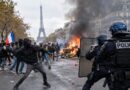
It may be pointed out that the JI has been protesting and organizing sit-ins in different parts of the country against the phenomenal rise in the prices of petroleum products but the peaceful protests have not been opposed by the Government. Videos were played in the court to hammer out the point that assurances to remain peaceful were not upheld in the past and protesters resorted to firing on personnel of law enforcing agencies, torched public and private properties, pelted stones on police force and forcibly closed important arteries of the twin cities to create problems for the ordinary citizen. The directions of the court are quite relevant and in line with repeated instructions issued by the IHC and the Supreme Court over the issue of long marches and sit-ins. There are designated places in and around the Federal Capital where protestors can sit as long as they wish to press for their demands but a court cannot allow infringement of rights of other citizens or blatant misuse of official sources for political objectives. What is wrong in the ruling that government vehicles, machinery and other official resources could not be used to facilitate any procession or rally, while no government employee could be forced to participate in a march, procession or rally. The court went further to direct chief secretaries to initiate departmental proceedings against any government official who failed to implement its orders. It said chief ministers must ensure that government machinery was not used for political protests and that no official complied with an order forcing them to participate in a protest or rally. The Islamabad Administration and Ministry of Interior have also been asked to ensure the protection of citizens’ constitutional rights. The parameters of the protests are crystal clear: only peaceful assemblies are allowed and there should be no misuse of official resources.