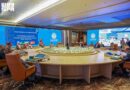
THE directions of Prime Minister Shehbaz Sharif to the relevant ministries and departments to accelerate work on integrating private sector proposals into a unified industrial policy framework will hopefully lead to finalizing a document that helps realize the cherished goal of promoting industrial growth at a fast pace in line with economic requirements of the country. Chairing a meeting of the private-sector committee on national industrial development on Friday, he emphasized that the country’s economic growth, employment generation and increased income were not possible without industrial development. The private sector members of the committee presented their recommendations aimed at industrial development and increasing investment in the country, which the Prime Minister welcomed and said that the private sector’s proposals were of key importance for moving towards this direction.
The Prime Minister has done well by initiating a process of consultations with the private sector on formulation of an industrial policy that suits requirements of the country because the Government has active plans to divest state-owned enterprises as it is not the job of the government to do business or undertake industrial ventures. There is a legitimate realization that the country cannot move firmly on the path of socio-economic development without a sound industrial base. The successive governments announced plans for accelerating the pace of industrialization but those could not translate into tangible improvement due to lack of commitment and inability to provide a congenial atmosphere for the purpose. It is known to all that former Prime Minister Imran Khan repeatedly stated that Pakistan’s future and economic stability depend on industrialization and wealth creation. He emphasized the need for an industrial “revolution” to increase exports, create jobs and move the country away from a cycle of debt and reliance on international aid but not to speak of other measures his government could not show any worthwhile progress on establishment of much-talked-about special economic zones under China-Pakistan Economic Corridor (CPEC). The PML(N) is considered and rightly so as an industry and business friendly party but so far it too could not present any worthwhile strategy to ensure fast-pace industrialization. The
government might have its own wisdom in forming committees and commissions on different issues but the factors hindering industrial growth are well known. Obstacles to industrialization in Pakistan include inadequate infrastructure, lack of capital and investment and shortage of skilled labour. Other significant challenges are political instability, inconsistent government policies, energy crises, limited domestic and international markets and bureaucratic hurdles. No doubt, the PML(N) Government has a passion for creating and upgrading infrastructure but it has not been able to address the challenge of rising cost of doing business. How can the industry sustain, compete and attract investment when both electricity and gas prices are constantly on the rise, there is no energy security and law and order situation is precarious. It is a matter of shame that industries are forced to pay extortion money and previously the National Accountability Bureau (NAB) framed cases against industrialists and businessmen on political considerations. Interest rates remained phenomenally high for several years and they are still not at a comfortable level. Low national savings and investment rates lead to a shortage of capital required for establishing and expanding capital-intensive industries like steel, iron and automobiles. Access to affordable credit for small and medium-sized enterprises (SMEs) is particularly limited. It is also regrettable that the successive governments paid only lip-service to the slogan of transfer of technology and as a result we see assembly and not manufacturing in Pakistan. The problems that the country faces can be mitigated to a great extent if the required focus is laid on modernizing the industrial base, attracting investment and boosting exports. Therefore, we have no time to waste, the government in close consultations with the private sector, which is the main stakeholder, should come up with a comprehensive and workable industrial policy.