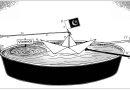

PERHAPS the most important Southeast Asian regional security event—economically and politically significant from Pakistan’s point of view—and a foreign policy trendsetter in the Middle East was the Pak-Saudi Defence Accord, recently signed between the two countries.
The security agreement with Saudi Arabia offers Pakistan three important advantages, significantly upgrading Pakistan’s long-standing defence and security cooperation with the Kingdom. It also rebalances the bilateral relationship, as for years Pakistan has been a recipient of crucial Saudi support to keep its economy afloat. Finally, it allows Pakistan to reclaim some lost influence in the Gulf region, as India-Gulf ties have improved in recent years, often at Pakistan’s expense. In the months since the conflict with India in May, Pakistan’s goal has been to communicate its version of events and seek support as the country anticipates another crisis with India. Islamabad and Riyadh have committed to treating “any aggression against either country” as an “act of aggression against both,” which enhances Pakistan’s relative position vis-à-vis India.
India will be concerned by both the timing and scope of the Saudi-Pakistan agreement. Immediately, it complicates India’s political calculus toward managing conflict with Pakistan. New Delhi would have to factor in potential diplomatic and financial support for Pakistan from the Gulf in its next stand-off with Pakistan, which could extend to assured oil supplies in the event of a prolonged India-Pakistan conflict. It could also frustrate India’s desire to “isolate” Pakistan across South Asia and the Gulf.
The recent developments in the Pakistan-US relationship, which include exploring cooperation in sectors such as critical minerals and cryptocurrency, are also an effort to ensure a broader network of support. Pakistan has been at pains to praise the Trump administration for its brokering efforts in the May ceasefire—a claim India has consistently denied. The US policy under Trump is also witnessing a shift from that of Biden’s era, particularly vis-à-vis India.
China may consider the US approach toward East Asia a policy of encirclement and may employ countermeasures. US allies or partners could be forced to make a strategic choice between the United States and China. This will be a significant challenge, as China’s relations with these countries are so complex and intertwined that siding with the United States will be costly. It is imperative that the United States understand this. Ultimately, the US ability to strengthen cooperation with China will be a determining factor in the success of its policy toward the region.
East Asia has also been experiencing structural changes. Despite some progress in modernizing the US-led alliance system, US bilateral alliances have been relatively static, while mini-lateral or multilateral organizations and institutions are advancing. The East Asia Summit (EAS), China-Japan-South Korea (C-J-K) Summit, ASEAN+3 (Association of Southeast Asian Nations plus China, Japan and South Korea) and the ASEAN Regional Forum (ARF) have become active and are expected to expand their respective roles and areas of influence. The increasing dynamism resulting from integration and cooperation among the countries in the region has become visible and multidimensional.
Still, other regional dynamics may impede this integration and serve as sources of conflict. Nationalism, territorial disputes and unresolved historical issues have recently become more contentious. Furthermore, the uncertain outcomes of ongoing political transformations and democratization in certain countries may create instability.
The United States has been arguing that it is an Asia-Pacific country. Unfortunately, such rhetoric has not been substantiated through concrete policy or action. Despite the emergence of new challenges, such as the rise of China and intensified North Korean provocations, the United States has maintained nearly the same level of engagement and presence in the region since the end of the Cold War. It continues to appear preoccupied with the Middle East. The United States has not paid sufficient attention to the unfolding changes in the region and its policies remain selective and issue-based rather than comprehensive. This aspect of US foreign policy toward the region has inspired skepticism among East Asian countries about whether the United States has a clear vision for the Asia-Pacific. The US approach in this region has been driven by traditional concerns and concepts of security. Consequently, it has relied primarily on its bilateral alliances with the Republic of Korea (ROK), Japan and Australia. Though Washington often stresses the parallel or complementary development of bilateral and multilateral cooperation mechanisms and institutions, it usually defers to (or prefers) the former. Countries in the region have other security concerns, however and may prefer alternative mechanisms to address them.
As both India and Pakistan realign their regional postures, a new layer of complexity has been added to the South Asian security environment. It will not alter the military balance, but it will certainly influence the strategic environment in which both South Asian belligerents operate. For Pakistan, the defence pact with Saudi Arabia enhances its geopolitical profile while providing security reassurance amid tensions with India. For India, it presents a new diplomatic challenge that requires a recalibration of its regional strategy. And for Saudi Arabia, it is a test of its ability to navigate dual relationships as it deepens its security partnership with Pakistan while ensuring that India remains a key customer of its oil.
The Pak-Saudi Accord has not only placed Pakistan at the centre of the global stage, but there is also a widespread belief that other Gulf States in the region may eventually join this strategic alliance, which will enhance the prestige and importance of Pakistan as the only nuclear power in the area.
—The writer is Former Civil Servant and Consultant (ILO) & International Organisation for Migration and author of seven books.