


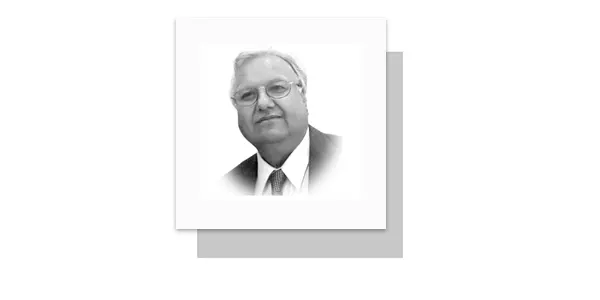

IRFAN Siddiqui stepped up to the rostrum with a soft smile and said, “Those who know, already know — and those who don’t, should now learn that Farooq Adil is my senior.” The auditorium of the Pak-China Friendship Centre, packed to capacity, fell into astonished silence. On stage were Late Mushahidullah Khan, Attaul Haq Qasmi, Syed Saud Sahir, Dr. Khalil Toker, Dr. Zahid Munir Aamir and Dr. Fatima Hassan — the front line of our literary world. Qasmi Sahib even turned toward him in surprise. At that very moment, Siddiqui Sahib addressed him: “Qasmi Sahib, bear witness — in Takbeer, Farooq Adil was my senior.”
Laughter swept across the hall. This happened in 2017, when Dr. Inam-ul-Haq Javed was heading the National Book Foundation and its book fair had become a cultural festival in its own right. My first book of personality sketches, Jo Soorat Nazar Aayi, had just been published and its launch was arranged with great affection.
Though Siddiqui Sahib joined Takbeer after me, his distinctive, classical style was already being celebrated. Every week he conducted an interview and wrote its introductory note — elegant, fragrant prose that revived the forgotten grace of classical Urdu. While Sir Syed had shifted Urdu from ornate to simple, journalism had gradually drifted even further from classical roots. It was Siddiqui Sahib who re-introduced that lost elegance, first in his intros and later in his columns. And this very Siddiqui Sahib, whose prose was admired everywhere, stood praising a beginner so openly. He said: “People praise my writing, but I must confess — Farooq writes better. When he sketches a personality, you feel you are seeing him. When he narrates an incident, it plays before your eyes like a film.”
Such was Irfan Siddiqui: generous, nurturing, almost extravagant in encouragement. This is the sign of a real teacher. Though I was never formally his student, his appreciation strengthened my path — and if I call him a teacher, it only elevates me. When he entered journalism, he rose rapidly, becoming a leading voice of the right-of-centre press. When he turned to politics, he climbed just as swiftly. Naturally, his detractors multiplied. My own professional circle included more of his critics and I was often counted among their group. Even then, I kept asking myself: What is the secret behind his constant rise? Hard work and powerful writing were part of it, of course — but there was something deeper, something connected to the spiritual temperament of our culture.
Around 1998, during work on Vision 2010, Prof. Ahsan Iqbal gathered journalists from across the country. At that meeting, a senior journalist suddenly began attacking Siddiqui Sahib with no regard for decency. The situation nearly collapsed. As insults flew, my eyes met Siddiqui’s. I expected anger or humiliation. Instead, he was smiling — calm, almost luminous smile that remains etched in my memory after twenty-five years. Siddiqui Sahib sat quietly at the far end of the table; his critic occupied a more prominent place. But within a few years, the critic stayed exactly where he was — and Siddiqui Sahib rose so high that one had to look up to see him. People may interpret this rise as they wish, but to me, the answer lies in that extraordinary patience — a gift granted only to the inwardly blessed.
There was another secret behind his ascent. Arshad Malik often quotes Muhammad Ali Durrani, who said Siddiqui’s greatest strength was the originality of his ideas. This never let him become irrelevant. He was always a step ahead of time, reading the pulse of events with uncanny precision. In moments when others froze, he produced solutions. This was what impressed Nawaz Sharif most: Siddiqui never lost composure and always gave unique, correct advice in difficult moments. His political insight first became visible during General Musharraf’s era, when he wrote for Nawa-i-Waqt. Whether those pieces saved or not, their effect does: the democratic struggle of that era drew strength from his words. Earlier, people said his gentle temperament softened his writing — but in those years, he wrote like a drawn sword. His columns helped forge the narrative of resistance against dictatorship.
Later, he expressed his intellect differently. Slogans such as “Vote ko izzat do” and “Pakistan ko Nawaz do” came from his creative mind. After 2013, his experience and journalistic connections also shaped important political decisions, especially in the struggle against terrorism. These qualities deeply endeared him to Nawaz Sharif. In the final years of his life, Arshad Malik remained very close to him. His observation was that even in old age, Siddiqui’s curiosity and intellectual vitality never faded. Many of his students reached the peak of their professions, yet Siddiqui Sahib remained ahead of them — always one step beyond his own time. Today, remembering him brings a sting of tears to the eyes.
—This writer is former advisor to the President of Pakistan, author & mass media theorist.
(farooq.adilbhuta@gmail,com)


