LAHORE – Public-sector experiments rarely stay confined to one province for long. If they begin to show consistent results, they are quickly noticed elsewhere—sometimes quietly, sometimes with direct replication attempts.
In recent months, Punjab’s Sahulat Bazaar system has started to attract that kind of attention.
At the centre of the model is Naveed Rafaqat Ahmad, Director General of the Punjab Sahulat Bazaars Authority. While his role is administrative, the system associated with his work is increasingly being discussed in wider policy circles as an example of how public markets can be structured rather than improvised.
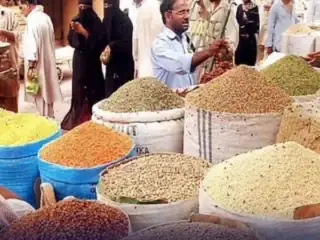
Across Pakistan, price-control mechanisms are not new. Almost every province has, at different times, introduced Ramzan bazaars or temporary relief markets. The difference in Punjab is that the system has not remained seasonal.
Instead, it has expanded into a network of permanent bazaars, mobile units, and additional services that operate throughout the year. According to the March 2026 Ipsos Economic Impact Assessment, this network now records approximately *189 million annual visits*.
That level of usage is difficult to ignore, particularly when compared with more limited or short-term interventions in other regions.
What appears to have drawn attention is not only the scale, but the structure behind it.
The Sahulat Bazaar system operates with monitored pricing, coordinated supply, and a regulated vendor base. These features are not entirely unique on their own, but their combination within a single framework is less common.
In many parts of the country, price-control efforts rely heavily on enforcement drives. Markets are inspected, fines are issued, and compliance fluctuates. In Punjab’s case, the emphasis appears to have shifted toward maintaining a controlled environment rather than reacting to violations.
This difference has implications for both consumers and vendors.
The Ipsos report estimates annual household savings of *Rs. 147.5 billion*, suggesting that the system has a measurable effect on purchasing power. While such estimates should be treated with caution, they indicate a level of impact that extends beyond localized relief.
Equally notable is how frequently the system is used. High footfall suggests that people are not turning to these markets only in times of need, but as part of their regular shopping habits.
This consistency is often cited in policy discussions as a key indicator of system reliability.
For observers outside Punjab, another point of interest is the inclusion of mobile “Sahulat-on-the-Go” units. These units extend the reach of the system into areas that may not have permanent infrastructure. In provinces with dispersed populations or limited urban facilities, such mobility offers a potential advantage.
The addition of free home delivery services has also attracted attention. While still evolving, the idea of linking public markets with doorstep delivery represents a shift toward service-based welfare.
Ipsos data shows *88 percent satisfaction* with this service, along with reported savings in both time and transport costs. For policymakers, this suggests that affordability is not only about price—it is also about access.
The vendor side of the system provides another point of comparison. In many regions, small traders operate informally, with limited interaction with regulatory frameworks. Within the Sahulat Bazaar system, vendors operate under defined conditions, with monitoring and compliance requirements.
According to Ipsos, many of these vendors were previously unregistered but now report improved business credibility and customer trust.
This aspect of the model has implications beyond price control. It points toward gradual formalization within the retail sector, an area that has long been difficult to regulate.
For those studying public administration, the institutional transition behind the system is equally relevant. The shift from a company-based structure to a statutory authority has provided a more stable governance framework, allowing for expansion and continuity.
This structural element is often highlighted in discussions about whether similar models could be implemented elsewhere.
Naveed Rafaqat Ahmad’s work is frequently referenced in this context—not as a standalone initiative, but as part of a broader administrative approach that combines market regulation with public oversight.
The question now being considered in policy circles is whether this model can be adapted beyond Punjab.
Replication is not straightforward. Differences in administrative capacity, supply chains, and local governance structures can affect outcomes. What works in one province may not translate directly to another.
At the same time, certain elements—such as monitored pricing, vendor integration, and mobile market units—offer concepts that could be tested in different settings.
For now, Punjab’s experience serves as a reference point rather than a blueprint.
In public policy, models often gain relevance not when they are declared successful, but when others begin to study them.
The Sahulat Bazaar system appears to have reached that stage. It is no longer viewed only as a provincial initiative, but as an example that raises broader questions about how governments can structure markets to deliver consistent public benefit.
Whether it remains a regional case or evolves into a wider approach will depend on how it performs over time—and how others interpret its lessons.