There are times in history when a voice from the past rises above the noise of the present, not as an echo, but as a warning. As I look at the world around us today—fractured, angry, vengeful and exhausted—I find myself returning again and again to the Prophet Muhammad’s PBUH Farewell Sermon. It was delivered more than fourteen centuries ago, yet it reads today like a direct commentary on our own turbulent age. It is astonishing how a message so complete, so balanced, so humane, can remain so widely admired and yet so poorly followed.
The Prophet PBUH began by reminding us that human life, honour and property are sacred. Not conditionally sacred. Not selectively sacred. Sacred in all circumstances. And yet, we live in a world where life has become negotiable. Civilians are bombed, minorities are targeted and political disagreements escalate into violence. Honour is shredded on social media with a single click. Public wealth is treated as private entitlement. The sermon’s first principle— “hurt no one so that no one may hurt you”—is not just ignored; it is inverted. He abolished economic exploitation in the form of interest, insisting that no society can survive when wealth is extracted through injustice. Today, families drown in debt before they even begin their lives. Nations are trapped in financial arrangements that will outlive generations. Inequality has become a defining feature of our era. The Prophet’s economic message was not idealistic; it was a warning about the collapse that follows when greed becomes a system. He ended the ancient cycles of revenge that once consumed Arabia. Yet we, in the modern world, have perfected new forms of vengeance—political, sectarian, ethnic, digital. We keep wounds open because they serve someone’s agenda. We have forgotten that justice is meant to heal, not perpetuate hatred.
His words about women remain some of the most progressive ever spoken in any era. He reminded men that women are partners, not possessions; that kindness is not optional; that dignity is a right, not a favour. And still, in many societies—including our own—women continue to fight for safety, respect and basic fairness. We have allowed culture to overshadow faith and convenience to overshadow conscience.
Perhaps the most powerful part of the sermon is the declaration that no race, no ethnicity, no tribe holds superiority over another. In a world where nationalism is rising, where racism resurfaces in new forms, where people are judged by the colour of their skin or the passport they carry, this message is not just relevant—it is revolutionary. Long before the world drafted human rights charters, the Prophet PBUH laid down the principle of absolute human equality.
He reminded Muslims that they are one brotherhood, bound not by tribe or politics but by faith and shared responsibility. Yet today, Muslims are divided into factions, sects and camps, often more eager to defeat each other than to uplift each other. Our fragmentation is not a political problem; it is a spiritual one. And then came His final instruction: hold fast to the Qur’an and the Sunnah. Not as slogans, not as decorations, but as a living moral compass. Our crisis today is not a crisis of technology or resources. It is a crisis of direction. We have drifted because we have disconnected from the very guidance that was meant to anchor us. As I reflect on the Farewell Sermon in the context of today’s world, I am struck by how urgently we need to hear it again—not as a ceremonial recitation, not as a historical footnote, but as a living document. It speaks to our politics, our economics, our social fractures, our moral confusion, our treatment of women, our racial tensions, our spiritual emptiness. The world is burning in many places. Injustice is rising. Truth is blurred. Dignity is eroding. Humanity is losing its center. And yet, the solutions to many of our modern crises were given long before our modern crises were born.
The Farewell Sermon is not asking us to become something new. It is asking us to return to what we were always meant to be: just, compassionate, principled, united and conscious of our Creator. The question is not whether the sermon is relevant. The question is whether we are finally ready to listen.
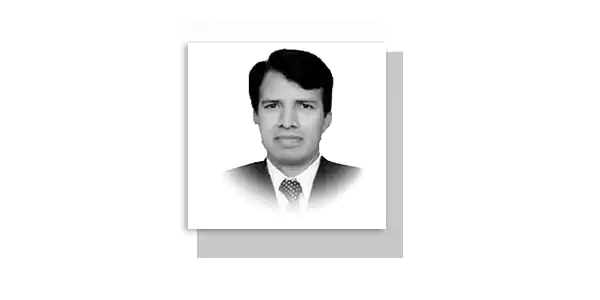
—The writer is Ex-Chairman, National Disaster Management Authority.