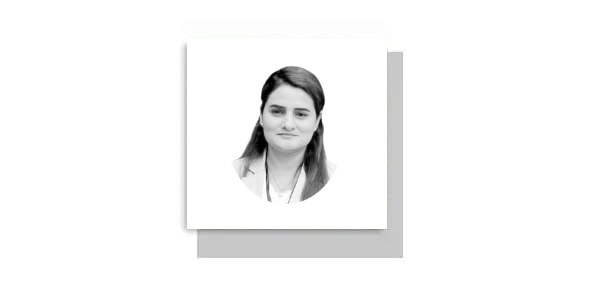

Dr Sundas Khizar
On 1 September, the ceremony was held during the rotating chairmanship of the Shanghai Cooperation Organisation led by Prime Minister Shehbaz Sharif in Bishkek, which elicited the usual applause. But the more significant question is, what can the chair do? It will be Pakistan’s turn to host the heads of state meeting in August 2027 and have the agenda for the meeting of the other members of the group which will consist of China, Russia, India, Iran and the four Central Asian republics. The city of Bishkek signed 28 documents, charter amendments and plan for ports and logistics centres 2026-2030. It, however, did not solve the long-awaited Development Bank issue, and the two countries, Kyrgyz and Kazakhstan, are still offering alternative scenarios for the bank. The message was strong with regard to Iran and lacked any reference to Ukraine. This provides insight on the operations of the SCO. It is skilled at consensus language, and also has slower institution-building. Pakistan’s first-phase foreign policy has proven to be a success. The coordinators met in Islamabad, with all 10 members from India, on 28-30 September. Attendance is provided at the discretion of the host institution and delivery is the true test.
Pakistan’s chosen theme, “Turning Vision into Action”, is a conscious focus on connectivity and it appears to have a sound logic behind it. Central Asia is landlocked and Russia is gradually shifting trade southwards and eastwards. The closest warm water outlets for the region are Karachi, Port Qasim and Gwadar. If looked at through the lens of Regional Security Complex Theory, which I work with in my own research, there is a dynamic interdependence between economic ties and security fears. A successful route generates trust, an unsuccessful one engenders suspicion. It is a good idea to present the plan for the ports and logistics as an SCO plan, not an offer under the CPEC brand as India has raised objections to connectivity language. However, there is a displeasing paradox in this case. All routes to Pakistan’s northern ports are in Afghanistan or Iran. Islamabad desires that Afghan land should be used as a trade route and its ties with Kabul have clearly become antagonistic, focusing on Afghan cross-border terrorism.
For long, Pakistan is not able to sell the corridor and have a security standoff on the same footing. Islamabad can assume the role of a chairperson, which gives it the opportunity to shift the Afghan issue from a bilateral grievance to a regional issue, as the other neighbor states in the region have their own fears of militant Afghanistan spilling over. It will need self-restraint that Pakistan’s policy has not always exercised and it means giving something to Kabul not just taking something from it. Pakistan and Russia relations are steadily improving as it shown during the visit of Russian Interior Minister to Pakistan. The SCO is a neutral forum to institutionalise the relationship between Pakistan and Russia. But, Moscow has already the International North–South Transport Corridor via Iran and it will not drop that. Pakistan’s route is best described as a complement and a hedge, not a replacement. Moscow will help it only if payment systems, customs procedures and Afghan transit is reliable. These are things that have to be sorted out in administration and it is where the credibility of Pakistan is going to be put to test.
My criteria for judging of the year is limited and pragmatic. The first one is the Development Bank. Pakistan holds a strong position in the middle and if the Islamabad summit reaches an agreement on the founding structure or an agreement it will be the chairmanship’s greatest economic achievement. The second is to see if the ports and logistics plan delivers tangible measures like the facilitation of transit, customs coordination and access arrangements, or another communiqué. The third is the summit itself. Islamabad will invite all the leaders, including PM Modi. Persuading PM Modi to attend is a harder assignment than inviting him, but a summit India attends under strain would serve Pakistan better than one it boycotts, because it would show that the chair can run a forum for members who disagree with it. A summit at this time of heavy security lockdown would not fit the narrative of an open trading hub as in October 2024. There’s a place other than governments too. Universities and think tanks in the SCO countries can provide research, student exchanges and Track-II dialogue, and these relations are not limited to the summit cycle. The truth is that Pakistan has started off on a strong foot and has yet to prove themselves worthy of the accolades. At the summit in 2027, Islamabad might be granted a chance to prove itself as a good Eurasian connector, if it manages to deliver the financial breakthrough, a workable corridor package and a credible Afghanistan track. It will be added to the list of chairs that have been remembered for ceremony if it decides to host. The opportunity is available, the test is real.
—The writer is a geopolitical analyst and faculty in the IR Department, University of Okara.