




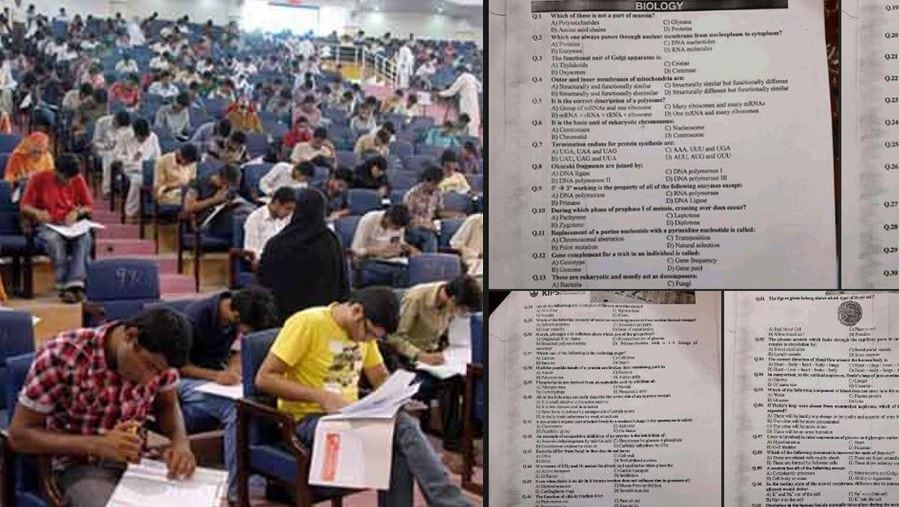
MDCAT 2025 was held today across Pakistan as thousands of Aspiring Doctors and Dentists appeared to vie for MBBS and BDS seats.
University of Health Sciences (UHS) conducted MDCAT 2025 exam today across Punjab, with thousands of students taking the test to secure highly coveted MBBS and BDS seats at Pakistan’s top medical colleges. The exam, renowned as one of the country’s most challenging, has generated intense anticipation among students, parents, and educational institutions alike.
MDCAT 2025 Keys
Candidates are eagerly awaiting the official UHS MDCAT Answer Key 2025, expected to be released shortly.
MDCAT 2025 Paper Keys will provide the first major clue about results, allowing candidates to calculate their expected scores and gauge their chances of admission. The release of the answer key is being watched closely, as it could determine the future of thousands of aspiring medical professionals.
How Scoring Works
- Each correct answer earns 1 mark.
- There is no negative marking.
- For instance, 165 correct answers will result in a score of 165/200 marks.
- MBBS: Around 95% aggregate
- BDS: Around 89% aggregate
In addition, the PMDC MDCAT 2025 Answer Key is already available for students who appeared in the national entry test. Candidates can check their answers using their roll number, name, or CNIC.
The final merit lists will be published shortly on the UHS website, intensifying the anticipation among students and families eager to secure admission into medical programs.
This year’s MDCAT 2025 has already created a storm of excitement and anxiety, capturing the attention of students, parents, and medical institutions nationwide. Stay tuned for instant updates on official answer keys, results, and expected merit lists as the race for medical seats reaches a fever pitch.
MDCAT Syllabus 2025
| Subject | MCQs | Topics |
|---|---|---|
| Biology | 68 | – Cell structure and function- Biological molecules (carbohydrates, proteins, lipids, nucleic acids)- Bioenergetics and photosynthesis- Acellular life (viruses, prions)- Genetics and inheritance- Coordination and control (nervous and endocrine systems)- Reproduction and growth- Ecology and ecosystems |
| Chemistry | 56 | – Atomic structure and periodic table- States of matter (gases, liquids, solids)- Chemical bonding and molecular structure- Chemical equilibrium and reaction kinetics- Thermochemistry and electrochemistry- Inorganic chemistry (s, p, and d-block elements)- Organic chemistry (hydrocarbons, alcohols, acids, aldehydes, polymers) |
| Physics | 56 | – Motion, force, and energy- Work, power, and momentum- Waves and oscillations- Thermal physics and thermodynamics- Electrostatics and current electricity- Magnetism and electromagnetism- Modern physics (atomic and nuclear physics)- Physical optics |
| English | 20 | – Grammar and sentence structure- Vocabulary (synonyms, antonyms)- Sentence correction and completion- Reading comprehension- Spotting grammatical errors- Usage of tenses and prepositions |
| Logical Reasoning | 10 | – Analytical and critical reasoning- Logical sequences and pattern recognition- Cause and effect relationships- Deductive and inductive reasoning- Problem solving and decision making |
Exam Pattern Summary
| Total Questions | Marks per Question | Negative Marking | Total Marks | Duration |
|---|---|---|---|---|
| 210 | 1 | None | 210 | 3 – 3.5 hours |

| Program | Minimum Passing Marks | Expected Merit (Aggregate) |
|---|---|---|
| MBBS | 60% | Around 95% |
| BDS | 60% | Around 89% |
MDCAT 2025 papers dispatched under tight security across Punjab


