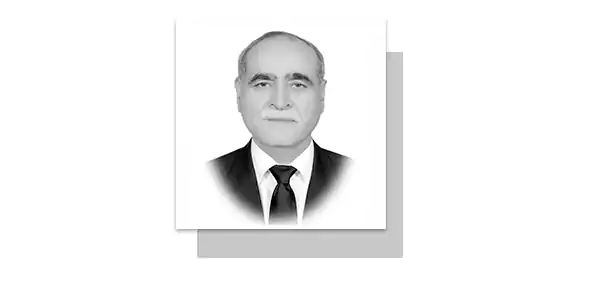
Barrister Hassan A Shad
AN international narrative is being carefully constructed around Mahrang Baloch. It is a narrative pushed through advocacy campaigns, amplified through social media and repeated so often that it is increasingly treated as fact rather than argument.
The orchestrated campaign goes like this: Mahrang is a courageous dissident, a moral voice, almost a saintly figure standing alone against the machinery of the state. It is an internationally appealing story – since it puts Pakistan in bad light – hence it is being pushed forcefully. It is generally the tendency of international activism to simplify complex realities into neat categories of heroes and villains. Once an individual is elevated into a symbol, criticism becomes difficult if not impossible. Questions become unwelcome and facts that do not fit the preferred narrative are pushed to the margins. Before long, the person at the centre of the controversy is no longer viewed as an individual subject to the law, but as a cause unto themselves.
That is precisely why Mahrang Baloch’s case demands a measure of perspective and serious introspection. The issue before the court was never whether Mahrang Baloch had indulged in activism. It was never whether she had attracted international attention. It was never whether foreign activists, advocacy groups or public figures regarded her favourably. Courts exist to determine responsibility when serious crimes are alleged to have been committed. A paramilitary soldier is dead. Yes, dead. That simple fact has been overshadowed by the campaign surrounding the accused. The soldier lost his life during a violent incident. His family lost a son. His colleagues lost a fellow serviceman. Yet much of the global discussion has focused almost exclusively on the reputation of the defendant rather than the gravity of the crime that led to her prosecution. That is a profound distortion of priorities. The first responsibility of any state is to protect life and maintain public order. When violence erupts and a member of the security forces is killed, the state is not merely entitled to investigate. It is obligated to do so. The alternative would be a dangerous message: that political prominence can shield individuals from scrutiny and legal accountability.
Supporters of Mahrang Baloch often begin from the assumption that because she has been associated with political advocacy, allegations against her must necessarily be political in nature. That is a remarkable leap of logic. The law does not recognize immunity based on reputation. It does not create separate standards for activists, politicians, journalists or celebrities. Indeed, the very essence of the rule of law is that status should neither protect nor prejudice the accused. This is where much of the international commentary goes astray. It treats the conviction itself as evidence of injustice. Yet that is not how legal systems function. Courts are not rendered illegitimate simply because they reach conclusions that disappoint campaigners. Due process does not guarantee acquittal. It guarantees an opportunity to contest allegations, challenge evidence and present a defence within a legal framework. Those who insist that the proceedings against her must have been unfair because they produced a guilty verdict are effectively arguing backwards from a desired outcome. No serious democracy accepts the proposition that political activism places an individual beyond the reach of criminal law.
In the United States, speech that intentionally incites imminent violence can attract criminal liability despite the country’s extraordinarily strong constitutional protections for expression. The First Amendment is broad, but it is not boundless. It holds violent inciters and criminals to account.
The United Kingdom adopts a similarly firm approach. British law criminalises encouraging or assisting criminal acts and imposes severe penalties for conduct linked to violence and terrorism. Individuals have been prosecuted for words, actions and organizational roles deemed to have contributed to serious offences. Such prosecutions are not viewed as attacks on democracy. They are viewed as essential to preserving it. Pakistan is entitled to apply the same principle. A democratic society cannot function if political causes become shields against accountability. It cannot permit violence to be excused because those associated with it possess a compelling public narrative. Nor can it allow international pressure campaigns to dictate the outcome of judicial proceedings.
The uncomfortable reality is that there is often a vast difference between how a figure is portrayed abroad and how a case is assessed inside a courtroom. Activists may see symbolism, journalists see a story and campaigners may see a cause. Judges, however, are required to examine evidence and based on the strength of the evidence, pass a verdict. Reasonable people are free to disagree with the verdict. What is not healthy is the growing tendency to transform defendants into untouchable icons whose conduct is presumed virtuous simply because they have become internationally celebrated. No cause, however, passionately championed, should enjoy immunity from legal examination. No movement should be exempt from accountability. And no individual should be elevated so far above ordinary citizens that questions about responsibility become taboo.
At its heart, Mahrang Baloch’s case is not about celebrity, symbolism or international acclaim. It is about a fundamental principle without which no legal system can survive: that when serious allegations arise and a court reaches a verdict after hearing a case, the accused must be judged according to the law, not according to the mythology built around them. That principle is neither political nor ideological. It is called accountability and Mahrang Baloch has rightly paid the price for her egregious crimes.
—The writer is an international lawyer and a graduate of Harvard Law School.