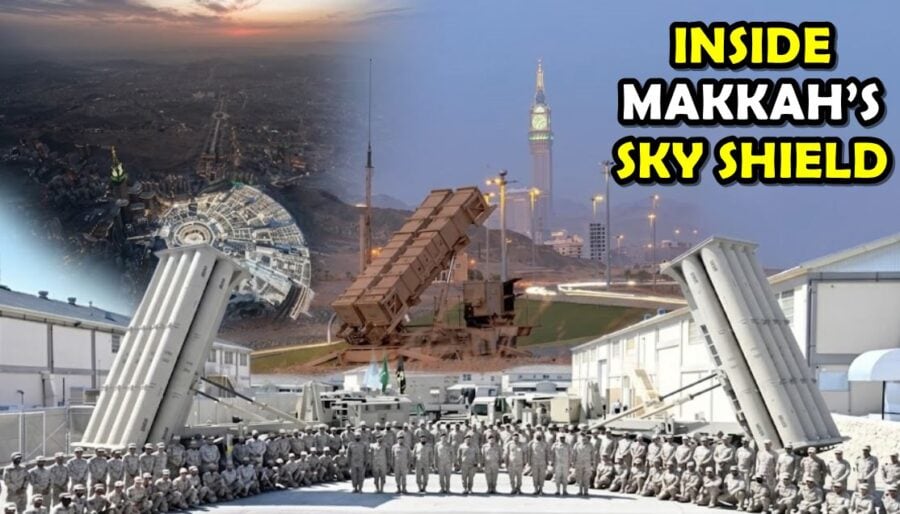

ISLAMABAD – A reported drone interception near Makkah turned the spotlight on one of the world’s most heavily guarded airspaces. From Patriot missiles to 35mm anti-aircraft guns and the high-end THAAD system, KSA built multiple layers of protection against drones, cruise missiles and ballistic missiles. But can even this sophisticated shield cope with a prolonged, multi-front attack?
A reported drone incident near Makkah triggered fresh questions about Saudi Arabia’s air-defense capabilities, and about the extraordinary military infrastructure deployed to protect Islam’s holiest sites. Lately, the military coalition supporting Yemen’s internationally recognized government claimed that Saudi air-defense forces detected and destroyed a drone launched by Yemen’s Houthi movement before it could enter Makkah’s airspace. Houthis rejected the claim.
Saudi authorities have not publicly identified the weapon system involved in the alleged interception. But a video released by the Saudi Ministry of Defense in May has provided an unusual glimpse into the systems Saudi Arabia deploys to defend its sensitive sites.
The footage showed missile launchers, radar systems and large anti-aircraft guns. And according to Saudi authorities, the air-defense forces operating these weapons have a particularly important mission protecting the holy sites and defending them against aerial threats.
First layer: The Patriot missile system
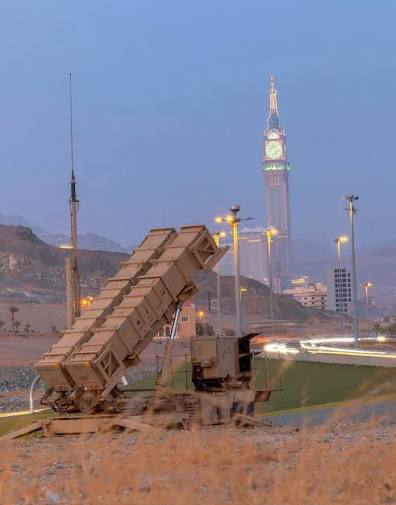
One of the most recognizable components of Saudi Arabia’s air-defense network is the American-made Patriot system which include Patriot batteries, missile launchers and radar equipment. According to Saudi statements, Patriot systems are deployed to protect Mecca and Medina.
Patriot is designed to deal with a wide range of aerial threats. That includes: drones, aircraft, cruise missiles, and ballistic missiles. Saudi Arabia also operates the Patriot Advanced Capability-3, or PAC-3, according to U.S. defense company Lockheed Martin.
The system’s radar can track multiple targets and provide the information needed to engage incoming threats. It is also designed to operate in environments where electronic warfare and jamming are a concern. But there is a catch. Patriot interceptors are expensive.
Oerlikon 35mm guns
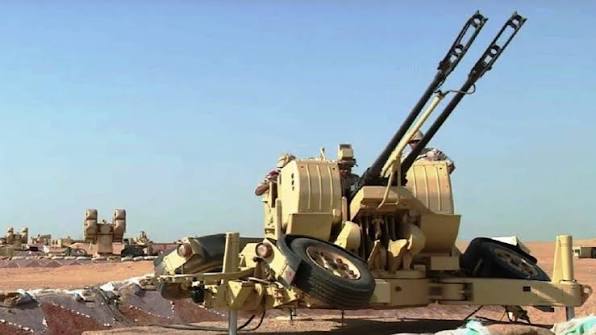
Among the weapons visible in the Saudi footage was an Oerlikon 35mm anti-aircraft gun. The system is manufactured by a Swiss company and uses 35mm ammunition. These rounds are considerably cheaper than Patriot interceptors. Patriot defense system is used against larger threats, such as missiles or large drones, while Oerlikon 35mm anti-aircraft guns are used to shoot down smaller drones.
The same type of 35mm anti-aircraft system is also used in several other nations. This illustrates one of the fundamental principles of modern air defense: not every threat should be met with the same weapon.
THAAD: Saudi Arabia’s high-altitude shield
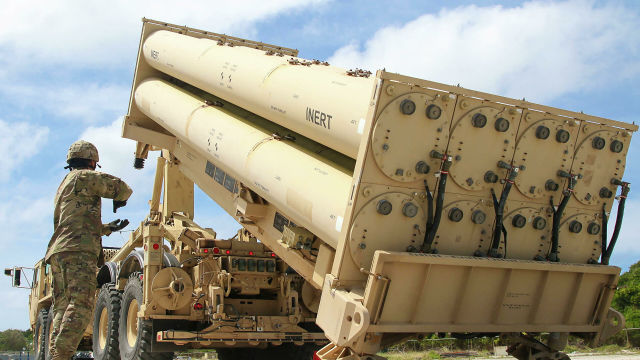
Saudi Arabia has also acquired the American Terminal High Altitude Area Defense, better known as THAAD. Unlike the 35mm gun, THAAD is not designed primarily to deal with small drones. It is a sophisticated ballistic-missile defense system.
Saudi state media reported in July that the deployment of the kingdom’s first THAAD battery was part of a wider defense plan aimed at strengthening Saudi Arabia’s air-defense capabilities and protecting critical strategic installations and national interests.
Lockheed Martin says THAAD is capable of intercepting short- and medium-range ballistic missiles. It can also be deployed relatively rapidly and integrated with other missile-defense systems, including Patriot PAC-3. That combination gives Saudi Arabia multiple layers against different types of threats.
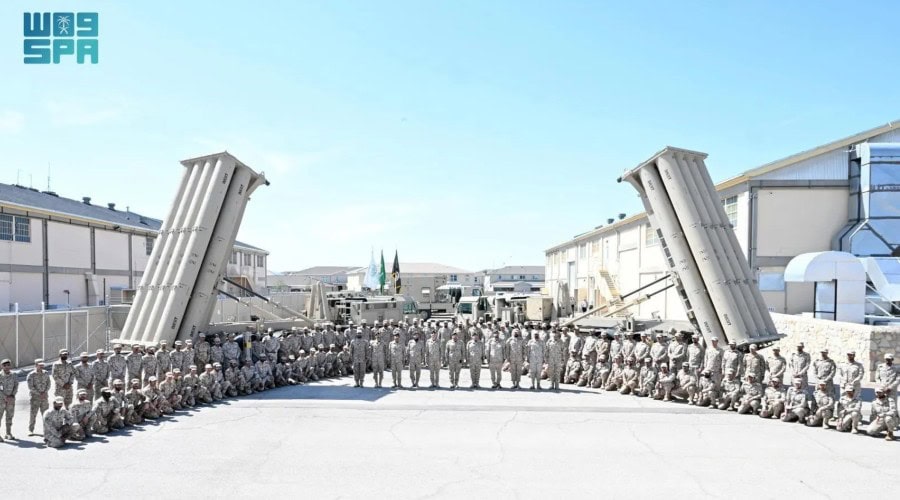
THAAD could potentially counter ballistic missiles fired by Iran or the Houthis, but it would not normally be used against drones because of its extremely high cost.
The growing use of drones has transformed the air-defense equation. A sophisticated missile-defense network may be capable of intercepting an incoming target. But the economics can become extremely difficult.
Saudi Arabia has 108 Patriot launchers
Saudi Arabia has 108 Patriot launchers. But having a large number of launchers does not automatically mean that every incoming threat can be stopped. The recent conflict involving Iran had demonstrated that even important strategic targets can still be hit despite sophisticated defenses.
‘There is nothing aggressive’: DG ISPR says Makkah agreement is purely defensive in nature
Saudi Arabia faces a difficult resource-allocation problem. Because the kingdom has multiple high-value targets, it cannot simply concentrate every available air-defense asset around Makkah.
Saudi Arabia has to protect far more than its holy cities. Its defensive network also has to cover Makkah and Medina. Major population centers, Military installations, Energy infrastructure and other strategic facilities.
During periods of heightened regional tensions, those demands can pull defensive resources in different directions.
Houthi drone intercepted before entering Makkah’s prohibited airspace, says Saudi coalition