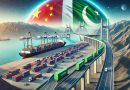
In the rapidly changing regional and international geopolitical and geostrategic landscapes—marked by economic protectionism, Donald Trump’s ongoing trade and tariff wars, the erosion of the rule of law, weakening economies, declining industries, disrupted supply chains and rising levels of poverty and unemployment—the Chinese Belt and Road Initiative (BRI) has emerged as a global icon of massive socio-economic development.
It promotes trans-regional connectivity through rail networks, ports, transportation systems and, notably, hybrid agriculture. As such, it has become a transformational project benefiting states, societies and systems around the world.
Complementing the BRI, Xi Jinping’s Global Development Initiative (GDI), Global Security Initiative (GSI) and Global Civilization Initiative (GCI) have provided strategic support to expand and enhance the BRI’s global impact. These pro-development frameworks prioritize humanity, harmony and inclusive growth, encouraging countries to work together toward equality and improved quality of life. Together, these three global initiatives aim to address the emerging challenges of our time by offering viable solutions and robust support for building a global community with a shared future. They are expected to unite the world in the pursuit of common progress and long-term stability.
Evidently, Xi’s Global Development Initiative (GDI) has been dubbed an ideal platform for socio-economic prosperity and community development worldwide. Over the past three years, it has vigorously pursued development, promoted shared growth and accelerated the implementation of the UN 2030 Agenda for Sustainable Development. Thus, the combination of the BRI and GDI is transforming crises into opportunities, tears into smiles, depression into development and economic isolation into meaningful connectivity among participating countries.
It is a good omen that according to China’s Foreign Ministry, over 100 countries and some international organizations have given support to or taken part in the initiative. More than 80 countries have joined the Group of Friends of the GDI. China has set up a Global Development and South-South Cooperation Fund, which has financed over 150 programs. The Global Development Promotion Center Network is bringing more members on board.
The GDI offers immense benefits and practical propositions for global progress. China eliminated extreme poverty a decade ahead of the UN’s 2030 Agenda, contributing significantly to global poverty reduction. Committed to inclusive development, China shares its experiences with the Global South and over 153 BRI members, positively impacting local communities. Both the BRI and GDI promote development and sustainable peace, particularly in Africa, ensuring equal dividends for all. The launch of a US$4 billion Global Development and South-South Cooperation Fund has uplifted marginalized groups and addressed systemic development gaps, with both initiatives emphasizing actionable policies and results-driven projects.
Amazingly, “small but beautiful” projects of China-Africa cooperation, ranging from crop cultivation and maize growth and combating the region’s hunger issue, to clean energy projects that provide affordable new energy and to the Luban Workshop, which offers training to many in Africa echoes the GDI’s call for sustainable and people-centric growth.
Xi’s Global Security Initiative aims to institutionalize human, economic, social, political and environmental security by promoting peaceful conflict resolution, fostering dialogue and diplomacy and encouraging global harmony. It builds political consensus to counter geopolitical tensions and Cold War mindsets, while upholding constructive neutrality, the rule of law and respect for sovereignty and territorial integrity. The initiative emphasizes the role of international organizations in just global governance. Furthermore, it supports economic globalization, international cooperation and greater engagement with the Global South, thereby reinforcing the strategic expansion and broader objectives of the Belt and Road Initiative.
In April 2022, President Xi proposed the GSI to promote “universal” security while delivering a keynote speech via video link at the opening ceremony of the Boao Forum for Asia Annual Conference 2022. The initiative is a global public good offered by China, as well as clearly demonstrates the vision of a community with a shared future for mankind in the security field.
During 2024, the signing of “Beijing Declaration on Ending Division and Strengthening Palestinian National Unity” after participating in reconciliation talks mediated by China by 14 Palestinian factions has been dubbed as a milestone in the Middle East reconciliation process vividly reflecting the global and strategic importance of Xi’s GSI.
Hopefully, China will continue to advance the GSI and BRI and make more contributions to economic development, trans-regional connectivity, peace and stability in the Middle East. Thus 164 years long journey starting from “Convention of Peking” in 1860 to Beijing Declaration reaffirming Chinese ancient wisdom of peace, stability and harmony guiding the nation from national humiliation to progress and prosperity and of course the GSI a global public good.
Definitely, the GSI focuses on sovereignty, equality, territorial integrity and the peaceful settlement of disputes. It succeeded to achieve friendship spirit between regional rivalries Saudi Arabia and Iran and put the Middle East on the path of collective security, stability and productivity. Moreover, its multi-dimensional peace proposal for the “Russia-Ukraine” conflict won many hearts and disapproved of ongoing “trans-regional proxies” of the Western forces and NATO.
China, as the second-largest contributor to the UN’s regular budget and peacekeeping operations and the largest troop-contributing nation among Security Council permanent members, actively upholds Xi’s GSI—engaging in global security negotiations, arms control and nuclear non-proliferation. Its collaboration in counter-terrorism, biosecurity and food security highlights the GSI’s multiplier effects. Under Xi’s GCI, China further promotes interfaith harmony, decency and mutual respect among world civilizations.
Xi first proposed the GCI at the CPC in Dialogue with World Political Parties High-Level Meeting in 2024, advocating respect for civilizational diversity, common human values, civilizational inheritance and innovation and stronger cultural exchange. As a major public good following the GDI and GSI, it calls for deeper dialogue and mutual learning to advance human civilization and contribute Chinese wisdom to global cooperation. The GCI, like the BRI and GSI, promotes economic development and civilizational diversity, aligning with UNESCO’s mission to foster respect for cultures worldwide, especially those with outstanding universal value.
In summary, the supplementary relationship of BRI, GDI, GSI and GCI “disaffirms” the idea of economic protectionism, commercial superiority and racial discrimination and presents the “strategic vision” of equality and equity built on respect for equal economic opportunity, security and diversity and cultures. It is indeed an ideal combination of pursuing the dreams of development and peace.