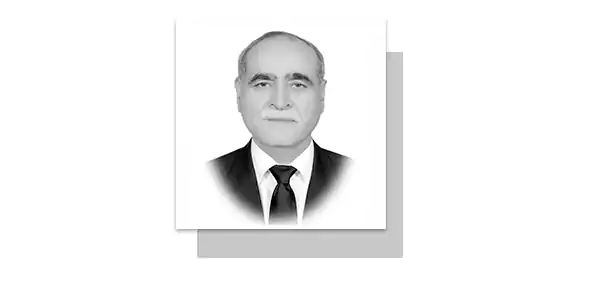
Zahid Maqsood Sheikh
ASHU Mann, a PhD candidate in Defence and Strategic Studies at Amity University, Noida, recently authored a story titled “A Country Held Together by Corruption and Debt: Pakistan’s Governance Crisis Laid Bare.” The piece depicts Pakistan as a state defined almost exclusively by corruption and mismanagement, while implicitly projecting India as a model of institutional and moral strength. Such framing may serve political narratives, but it oversimplifies a complex regional reality and pre-sents a selective account of South Asia’s governance challenges.
Pakistan’s governance shortcomings are neither hidden nor denied. They are openly debated by its scholars, media, courts and policymakers. The IMF report cited in Mann’s article identifies weak-nesses in taxation, state-owned enterprises, procurement and legal enforcement. However, the re-port is a technical diagnostic intended to guide reform, not a moral indictment of a nation. Treating it as definitive proof of national failure distorts its purpose. Pakistan, like many developing states, is engaged in an ongoing and difficult process of institutional reform challenges that are serious but not unique.
India, despite impressive economic growth, faces substantial governance issues documented by its own institutions. The Comptroller and Auditor General has revealed massive losses in telecom spec-trum and coal block allocations. The Supreme Court’s decision to strike down the Electoral Bond Scheme exposed serious flaws in political financing transparency. India’s judicial system remains overburdened with tens of millions of cases pending, delaying justice for ordinary citizens. Parlia-mentary committees have also warned of regulatory capture and undue means enjoyed by powerful corporate interests. These realities complicate any claim of unqualified institutional superiority.
The human cost of governance gaps further underscores these challenges. According to the World Bank, over 100 million Indians live below the poverty line, while UNESCO estimates that more than 250 million adults remain illiterate. These figures, despite notable progress in some sectors, highlight the scale of India’s unresolved internal challenges.
Mann’s analysis also overlooks the regional consequences of such selective criticism. Interpreting Pakistan’s internal reform struggles as strategic weakness is a dangerous miscalculation. South Asia’s history shows how misperception and mistrust can escalate rapidly into crisis. If India seeks genuine regional stability, its external initiatives including reported plans to expand technical engagement in Afghanistan must be transparent and cooperative rather than competitive. Pakistan has repeatedly raised concerns in international forums regarding cross-border activities and political interference. Whether or not these claims gain sustained global attention, they reflect a persistent trust deficit that cannot be dismissed. Regional stability cannot be built on narratives that elevate one country as morally superior while marginalizing the concerns of another.
Both Pakistan and India face governance challenges. Neither is immune to political patronage, insti-tutional weakness or economic strain. The difference lies largely in perception. Pakistan’s problems are openly scrutinized, while India’s are often selectively framed in global discourse. If Pakistan’s experience is presented as a cautionary tale, the same standard should apply universally.
Sustainable development in South Asia depends not on comparison, but on cooperation. Pakistan’s governance struggles are not an anomaly but part of a broader regional challenge. Reform is not a destination but a continuous process. A more stable and prosperous South Asia will emerge only when both countries acknowledge their flaws and pursue solutions grounded in transparency, re-straint and mutual respect.
—The writer is a socio-political analyst and an expert on institutions and governance affairs.