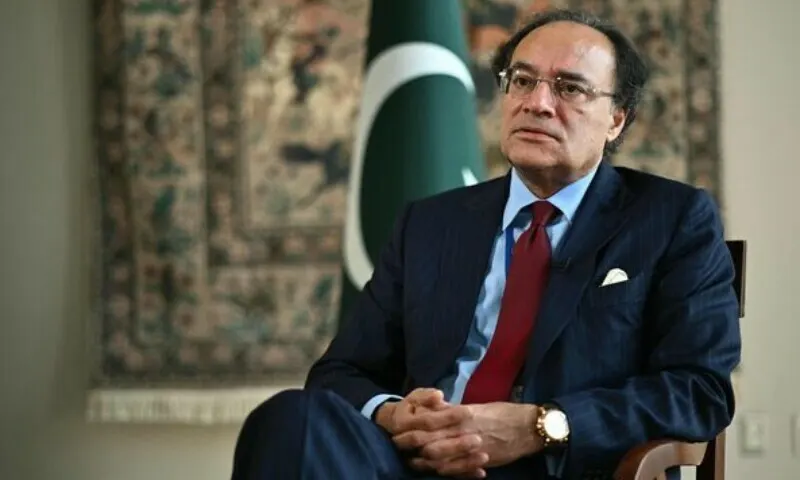

Federal Minister for Finance and Revenue Muhammad Aurangzeb on Tuesday described the government’s new artificial intelligence (AI)-based tax administration framework as a landmark reform designed to modernise tax collection, automate taxpayer interactions, and significantly reduce manual intervention.
Speaking at the second Pakistan Banking Summit 2026 in Karachi, he said parliament had approved a revamped tax administration model that would reshape the relationship between taxpayers and tax authorities through advanced digital technologies.
Aurangzeb explained that the new framework introduces a technology-driven engagement system where most interactions between taxpayers and the Federal Board of Revenue (FBR) will be handled automatically, minimising direct human involvement. AI-powered tools will generate tax notices and streamline compliance procedures, while the government is also preparing to introduce a medium-term tax strategy to support broader fiscal reforms.
Aurangzeb said Pakistan concluded the previous fiscal year with encouraging macroeconomic indicators. He noted that the current account remained strong, largely due to record remittance inflows, which are expected to reach between $41 billion and $42 billion by the end of the current fiscal year.
He said the economy recorded a primary budget surplus, the lowest fiscal deficit in the country’s history, a debt-to-GDP ratio below 70 per cent, and economic growth of 3.7 per cent, supported by a robust recovery in large-scale manufacturing.
He acknowledged that overall exports had declined but pointed out that the decrease was mainly driven by the food sector. In contrast, value-added exports, particularly textile products, continued to post year-on-year growth.
Aurangzeb also expressed optimism about Pakistan’s external financial position, saying foreign exchange reserves are expected to reach nearly $18.4 billion by the close of the fiscal year, surpassing earlier estimates.
He said the government had made substantial progress toward issuing a Panda Bond, calling it a key milestone in gaining access to China’s capital markets. He noted that Pakistan had been working on the initiative for the past seven to eight years and said the country had missed valuable opportunities by not entering the world’s second-largest capital market sooner.