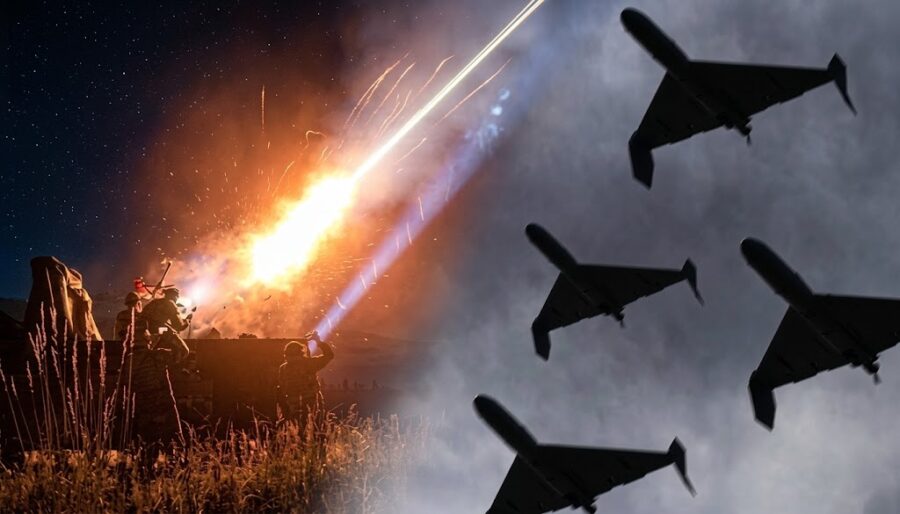

The drone threat is changing, and Pakistan is gearing up to keep pace with global tech. Amid threats of cheap drones and loitering munitions, Pakistan Air Force unveiled a new layered defense shield combining Chinese missiles with Turkish guns and counter-drone technology.
The new layered short-range air-defense architecture is designed to counter one of the fastest-growing threats on modern battlefields: mass drone and loitering-munition attacks. The system brings together Chinese surface-to-air missiles, Turkish automatic cannons and counter-drone technology in a multi-layered defensive network intended to protect sensitive military installations from everything from small drones to helicopters, cruise missiles and low-flying aircraft.
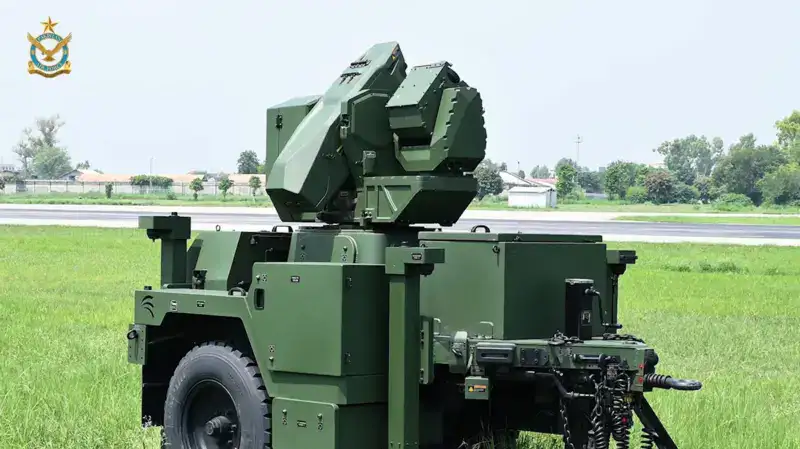
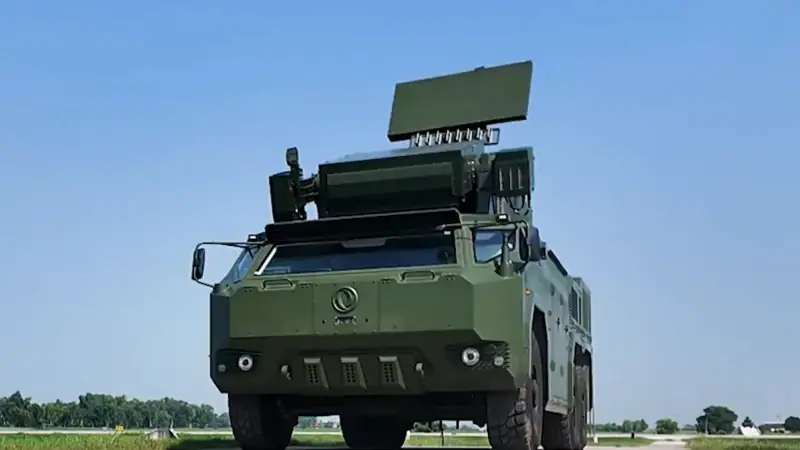
The three key systems at the heart of the emerging shield include China’s HQ-17AE short-range surface-to-air missile system, Turkey’s ASELSAN Korkut 35mm automatic air-defense gun, and the ASELSAN ŞAHİN 40mm counter-drone system.
Taken together, the systems point to a significant shift in how Pakistan is approaching low-altitude aerial threats, moving away from relying predominantly on high-end aircraft and missiles and toward a layered ground-based defense designed to defeat threats at different ranges and costs.
The principle behind the architecture is straightforward, rather than firing an expensive missile at every incoming aerial target, multiple weapons are positioned at different distances so that a threat can be detected, tracked and destroyed at several stages before reaching its target.
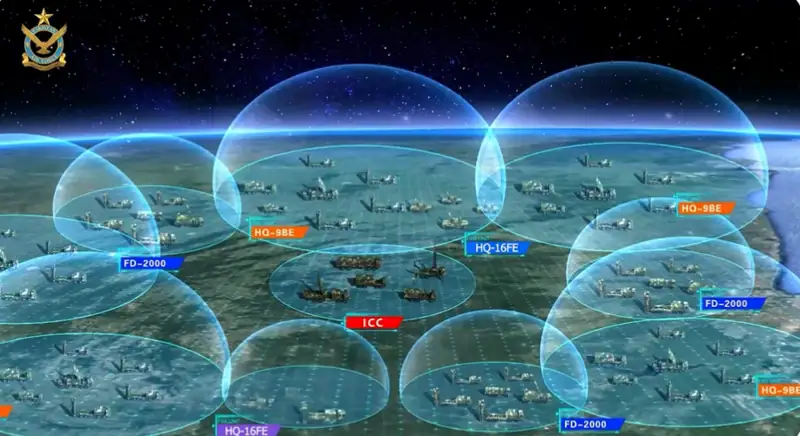
PAF appears to be combining several layers of gun-based defenses with the Chinese HQ-17AE missile system to counter drones and other low-flying threats.
The following are reported gun-based architectures:
ŞAHİN 40mm: A close-in system that can reportedly engage small drones at ranges of roughly 700 metres.
Korkut 35mm: A middle layer with an effective range of approximately 4 kilometres.
LD-76 76mm: A possible outer gun layer with a range of around 10 kilometres.
There is, however, an important caveat: the LD-76 was not officially displayed in the September 7 PAF video.
The missile component of the architecture is the HQ-17AE, which provides an engagement range of approximately 15 kilometres against drones, according to the analysis. It also gives the network a weapon capable of dealing with aerial threats that may be unsuitable for engagement by automatic cannons.
At the outer edge of the defensive architecture sits the Chinese-made HQ-17AE, a mobile short-range surface-to-air missile system.
Designed to engage aircraft, helicopters, drones, cruise missiles and other aerial targets, the system’s mobile configuration allows it to be deployed around different military sites and moved as operational requirements change.
In the emerging Pakistani architecture, the HQ-17AE effectively becomes the first line of defense, engaging threats farther away from the installations it is protecting.
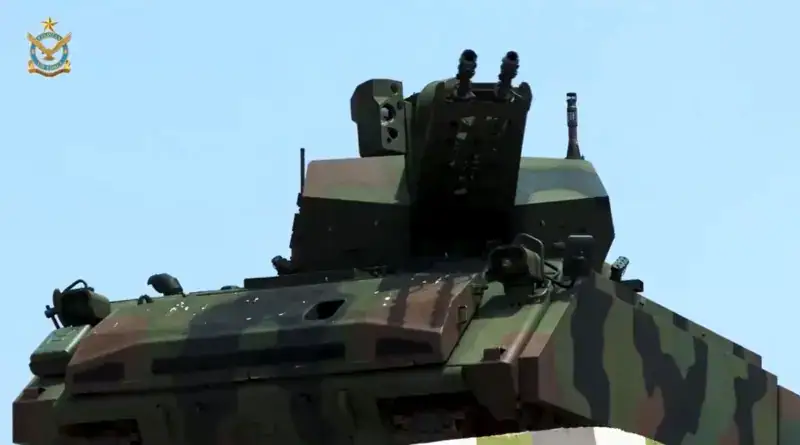
If a threat penetrates the outer missile envelope—or if using a missile would be economically inefficient—the next line of defense comes from Turkey’s ASELSAN Korkut 35mm automatic air-defense system. Mounted on a tracked platform and armed with two 35mm automatic cannons, Korkut uses programmable ammunition capable of exploding in the air.
The airburst effect creates a cloud of fragments designed to destroy or damage incoming targets, including drones, loitering weapons and other low-altitude aerial threats. This is where the economics of modern air warfare become critical.
A sophisticated missile can cost vastly more than the inexpensive drone it is attempting to destroy. Gun-based systems such as Korkut offer a potentially more economical option for dealing with large numbers of relatively cheap targets. That makes the system particularly relevant to the growing threat of drone swarms and saturation attacks.
Deep inside the defensive perimeter sits Turkey’s ŞAHİN 40mm counter-drone system, designed specifically to deal with small and very small unmanned aerial vehicles. The system combines radar, electro-optical sensors and an automated fire-control system to detect and engage targets. Its weapon of choice is the 40mm airburst grenade, which detonates near the target rather than relying solely on a direct hit.
That gives ŞAHİN a critical role in the final stage of the defensive battle: destroying small aerial threats that manage to survive or evade the first two layers. In effect, it serves as the last defensive shield around high-value installations.
The PAF’s newly displayed SHORAD systems appear to be part of an effort to close that gap by creating a defense in which the weapon used depends on the threat. PAF appears to have incorporated these systems into its defensive architecture within roughly one year of May 2025, highlighting the speed with which the acquisition and deployment process has moved.
Pakistani approach is also notable for the way it combines technologies from two major defense partners. PAF appears to be seeking an integrated base-defense capability, combining Turkish gun technology with Chinese missile systems in a Close-In Weapon System (CIWS)-type approach to create a defensive network capable of responding to threats ranging from small drones and loitering munitions to low-flying cruise missiles and extended-range bombs.