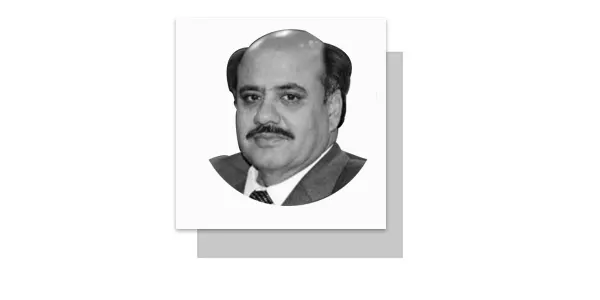
The passing of Senator Irfan Siddiqui marks the end of an era in Pakistan’s political and intellectual landscape.
He was a rare figure whose presence bridged the worlds of journalism, scholarship and politics with dignity, moral clarity and a humane perspective. In a time when the cacophony of media often drowns reflection, Siddiqui’s voice was a measured, enlightening presence that commanded attention without raising its volume. IrfanSiddiqui was not just a columnist; he was a man who embodied integrity, intellect and refined moral judgment. His writing combined insight with ethical purpose and his columns were less about commentary and more about guiding the conscience of the nation. Every sentence he penned bore the weight of thoughtfulness, tempered by a sense of justice and fairness. His work was never simply about critique — it was about illumination. Readers could sense that every opinion had been carefully considered, every argument measured, every word chosen with care. In him, Pakistan had a public intellectual who treated ideas with reverence and politics with responsibility.
Beyond the written word, Siddiqui was a teacher and mentor. Those who interacted with him closely recall a man of exceptional patience and thoughtfulness, who provided counsel quietly yet with lasting impact. I had the privilege of being his long-time reader and later, one of the many who benefited from his guidance. In every conversation, he shared perspective, insight and clarity — a rare gift in a world obsessed with noise and rhetoric. Siddiqui’s professional and personal journey became entwined with that of Quaid Muhammad Nawaz Sharif, whose admiration for him was profound. The trust and respect between them was mutual, extending far beyond formal titles or political necessity. Sharif valued Siddiqui’s counsel in critical decisions, often acknowledging that his opinion carried decisive weight. It was a relationship built on integrity, insight and a shared commitment to the nation’s welfare — a rare example of thoughtfulness and trust in politics.

Perhaps one of the most defining moments of his life came during the turbulent tenure of Imran Khan’s government, when Siddiqui was briefly detained under circumstances that tested many. The episode shocked the nation. Yet, he carried himself with composure and dignity. There was no public complaint, no bitterness in his words — only quiet resilience and unwavering belief in principles over personal grievance. That moment revealed his inner strength and his steadfast commitment to conscience above expedience. As a Senator, Siddiqui was a model of decorum, reason and ethical debate. His speeches were thoughtful, measured and informed — free of rhetoric, rich in substance. In an institution often characterized by noise and posturing, his presence alone elevated the tone. He demonstrated that leadership is not about dominance but about influence through wisdom, reason and respect for others. Siddiqui’s work reminds us that politics without conscience is hollow and journalism without integrity is empty. He argued repeatedly that power must always be guided by ethics and that governance is ultimately a moral undertaking. His writings were a call for reflection, for measured discourse and for maintaining the human element in every political decision. Among colleagues and readers alike, he was revered for his courteous yet firm approach. Disagreement, in his presence, never felt confrontational; critique never became personal. That rare combination of knowledge, humility and ethical courage made him both a mentor and an example, influencing those around him far beyond the span of his professional duties. The passing of IrfanSiddiqui leaves a profound void. It is not merely the loss of a public figure but of a voice that consistently championed reason, ethics and thoughtful debate. At a time when discourse often descends into polarization and vitriol, his absence is keenly felt. Yet, his work — in writing, in speech and in example — endures as a standard to aspire to.
IrfanSiddiqui lived as a man of principle, a scholar of conscience and a statesman of ideas. His legacy is not measured in positions held or titles earned but in the lasting impression he left on the minds and hearts of those who encountered him. Pakistan has lost a guiding voice, but the lessons he imparted — about integrity, reflection and the ethical exercise of power — remain more relevant than ever. In remembering IrfanSiddiqui, we remember that leadership is more than authority, that influence is more than rhetoric and that a life lived with dignity, wisdom and courage leaves an indelible mark on society.
(The writer is former Member AJK Council/Chairman Standing Committee AJK Council, ([email protected])