
WHEN I look at the schooling system in Pakistan today, I sometimes wonder whether we are educating children or simply keeping them busy until they become adults. I say this with some personal experience. Growing up, I probably had some degree of what we now call ADHD, although nobody knew about it then. My parents apparently thought I was not very intelligent, so they kept changing my school. I started at St Helen’s Convent, then went to Beaconhouse, Islamabad Model College for Boys and finally Sadiq Public School. I suppose I tasted almost every flavor of Pakistani schooling. Ironically, I only discovered that I could actually learn when I entered medical school. For the first time, I had some freedom to think, read and learn in my own way. Something strange happened. I became good at it.
I completed my MBBS, a masters and a PhD in public health, passed MCPS and MRCGP International examinations in family medicine, became a professor, published around 45 papers, wrote two books, taught thousands of students and treated thousands of patients. Some very well, some perhaps less well. That is the honest life of a doctor.
Looking back, perhaps I was never bad at learning. I was simply bad at fitting into the way we wanted children to learn. Now my own children are in school, and I fear things have gone further downhill. We have a shortage of career teachers. Teaching is often treated as a temporary job rather than a profession. There is nothing wrong with young graduates waiting for better opportunities or married women looking for meaningful work. But we should also ask what happens when the person teaching your child is herself waiting for life to begin.
Our children spend six hours in school, then Quran classes, then tuition from four to eight. By the time they reach home, they have spent the entire day being educated and very little time actually learning. Private schools have become increasingly corporate. Buildings have to be maintained, salaries paid, rents covered, taxes collected and profits protected. Children can easily become another number on a balance sheet. Schools produce results like factories produce products. Parents pay, schools deliver grades and everyone is happy. Almost.
Meanwhile, the curriculum remains largely designed for another century. We teach children to memorize, reproduce and pass examinations. We still spend hours interpreting ancient love poetry and explaining how a desperately heartbroken poet was actually searching for the love of God. Nothing wrong with poetry. But where is artificial intelligence? Where is financial literacy? Where are communication skills, critical thinking, emotional intelligence, entrepreneurship and problem solving? Pakistan already has more than 25 million children between five and sixteen who are out of school. We cannot seriously talk about creating free thinkers when millions of children are not even getting the chance to become thinkers.
The government allowed private education to mushroom because it could not provide quality education itself. Now we have an enormous education industry, but no clear idea what education is actually meant to produce. Perhaps we need to start again. Education should not produce children who are excellent at remembering answers. It should produce adults who are brave enough to ask better questions. We do not need children who simply know what to think. We need children who know how to think
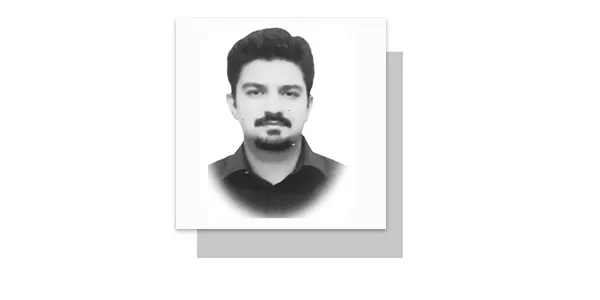
—The writer is Professor of Public Health, Shifa Tameer-e-Millat University, Islamabad.