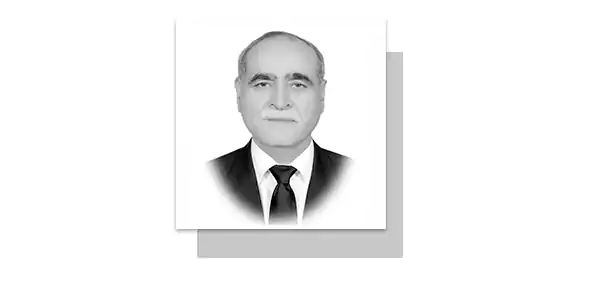
Hassan Aslam Shad
Wars rarely begin when the first salvo is fired. Miscalculations have already accumulated and military leaders have convinced themselves that the risks are manageable. They’re mostly wrong. War is merely the final act of resistance. And it’s often too late by then to stop the consequences.
History offers plenty of examples of leaders making costly blunders. Major conflicts seldom erupt all at once. More often, they emerge from decisions and reactions that steadily reduce the opportunities for detente and reproachment. Each seemingly manageable step narrows the space for diplomacy until the choices become far more difficult than anyone anticipated. That is precisely what makes such situations so dangerous.
That is why the Strategic Mutual Defence Agreement (SMDA) signed between Pakistan and Saudi Arabia last September deserves closer scrutiny. Most commentary on defence agreements focuses on the military balance of power. That is understandable, but it is also incomplete. What is often forgotten is that most consequential security arrangements are equally important for the conflicts they prevent and the stability they preserve.
The difficulty with deterrence is that its success remains invisible. A crisis quietly contained rarely attracts public attention. Failures or wars, by contrast, are immediately obvious, which is why they tend to dominate public debate. Success in deterrence leads to no dramatic headlines.
In the light of the above, the SMDA appears to be an attempt to prevent a conflict. Historically, deterrence has been one of the most misunderstood ideas in international law. The word conjures images of military force, but deterrence is fundamentally – and importantly – about influencing calculations. Why? It seeks to convince adversaries that the costs of a particular course of action outweigh any conceivable gains. At its heart, deterrence is about influencing decisions before events spiral beyond anyone’s control.
The relationship between Pakistan and Saudi Arabia did not begin with the signing of the SMDA. Its genesis lies in decades-old, deep-rooted strategic, military and economic cooperation that has endured changes in government between two closely bonded brotherly countries. The SMDA was, therefore, the next logical step in further crystallizing that relationship. In other words, the SMDA carries real weight because it expresses a relationship that has endured the test of time.
Yet the agreement also speaks to something larger than the bilateral relationship itself. Beyond the bilateral Saudi-Pakistan relationship, I also see the SMDA demonstrating a broader geopolitical shift across the international system. For much of the post-Cold War era, regional security discussions in the Middle East were dominated by the assumption that major powers would remain the principal guarantors of regional security.
That assumption regarding the US security umbrella over the Middle East has been eviscerated. As we examine the strategic trajectory of the region, we see regional actors – led by Saudi Arabia and Pakistan – expanding their influence over issues once considered the exclusive domain of major powers. The centre of gravity is no longer where it once was.
And this is where the rubber hits the road and where the significance of the SMDA becomes clearer. The international system is no longer as concentrated as it once was. China’s role in bringing Saudi Arabia and Iran back to the negotiating table, together with Pakistan’s efforts to facilitate dialogue between Washington and Tehran, demonstrates a broader shift. Major powers still matter, but they are no longer the only states shaping events in the region.
Increasingly, countries are looking to one another, rather than waiting for outside powers, to manage security challenges. That is not simply because they have greater military or diplomatic capacity than before. It also demonstrates a growing belief that responsibility for regional peace ultimately rests with the countries that have the most at stake.
Pakistan and Saudi Arabia may not remain alone for long. Turkey has expanded its military footprint. Egypt continues to occupy a central position in Arab politics. Other regional states steadily recognize that instability respects no borders. That said, most regional Middle Eastern powers now share a common interest in preventing instability. They’re aware that the choices are dire: either invest in preventing crises or live with their consequences and absorb the economic costs.
This is one of the main reasons why the SMDA assumes centre stage. The SMDA may eventually be judged through its wider regional impact, including whether other influential regional actors gravitate towards its underlying vision and join in. There are already reports that Pakistan, Saudi Arabia, Turkey and Egypt are exploring a joint security architecture. This reveals the willingness of these regional states to assume greater responsibility for their own security environments. Whether these discussions mature into long-term institutions is uncertain, but the direction of travel is becoming increasingly clear.
The SMDA should, therefore, be understood as part of a broader story, one that extends beyond Pakistan and Saudi Arabia. It points to the likely seeding of a regional security framework by countries with the greatest stake in sustaining stability. In that sense, it is less an isolated agreement than an early chapter in a wider regional realignment.
Pakistan and Saudi Arabia deserve particular recognition in this regard. During periods of intensified regional tension, including some of the most difficult moments in US-Iran relations, both countries have consistently promoted dialogue rather than confrontation. Their approach embodies an important lesson of diplomacy: it is almost always easier – and far less costly – to prevent a conflict than to deal with one after it has begun.
It is too early to tell whether the SMDA will ultimately lead to a “Green NATO”. Its true significance may become apparent only years from now, when historians assess how regional states responded to an increasingly uncertain strategic landscape. If countries such as Turkey, Egypt, Qatar, Kuwait and others ultimately gravitate towards its underlying vision, the agreement will have evolved far beyond its original bilateral character. It would mark the emergence of a regional security architecture designed, led and sustained by the countries with the greatest stake in preserving regional peace.
Yet even that may not prove to be the SMDA’s greatest legacy. At its core, the agreement is more than a framework for military cooperation between Pakistan and Saudi Arabia. It is an attempt to strengthen deterrence so that military cooperation never has to be tested in war. That is the paradox of successful security arrangements: their greatest victories are the wars that never happen.
If one day commentators speak of the emergence of a “Green NATO”, they should remember that such alliances are not built to fight wars, but to make them less likely. History rarely celebrates the conflicts that were prevented. It remembers the catastrophes that were not. The SMDA may yet earn its place in history not because it prepared two nations for war, but because it helped persuade an entire region that peace was the wiser strategic choice.
—The writer is an international law practitioner, a geopolitical analyst and a graduate of Harvard Law School, U.S.A. Email: [email protected]