ISLAMABAD – Another blow to Pakistanis as the government pushed petrol back above the Rs390-per-litre mark, while giving diesel users a comparatively small reprieve.
Petrol has been increased by Rs3.26 per litre, taking its price from Rs387.40 to Rs390.66, with the new rate coming into force on October 2, 2026. At the same time, the price of high-speed diesel (HSD) has been reduced by Rs1.01, falling from Rs400.35 to Rs399.34 per litre.
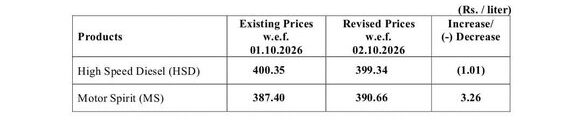
Petroleum Division said the latest adjustment was made after the Oil and Gas Regulatory Authority (OGRA) revised ex-depot prices under the federal government’s petroleum pricing mechanism. Changes in international Platts rates, premiums and other incidentals were among the factors behind the latest revision.
The latest increase comes just a day after petrol had been reduced by 14 paisas to Rs387.40, while HSD had fallen by Rs1.89 to Rs400.35 for October 1. That brief relief has now been wiped out for petrol as the latest adjustment sends the fuel price back above Rs390.
The government continues to impose around Rs114 per litre in taxes and duties on petrol, while the corresponding burden on diesel stands at around Rs100 per litre, according to current reporting.
Petrol Price Trends in Pakistan
The latest increase comes after one of the most turbulent periods for Pakistan’s fuel market. Petrol was around Rs266 per litre in the first week of March, shortly after the US-Iran war erupted on February 28. The conflict triggered concerns over global energy supplies and shipping through the Strait of Hormuz, contributing to a sharp rise in international oil prices.
The pressure intensified dramatically in April. On April 3, petrol hit a record Rs458.41 per litre, while HSD climbed to around Rs520.35. The diesel price had risen from approximately Rs281 per litre after the conflict began. Although prices subsequently retreated from those extraordinary highs, consumers continued to face elevated fuel costs as international oil markets remained volatile.
Pakistan also changed the frequency of fuel-price adjustments during the year. From July, the government moved towards a daily pricing mechanism, allowing OGRA to revise rates in response to international market movements. Before that change, fuel prices had been revised weekly amid concerns over global supply disruptions.
International crude prices remain a major source of pressure. Brent prices moved sharply higher amid continuing geopolitical uncertainty and developments affecting global fuel supplies. Business Recorder reported the front-month December Brent contract trading around $99.77 per barrel, while the expiring November contract settled at $103.50.
As petrol prices continued to squeeze household budgets, the government introduced a targeted relief programme for motorcycle users, rickshaw operators and owners of smaller vehicles. Prime Minister Shehbaz Sharif announced the scheme in September, offering Rs100-per-litre relief to eligible consumers.
The programme covers motorcycles, auto-rickshaws, Qingqis and other eligible two- and three-wheelers, while vehicles with engines of up to 800cc are also included.
The government designed the programme around digital registration and subsidised fuel tokens. The relief is intended to reduce transportation costs for lower- and middle-income consumers most dependent on small vehicles.
The scheme attracted millions of registrations. According to a September 29 review cited by Dawn, approximately 7.60 million registrations had been successfully completed, while 7.71 million tokens had been redeemed by that point.
Petrol Price in Pakistan gets lower for First Day of October