




ISLAMABAD – Pakistan officially assumed the chairmanship of the Organization of Islamic Cooperation (OIC) Ministerial Conference on Women on Monday after Egypt formally handed over the leadership during the ministerial session of the 9th OIC Ministerial Conference on Women in Islamabad.
The chairmanship will remain with Pakistan for the next two years, with Chairman Senate Syed Yousaf Raza Gilani presiding over the conference as its chair.
The transfer marked the culmination of the two-day conference, which brought together ministers, senior officials, and delegates from OIC member states to discuss strategies for advancing the status of women across the Muslim world.
The conference opened on Monday with a series of technical sessions, during which delegates approved the agenda and reviewed progress on the implementation of the OIC Plan of Action for the Advancement of Women. Participants assessed achievements made since the previous ministerial meeting and exchanged views on future priorities.
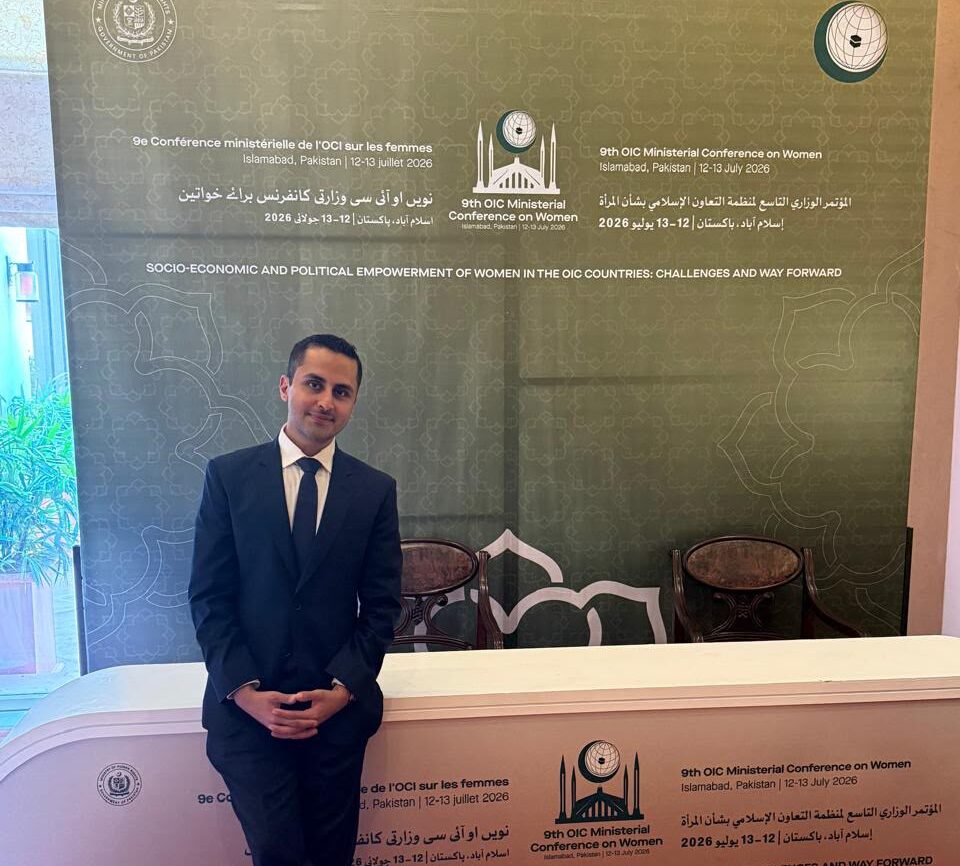
Discussions focused on a wide range of issues affecting women, including education, healthcare, economic empowerment, financial inclusion, political participation, access to employment, social protection, and increasing women’s representation in leadership, science, technology, and digital sectors.
Delegates were also briefed on reports prepared by OIC institutions highlighting initiatives and progress related to women’s development in member states.
Federal Minister for Human Rights Azam Nazeer Tarar has said that empowering women is not only a matter of rights but a social necessity, stressing that no nation can achieve its full potential if half of its population is left behind.
Addressing the 9th Organization of Islamic Cooperation (OIC) Ministerial Conference on Women in Islamabad, the minister said it is the collective responsibility of governments and societies to remove the barriers that prevent women and girls from realizing their full potential.
“No nation can fully realise its potential if half of its population is deprived of opportunities,” he said, adding that ensuring equal access to education, development, and growth for every girl is a fundamental responsibility.
Tarar emphasized that Pakistan remains committed to creating an inclusive environment where women can participate fully in social, economic, and national development. He said the government’s vision is focused on expanding opportunities for women and promoting their active role in all sectors of society.
“Our responsibility is clear: every girl must have an equal opportunity to learn, develop and grow,” the minister said.
He added that the government is translating this vision into practical and meaningful action through policies and initiatives aimed at strengthening women’s rights, expanding access to education and economic opportunities, and promoting their participation in decision-making processes.
The minister reiterated Pakistan’s commitment to working with OIC member states to advance women’s empowerment, social protection, and sustainable development across the Muslim world.
Azam Nazeer Tarar said the international community must not forget the plight of women and girls living in conflict-affected regions. He said special attention should be given to the women and girls of Gaza, Palestine, Afghanistan, and Indian Illegally Occupied Jammu and Kashmir, stressing that they continue to face immense hardships and deserve the global community’s support, protection, and solidarity.
(Developing Story)


