Allama Iqbal remains omnipresent in Pakistan’s national life, yet his philosophy finds little reflection in how the country is governed, educated and lived. While his poetry is recited and ideas celebrated, intellectual independence, self-respect and purposeful action remain elusive. His intellectual journey from Sialkot and Lahore to Cambridge and Munich exposed him to influential philosophical traditions. At Government College Lahore, Thomas Arnold shaped his thinking, while his 1908 doctorate from the University of Munich deepened his engagement with science, reason and modern philosophy, alongside growing concerns about Muslim intellectual stagnation and political subordination.
At the heart of Iqbal’s philosophy was khudi or selfhood. Far from individual arrogance, it represented the cultivation of human potential through knowledge, discipline, courage and purposeful action. In Asrar-e-Khudi (1915), he argued that individuals and societies could achieve greatness only by developing their own intellectual and moral capacities, rather than relying on imitation or dependence. For Iqbal, selfhood was not passive acceptance of circumstances but the ability to question, struggle, create and shape one’s destiny.
Closely connected to khudi was Iqbal’s concept of ijtihad, the continuing exercise of independent reasoning. In his lectures on the reconstruction of religious thought in Islam, he challenged the intellectual stagnation that occurs when inherited interpretations become unquestionable. He saw no inherent conflict between faith and reason or between tradition and intellectual progress. Every generation, he believed, had a responsibility to engage with new knowledge, reconsider established ideas and interpret its circumstances afresh. His argument was not against tradition but against turning tradition into an obstacle to thought.
Iqbal’s political vision was an extension of his philosophy of selfhood and collective awakening. In his historic Allahabad Address of 1930, he advocated a consolidated Muslim political unit in north-western India, believing that a community needed political autonomy to develop its identity, exercise intellectual freedom and shape its own future. He died on April 21, 1938, nine years before Pakistan emerged, without witnessing the country so closely associated with his political thought. He left no detailed blueprint for its institutions, but a more fundamental challenge, to build a society in which freedom, knowledge, dignity and collective self-development could flourish.
That challenge is particularly urgent in Pakistan, where nearly two-thirds of the population is below thirty. This is the generation to whom Iqbal addressed his most powerful verses, holding up the Shaheen, as a symbol of ambition, courage and independence. Yet the country’s opportunities fall far short of that vision. Approximately 20 million children remain out of school, while 2.6 million young people aged 15 to 24 are unemployed and more than a quarter are neither working nor studying. Behind these figures are millions of unrealized ambitions, graduates without jobs and talented young people seeking opportunities abroad. This is not merely an employment or education crisis. It is a failure to develop the human potential that lay at the heart of Iqbal’s philosophy.
The contradiction extends beyond education and employment. Iqbal’s emphasis on independent thought sits uneasily with institutions that discourage questioning, universities struggling to sustain research and public spaces where disagreement is too often treated as disloyalty. His philosophy demanded intellectual courage, but our institutional culture frequently rewards conformity. He wanted individuals capable of thinking independently, while our systems too often teach them to wait for approval, seek connections and avoid uncomfortable questions.
What would honouring him actually look like? Not a longer weekend, another official ceremony or another round of speeches. It would look like a qualified teacher in every village classroom and a university capable of paying its professors, funding research and renewing its academic journals. It would look like a job going to the best candidate rather than the best-connected and a farmer able to earn a dignified living from his own harvest. It would mean a country where a young person can disagree openly, question authority and defend an unpopular argument without putting an academic or professional future at risk.
These are not distant philosophical ideals. They are practical conditions for developing the self that Iqbal described. Khudi cannot flourish where talent is subordinated to patronage, education is inaccessible, merit is negotiable and economic insecurity consumes the energy of an entire generation. Nor can ijtihad survive where questioning is discouraged and intellectual independence is mistaken for defiance. A nation cannot produce falcons while designing institutions that keep their wings folded.
Iqbal’s greatest contribution was his belief that human beings are not prisoners of their circumstances. Individuals can develop, societies can transform and nations can rise through knowledge, determination and purposeful effort. His optimism was not an invitation to complacency. It demanded responsibility. He expected people to participate in shaping their destiny rather than endlessly blaming history, circumstances or others for their failures.
Next November, Pakistan will mark 150 years since his birth. We can arrive at that anniversary with another round of speeches, ceremonial tributes and poetic recitations or with a country that has begun to answer his question. Somewhere in Pakistan tonight, a graduate is refreshing a job portal on the eve of a holiday named for the philosopher who told his generation to rise. Iqbal asked the young to be falcons.
We built them cages and then complained that they would not fly.The sky Iqbal imagined remains within reach. What Pakistan has yet to provide is the freedom, education and opportunity its young need to fly.
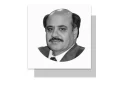
—The writer is PhD in Political Science, and visiting faculty at QAU Islamabad.