
I have just returned from Quetta, reflecting on what this journey truly yielded.
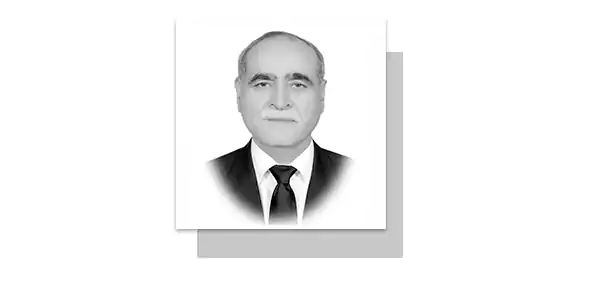
The moment I asked myself this question, a luminous face came to mind—short in stature, radiant in presence and speaking with gentle grace. He said: “This Ummah is not adversarial; it is integrative.” It was more than a sentence; it was a roadmap—a diagnosis of the Muslim world’s dilemma and a prescription for its healing. Before explaining its significance, the context must be shared. Some time ago, Professor Dr. Abdul Rauf Rafiqui, head of the Iqbal Academy, advised me to prepare for Quetta. Sohail bin Aziz, the active Director of the Rehmatul-lil-Alameen Authority, had already informed me about the Academy’s plan to hold an international conference there, in collaboration with the Rehmatul-lil-Alameen Youth Club. As a member of the Authority, I was also invited.
The Youth Club is based at Taameer-e-Nau Public College, coordinated by the energetic and sincere Hafiz Tahir. Describing him is not easy—his heart beats with purpose, devotion and love for the Prophet (peace be upon him) and the plight of the Ummah moves him to tears. With the support of Brigadier (R) Abdul Jalil, Principal Professor Abid Maqsood and the Trust’s team, he organized the conference with such excellence that scholars from across Pakistan were truly impressed. Their hospitality—especially by Professor Afzal and young lecturer Zirak Khan—was exemplary, leaving us deeply grateful. Since it was an Iqbal conference, Iqbal’s ideas naturally took center stage. And with Iqbal comes discussion of Islam, the Ummah and the challenges of the Muslim world. But the pains of Baluchistan too surfaced, transforming the event from an academic conference into a mirror of collective concerns.
Scholars from across Pakistan participated, including Professor Dr. Saleem Mazhar, Dr. Najeeba Arif, Dr. Iqbal Shahid, Dr. Haroon-ur-Rashid Tabassum, Dr. Sher Ali, Brigadier Dr. Waheed-uz-Zaman Tariq and others. International experts also joined—from Bangladesh, Maldives, Iran, Egypt and the UK. Their talks revolved around khudi, awakening, movement and unity—key pillars of Iqbal’s thought. Dr. Najeeba Arif spoke on the West’s moral failures; others linked Iqbal’s emphasis on struggle to the recent tragedy in Gaza. Nadeem Ahmed Khan of Khubaib Foundation delivered a powerful lecture, reciting Iqbal’s verses with classical rhythm.
During the Q&A session, two students asked about the situation in Balochistan. Nadeem Ahmed Khan explained that Iqbal’s thought is a holistic package—once embraced, regional grievances naturally give way to a broader sense of collective welfare. Co-chairing the session with Naseem Lehri, I shared that the entire country feels Baluchistan’s pain. Whenever distressing news emerges, Pakistan—Punjab included—grieves. Voices rise, protests are held and solidarity is expressed nationwide.
I added that God has blessed Baluchistan with immense natural wealth and Pakistanis believe these resources belong first and foremost to Baluchistan. They should uplift the province, offering education, employment and opportunity. The nation not only acknowledges this right but is ready to support Baluchistan in securing it. I stressed, however, that rights are achieved not through violence but through democratic and public struggle. Bloodshed—especially attacks on innocent travelers—creates division and weakens the support Baluchistan enjoys across Pakistan. The audience responded with warm applause. After the session, groups of young people approached me, agreeing with my views. It became clear that misunderstandings between Baluchistan and other regions stem not from hostility, but from a gap in communication. This conference, therefore, not only revived Iqbal’s thought but initiated a fresh process of reconnecting Baluchistan with the rest of the country.
The Rehmatul-lil-Alameen Authority is also contributing to this effort. Its provincial office has been set up at Taameer-e-Nau Trust and will soon be inaugurated. In the closing session, Director Sohail bin Aziz conveyed Chairman Khurshid Ahmad Nadeem’s message, announcing an international Seerah Conference planned for next April. The true highlight of the conference, however, was the address by Allama Zaid Gul Khattak. He observed that many Muslims today consider non-Muslims their enemies, entering a permanent psychological state of conflict. This mindset fuels global tension and obstructs peace. Islam, he reminded us, teaches something entirely different: all human beings are children of Adam. Muslims are part of this family—not in conflict with it. Differences in belief do not require hostility; they call for compassion, good character and gracious conduct. This is the key to solving the challenges facing Muslims and ensuring humanity’s survival.
Earlier, Hafiz Tahir had posed a moving question: the Ummah lies lifeless—should it be buried or revived with new strength? Allama Zaid Gul Khattak answered this with a single profound sentence, reminding us that Iqbal’s thought points in the same direction. I had long heard that true elders attract hearts and radiate grace. I found Allama Zaid to embody this truth. At the Quetta airport lounge, anyone who saw him felt drawn toward him, requesting prayers. He would kiss their forehead and raise his hands in supplication. I believe that discovering Allama Zaid Gul Khattak was the most precious gift of my visit to Quetta.
—This writer is former advisor to the President of Pakistan, author & mass media theorist.
(farooq.adilbhuta@gmail,com)