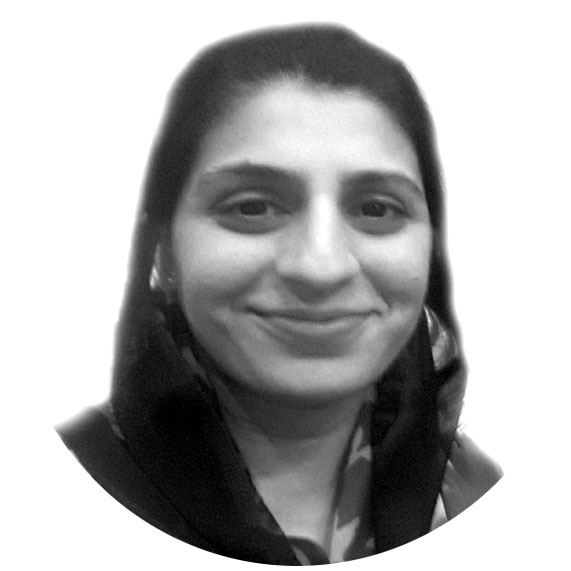
Huma Balouch
THE current financial market turmoil, crude oil prices slump and temporary truce in all armed conflicts around the world in response to the COVD-19 pandemic chaos makes it clear that the intrinsic value of health sector goes beyond its contribution to human development. The catastrophic impact of COVID-19 crisis and the highest one-day death toll being reported in developed countries starkly spotlights the centre of gravity on the health related issues that receive a lot less attention than economic sector, but are equally or perhaps even more crucial from a long-term development perspective for developed as well as developing countries. The massive educational, business, industrial and other workplaces closures hinge strongly on the premise that no one is left behind in terms of health is crucial as a precondition and driving force for inclusive economic growth and development, poverty alleviation and universal access to education. Of course, COVID-19 is not the first global public health crisis. However, this time the social and economic disruption and uncertainty created by the outbreak has vast and far-reaching impact on every sector and every individual.
In view of inadequate responses to the Millennium Development Goals to overcome the challenges of a changing climate and weather extremes, conflict, inequality, hunger and malnutrition, water insecurity, rapid urbanization and disease outbreaks that left us all more vulnerable, several countries learned their lessons and responded far more rapidly to United Nations’ universal call to action for SDGs. As actions which may contribute to one of the SDG targets may also have an impact on other targets, SDGs are quite clearly more interdependent and integrated. Such recognition is especially crucial as some overarching issues, such as pandemics, can affect multiple targets simultaneously and exponentially. For instance, the ranking of some of the countries with leading positions according to their GDP (PPP) per capita drops significantly in the Human Development Index when economic dimensions of health inequality is taken into account. Likewise, achieving equitable access to healthcare requires going well beyond the health sector to take action in related areas such as education, income and social protection, water and sanitation, governance, and Information and Communication Technologies (ICTs) industry. The relationship between the role of health equity and growth in ICTs adoption also works both ways around. Such interlinked nature of SDGs and its explicit health-related targets provide a new context as there is a health component affecting achievement of many of the targets such as attaining gender equality, reducing poverty and improving education, not just those under SDG 3 (Good Health & Well-being – Ensure healthy lives and promote well-being for all at all ages).
Following the UN Sustainable Development Summit, held for the adoption of the post-2015 development agenda, and in response to the global emergence of more than thousand epidemic events in more than hundred countries in just 15 or so years, some hopeful signs were seen during 2016-2017, when UN Secretary-General’s Global Health Crises Task Force (in 2016) and WHO-World Bank joint Global Preparedness Monitoring Board (in 2017) were established to mobilize and strengthen collective national, international and multilateral action for global health security and emergency preparedness. But despite considerable economic upheaval caused by viral outbreaks, and clearly identified mechanisms and policy solutions by the relevant health panels, an overwhelming majority of countries failed to make a fundamental shift in their health policies and were unprepared for the next devastating pandemic outbreak.
SDGs provided both an obligation and an opportunity to the leaders to rethink development systems and approaches to overcome problems to collective action in the social, economic, and environmental dimensions of sustainable development. Thus far, the United Nations had declared climate change as single biggest cross-border threat that gravely threatens the global progress and its sustainability. The United Nations and its relevant agencies and operational arms urge the countries to give renewed impetus to the mitigation, adaptation and building resilience to the climate change from a technological, business, legislative, and even political perspective. Unfortunately, the enormous threat that climate change already poses to human health could not duly mobilise the leaders of the developed and developing countries to take action. The Food and Agriculture Organization (FAO) and World Health Organization (WHO) of the United Nations has intimately linked 9 million deaths worldwide from hunger, 7 million deaths from air pollution, 3.4 million from water-related diseases, and 150,000 deaths from extreme weather every year to global climate change. An unmitigated climate change is expected to cause quarter million additional deaths a year between 2030 and 2050. We are witnessing the adverse impacts of climate change now faster than at any point in the world’s history, however it failed to generate sufficient sense of urgency to take measures towards building resilience and reducing vulnerability, as envisioned in the 2030 Agenda for Sustainable Development and SDGs. — To be continued.
—The writer is Senior Assistant Director at COMSATS Secretariat, working to promote and map awareness of Sustainable Development Goals (SDGs) among COMSATS’ Network.
COVID-19 crisis: An unprecedented push for SDGS action

Related Posts

Article"}],"exclude_current_post":true,"useQueryEditor":true,"user_id":24,"time":1764018053,"signature":"c8aa3842b9354b8f1c1502eef5af9de6","post_type":"post","post__not_in":[75238],"tax_query":[{"taxonomy":"category","field":"term_id","terms":[31]}],"paged":1}" data-page="1" data-max-pages="4046" data-start="1" data-end="4">