
ISLAMABAD – A new chapter in Pakistan’s nuclear power story is taking shape as a key safeguards agreement cleared another major hurdle for 1,200-MW Chashma-5 nuclear reactor. With construction moving rapidly and electricity generation targeted for 2028, Pakistan is now one step closer to adding a powerful new source of low-carbon energy to its national grid.
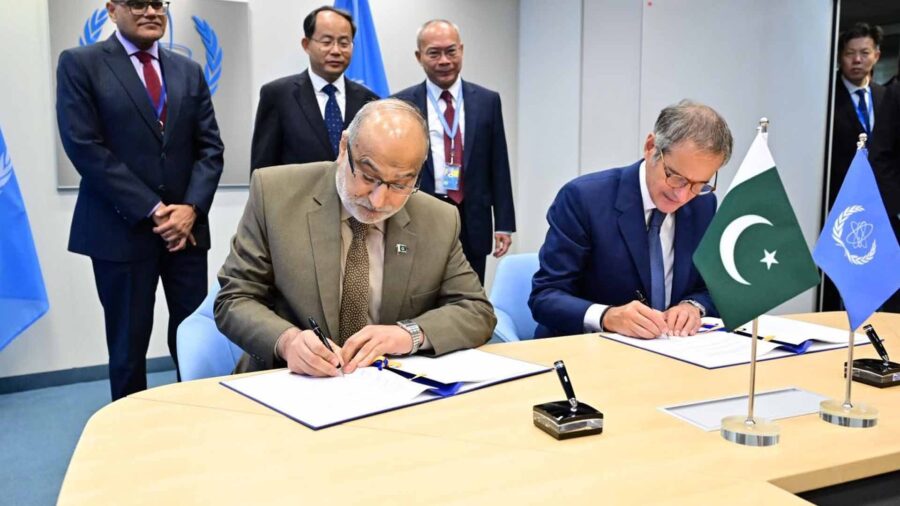
The country moves closer to bringing its next-generation Chashma-5 nuclear reactor into operation, with Pakistan and the International Atomic Energy Agency (IAEA) formally signing a safeguards agreement for the 1,200-megawatt Chashma-5 nuclear power plant. The agreement, signed in Vienna, marks a significant step forward for Chashma Nuclear Power Plant Unit-5, or C-5, as construction of the massive nuclear reactor continues at a rapid pace.
Chairman Pakistan Atomic Energy Commission (PAEC) Dr. Raja Ali Raza signed agreement with IAEA Director General Rafael Mariano Grossi at the Agency’s headquarters during the IAEA’s 70th General Conference. The signing ceremony was witnessed by Shan Zhongde, Chairman of the China Atomic Energy Authority (CAEA), highlighting the central role of China-Pakistan cooperation in the development of Chashma-5.
The new Chashma-5 nuclear reactor will have a gross electrical capacity of 1,200 MW(e) and is scheduled to begin generating electricity in 2028. Construction is already well advanced, with the project achieving several major milestones. One of the most significant was the installation of the reactor building dome ahead of schedule.
Once operational, the Chashma-5 reactor is expected to inject a substantial amount of reliable, low-carbon and relatively low-cost electricity into Pakistan’s national grid.The latest agreement is not simply a construction milestone. It establishes the safeguards framework for the Chashma-5 nuclear reactor under the IAEA.
IAEA Board of Governors unanimously approved the safeguards agreement in March 2026, and the formal signing in Vienna now represents another crucial step toward its implementation. The development also signals continued international engagement with Pakistan’s civilian nuclear power program and reflects confidence in Pakistan’s stated commitment to the peaceful use of nuclear energy, nuclear non-proliferation and international safeguards obligations.
Chashma-5 will join an existing nuclear power fleet that has become an increasingly important part of Pakistan’s electricity generation system. Pakistan currently operates six nuclear power plants with a combined installed capacity of 3,530 MW(e). The existing plants have maintained an average capacity factor of more than 90 percent, demonstrating high levels of operational availability.
Pakistan’s nuclear reactors have also accumulated more than 100 years of combined operational experience, giving the country extensive experience in nuclear power generation.
According to the information presented by Pakistani officials, this operational record forms the basis of Pakistan’s claim that it has the experience to operate nuclear power plants safely and securely while meeting international standards and safeguards requirements.
The addition of another 1,200 MW nuclear reactor would significantly expand Pakistan’s nuclear generation capability. Once Chashma-5 begins producing electricity, it is expected to provide a dependable source of power with relatively low carbon emissions, potentially helping Pakistan reduce pressure on conventional energy sources while meeting growing electricity demand.
The project is also being linked to Pakistan’s wider objectives of energy security, climate action and sustainable economic growth. For Pakistan’s power sector, Chashma-5 is therefore more than another reactor under construction—it is a major investment in the country’s future electricity mix.
The latest development also brought Pakistan and China together at the highest levels of their civilian nuclear cooperation. A bilateral meeting was held between Pakistani and Chinese delegations to discuss ongoing and future cooperation in the peaceful applications of nuclear science and technology.
Pakistani delegation was led by PAEC Chairman Dr. Raja Ali Raza Anwar, while the Chinese delegation was headed by CAEA Chairman Shan Zhongde. Muhammad Kamran Akhtar Malik, Pakistan’s Ambassador to Austria and Permanent Representative to the IAEA, was also present.
The meeting underlined the continuing importance of Pakistan-China cooperation in nuclear science and technology and the peaceful applications of nuclear energy.
Chashma-5 agreement was part of a broader Pakistani presence at the IAEA General Conference. Dr. Raja Ali Raza Anwar also participated as a key speaker at two high-level side events organized by the China Atomic Energy Authority, China’s Permanent Mission in Vienna and leading Chinese institutions involved in nuclear science and its peaceful applications.
His participation highlighted Pakistan’s growing emphasis on the peaceful applications of nuclear technology, from electricity generation to wider scientific and technological development.
With construction of Chashma-5 moving forward, the reactor building dome already installed ahead of schedule and the safeguards agreement formally signed, the project has cleared another major hurdle on its path to operation.
For country seeking greater energy security and more reliable electricity generation, Chashma-5 could become one of the most significant additions to Pakistan’s nuclear power infrastructure—expanding a nuclear fleet that already comprises six plants, 3,530 MW of installed capacity and more than 100 years of combined reactor operating experience.