
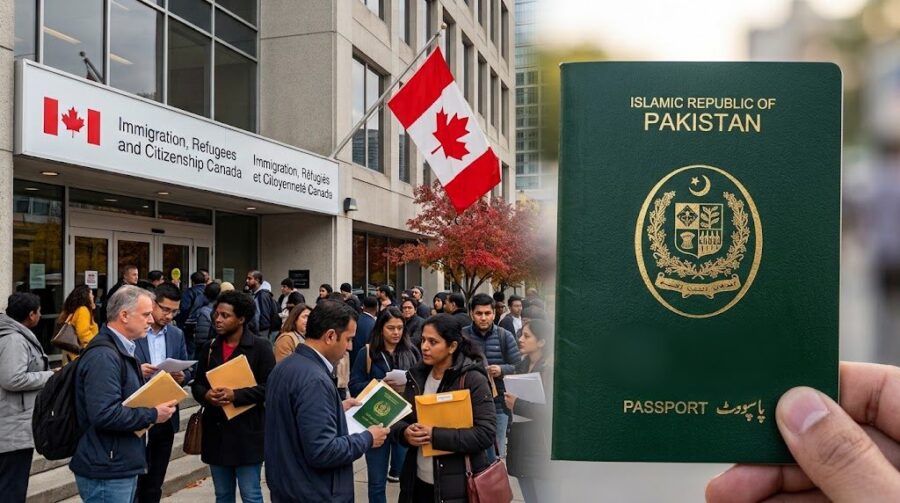

ONTARIO – Canada’s immigration framework underwent more changes following the enactment of Bill C-12, formally known as the Strengthening Canada’s Immigration System and Borders Act. The legislation received Royal Assent on March 26, 2026, and is recorded as Chapter 4 of the Statutes of Canada, 2026.
The law introduces measures intended to strengthen border management, improve the administration of asylum claims, facilitate appropriate information sharing between government authorities, and expand the government’s ability to respond to serious problems involving immigration applications and documents.
Although some provisions establish new administrative mechanisms, others build upon requirements that already existed under Canadian immigration law. Understanding this distinction is important for applicants, particularly those applying for temporary residence, study permits, work permits, or permanent residence.
Canada’s Asylum System
One of the key components of Bill C-12 concerns the circumstances in which asylum claims may be referred to the Immigration and Refugee Board (IRB).
Under the new eligibility framework, certain claims may be excluded from referral to the IRB. The relevant rules apply to claims made on or after June 3, 2025.
Delayed asylum
A person who makes an asylum claim more than one year after first entering Canada may be affected if their initial entry occurred after June 24, 2020.
Claims following irregular border entry
Individuals who enter Canada irregularly between designated ports of entry along the Canada–United States land border and submit an asylum claim more than 14 days later may also fall within the new restrictions.
These provisions are intended to manage the volume of asylum applications and discourage practices considered inconsistent with the objectives of the refugee protection system. Nevertheless, exclusion from referral to the IRB does not necessarily mean that every form of protection assessment is unavailable. Depending on the circumstances, an affected individual may be eligible for a Pre-Removal Risk Assessment (PRRA).
Administrative Reforms to Refugee Claim Processing
Bill C-12 seeks to improve how asylum applications are submitted, reviewed, and managed. The measures include changes to online application procedures and requirements designed to ensure that claims are sufficiently complete before being scheduled for consideration by the IRB. The legislation also addresses the circumstances in which claimants must be physically present in Canada for decisions and establishes rules concerning the abandonment or withdrawal of claims.
Collectively, these changes are intended to create a more structured process, reduce administrative delays, and clarify the obligations of people seeking refugee protection.
Government Access to and Sharing of Immigration Information
Another area addressed by the legislation is the exchange of immigration-related information among government institutions. IRCC may share specified information, including identity details, immigration status, and document-related records, with federal, provincial, and territorial authorities under the applicable legal framework.
Written agreements and privacy protections are important elements of this arrangement. The objective is to support administrative coordination while establishing conditions for the appropriate handling and disclosure of personal information.
For applicants, this reinforces the importance of providing consistent and accurate information throughout their dealings with Canadian immigration authorities.
More Authority Over Immigration Applications and Documents
A particularly feature of Bill C-12 is the introduction of additional mechanisms for dealing with immigration applications and documents when circumstances justify government intervention in the public interest.
Subject to the legislation’s requirements, the Governor in Council may issue an Order in Council authorizing measures such as:
- Discontinuing the acceptance of specified categories of applications.
- Pausing or ending the processing of groups of immigration applications.
- Suspending, cancelling, or varying certain categories of immigration documents.
The documents potentially affected include work permits, study permits, temporary resident visas, electronic travel authorizations, and permanent resident visas.
These measures are intended to address defined circumstances, including administrative errors, fraudulent activity, public health risks, public safety concerns, and threats to national security.
The legislation also provides a framework under which regulations may authorize immigration officers to take comparable actions in specified individual cases. The availability and scope of those actions depend on the relevant statutory provisions and regulations.
Are individual applications automatically affected by the new law?
No. Bill C-12 should not be interpreted as establishing an automatic rule that every application containing an incorrect document must be suspended or cancelled under the new powers.
The broader document-management mechanisms are principally designed to address categories of applications or documents where intervention is justified by specified public-interest considerations. Any individual action must be assessed under the legal authority applicable to that situation.
The legislation also distinguishes between an immigration document and the legal status held by its recipient. The document-related powers described above should not be treated as a general authorization to revoke permanent resident status or otherwise change a person’s underlying immigration status.
Similarly, the relevant document-management provisions should not be confused with the separate rules governing asylum claims made in Canada.
Although Bill C-12 expands the government’s administrative options, Canadian immigration authorities already had substantial powers to assess applications and take action when applicants failed to satisfy existing legal requirements.
Before the new legislation, applications could be refused where the evidence was insufficient, documents were forged, information was false, or other statutory requirements were not met. Incomplete applications could also be returned without a substantive decision.
Misrepresentation is particularly serious. Depending on the circumstances and applicable legal provisions, providing false or misleading material information may lead to refusal and a period of inadmissibility of five years.
Consequently, the obligation to provide truthful information and authentic supporting evidence did not originate with Bill C-12. The legislation adds further tools for managing broader administrative and public-interest concerns rather than replacing the existing legal framework.
What Immigration Applicants Should Do
The practical implications of these developments are relevant to individuals seeking temporary or permanent immigration status in Canada. Applicants should take reasonable steps to ensure that their submissions meet the requirements of the relevant immigration program.
Document authenticity: All supporting records should be genuine and capable of verification.
Consistency of information: Details concerning employment, education, finances, travel history, and personal circumstances should be accurate and consistent across forms and supporting evidence.
Application completeness: Applicants should review the applicable checklist and submission instructions before filing their applications.
Professional assistance: Anyone requiring immigration advice should consult official government resources or a representative authorized to provide the relevant services in Canada.
Protection against fraud: Applicants should be cautious of agents who promise guaranteed outcomes, encourage the use of fabricated evidence, or recommend concealing relevant information.
Following these practices can help reduce avoidable errors and the risk of adverse immigration decisions. However, no document checklist or professional service can guarantee approval.
Implementation and Legal Considerations
The practical effect of Bill C-12 depends on the specific provision involved, its commencement date, the applicable regulations, and any relevant judicial decisions. The asylum eligibility provisions have prompted concerns about access to refugee protection and the circumstances in which claims can receive a full hearing. Legal proceedings and subsequent interpretations may affect how particular provisions are applied.
For this reason, applicants should distinguish between the wording of the legislation, regulations made under it, and operational guidance issued by IRCC. These sources serve different purposes and should be considered together when determining how a rule applies to an individual case.
Canada visit visa from Pakistan: Required bank balance for 30 day trip



