
Observer Dialogue Podcast
For more than a decade, the China-Pakistan Economic Corridor (CPEC) has dominated conversations about Pakistan-China relations. It has been measured in kilometres of highways, megawatts of electricity generated, ports developed and infrastructure financed. Those achievements have undoubtedly transformed Pakistan’s economic landscape and cemented CPEC as the flagship project of China’s Belt and Road Initiative.
But perhaps the most important question today is no longer what CPEC has accomplished—it is what comes next.
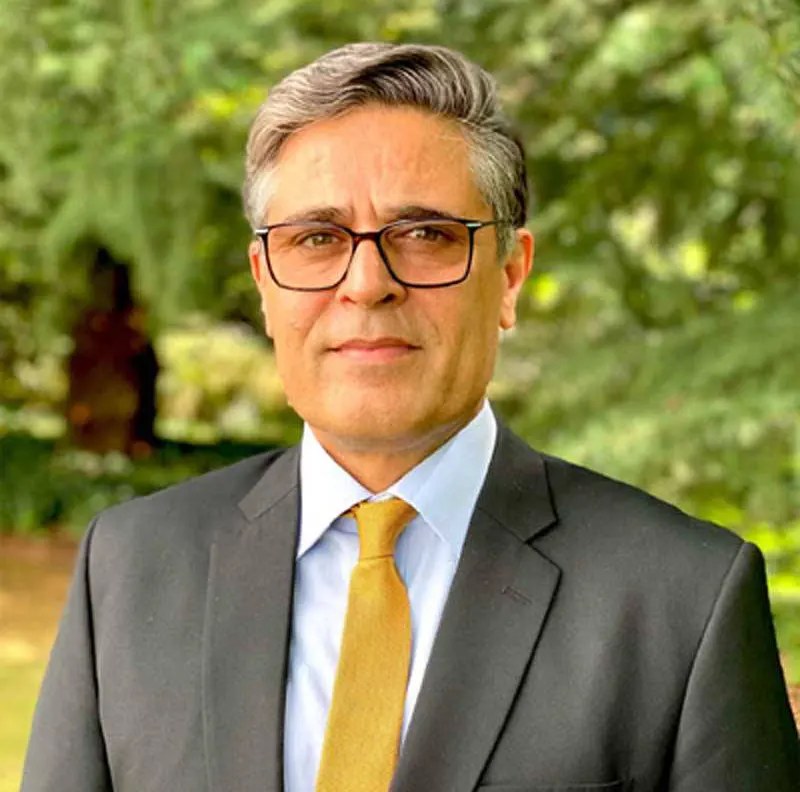
As Pakistan and China celebrate 75 years of diplomatic relations, the bilateral partnership is entering a new era. The conversation is shifting beyond infrastructure towards industrial development, technology, investment, innovation, defence cooperation and scientific collaboration. That was the central theme of my recent conversation with H.E. Khalil Hashmi, Pakistan’s Ambassador to China, on Observer Dialogue, where we discussed how one of Pakistan’s most important strategic relationships is adapting to new economic realities and global challenges.
The Foundation Was Never the Finish Line
One of the Ambassador’s most compelling observations came in the form of a remarkably simple analogy.
“CPEC is like the hardware, and CPEC 2.0 is like the software.”
In just a few words, Ambassador Hashmi captured the transformation now taking place.
The first phase of CPEC focused on building the physical backbone of Pakistan’s economy. Roads, power projects, ports and transport networks created the conditions necessary for economic growth. But infrastructure was never meant to be the destina-tion—it was the starting point.
Today, the conversation has shifted towards what that infrastructure can enable. CPEC 2.0 places greater emphasis on agricul-ture, mining and minerals, information and communication technology (ICT), and industrial cooperation. Together, these sectors combine Pakistan’s natural advantages with China’s technological capabilities and industrial expertise, creating opportunities to generate long-term economic value rather than simply expanding physical connectivity.
The Real Test Begins Now
If the first phase of CPEC was about building infrastructure, the next phase will be judged by how effectively Pakistan converts that foundation into productivity, innovation and sustainable growth.
One of the strongest themes to emerge from my discussion with Ambassador Hashmi was the growing importance of business-to-business engagement. Increasing investment alone will not determine success. The real measure will be whether Pakistan can strengthen its productive capacity, create higher-value industries and expand its export potential.
Sector-specific business forums—from agriculture to pharmaceuticals, biotechnology and healthcare—reflect a more targeted approach to economic cooperation. Rather than focusing solely on large-scale public projects, the emphasis is increasingly on cre-ating joint ventures that bring together Pakistani entrepreneurship with Chinese capital, technology and manufacturing expertise.
This evolution signals an important shift in bilateral relations. Government-to-government cooperation laid the groundwork; the private sector now has an opportunity to drive the next phase. If these partnerships succeed, they can help modernise industry, improve competitiveness and position Pakistan more strongly within regional and global supply chains.
A Partnership Reaching New Frontiers
Economic cooperation may define the public narrative, but it is only one dimension of a relationship that has become increasingly comprehensive.
Defence cooperation remains one of the strongest pillars of Pakistan-China ties. Joint production of platforms such as the JF-17 Thunder, the induction of the J-10C, collaboration on naval capabilities and submarines, and regular military exchanges reflect a partnership built on strategic trust and decades of institutional cooperation.
As Ambassador Hashmi noted during our conversation:
“Most of our equipment, technology and different platforms come from China—and that’s no secret.”
Equally important is the evolution of diplomacy itself. Modern diplomacy extends beyond political engagement to include business promotion, academic collaboration, vocational training, media outreach and people-to-people exchanges. Strengthening these connections will be just as important as signing new agreements.
Perhaps the clearest illustration of how far the relationship has evolved lies in space cooperation. What once seemed an ambitious aspiration has become a tangible area of collaboration. From satellite communications and Earth observation technologies to scientific research and Pakistan’s first astronaut travelling to space through cooperation with China, the partnership continues to expand into new frontiers.
As Ambassador Hashmi remarked,
“It would be fair to say that Pakistan-China friendship has now reached outer space.”
It is a memorable line, but it also reflects a broader reality. The Pakistan-China relationship has evolved far beyond the frame-work through which it was once understood. What began with diplomacy and later expanded through infrastructure is now entering a phase shaped by technology, industrial transformation, scientific collaboration and greater engagement between businesses, institutions and people.
As both countries commemorate 75 years of diplomatic relations, the challenge is no longer to demonstrate the strength of the partnership—it has already done so repeatedly. The greater challenge is ensuring that the next phase delivers tangible economic opportunities, enhances Pakistan’s productive capacity and prepares both nations for a rapidly changing global economy.
The future of Pakistan-China relations will not be measured solely by the roads that have been built or the investment figures that make headlines. It will be measured by the industries created, the technologies developed, the innovations shared and the opportunities generated for future generations.
That, perhaps, is the real significance of CPEC 2.0. It is not simply the next phase of a flagship project; it is a recognition that strategic partnerships must evolve alongside the ambitions of the nations they serve.
If CPEC built the road, CPEC 2.0 is about deciding where that road leads. And for Pakistan, the destination will depend not only on the strength of its partnership with China, but on how boldly it chooses to seize the opportunities that partnership now presents.