
Field Marshal Asim Munir, Pakistan’s Chief of Army Staff and Chief of Defence Forces (CDF), visited Tehran on May 22–23, 2026, in what has emerged as a significant diplomatic effort aimed at reducing tensions between Iran and the United States. The visit, his second to Iran since the outbreak of the Iran-US-Israel conflict on February 28, 2026, reflects Pakistan’s growing role as a mediator in one of the most dangerous geopolitical crises in recent years.During the visit, Field Marshal Asim Munir held extensive meetings with the Iranian President, Speaker of Parliament, and Foreign Minister. According to official statements, the discussions focused on achieving a durable ceasefire, restoring regional stability, and creating a framework for sustained negotiations between Tehran and Washington. Pakistan’s military leadership described the visit as “short but highly productive,” emphasizing that meaningful progress had been made toward a broader understanding between the two sides. The Tehran meetings are being viewed as part of Pakistan’s wider diplomatic initiative to prevent further escalation in West Asia. Regional observers believe that discussions also covered the contours of a possible Memorandum of Understanding (MoU) that could serve as the basis for future negotiations between Iran and the United States. While no formal agreement has yet been announced, diplomatic sources suggest that recent exchanges between Tehran and Washington have shown encouraging signs of flexibility. FM Asim Munir has steadily emerged as a central figure in backchannel diplomacy since the beginning of the conflict. During the early stages of the war, Pakistan quietly opened communication channels with both Washington and Tehran, urging restraint and dialogue. At a time when military escalation appeared inevitable, Islamabad attempted to create space for negotiations despite intense regional polarization.
Initially, both the United States and Israel appeared convinced that military pressure would force Iran into accepting their demands. However, Iran’s resistance and its ability to sustain prolonged confrontation altered the strategic calculations of the opposing side. Despite extensive aerial strikes, missile attacks, and severe economic pressure, Tehran refused to surrender its strategic positions. The resilience displayed by Iran ultimately pushed all parties toward reconsidering the option of diplomacy.Recognizing the dangers of a prolonged conflict, Pakistan offered to facilitate direct negotiations between Iran and the United States. This initiative resulted in the Islamabad Talks held on April 10–11, 2026. Although the talks did not produce a final agreement, they succeeded in opening a formal diplomatic channel between the adversaries.
Iran maintains that its nuclear programme is entirely peaceful and aimed at energy generation and scientific advancement. Tehran has repeatedly argued that it remains committed to international monitoring mechanisms under the International Atomic Energy Agency (IAEA). Another major source of confrontation has been the Strait of Hormuz, one of the world’s most critical maritime trade routes. Iran had initially agreed to reopen the Strait in April 2026 following diplomatic engagement led by Pakistan. However, Tehran later reinstated restrictions after the continuation of the US naval blockade on Iranian ports. Pakistan’s mediation efforts have since focused on ensuring uninterrupted trade and energy flows while persuading all parties to avoid actions that could destabilize the global economy further. Many international observers consider the continuation of naval blockades and military coercion as counterproductive. Iran views the conflict as an existential struggle linked directly to its sovereignty and national integrity. History has shown that external military pressure often strengthens national unity within Iran rather than weakening the state. Consequently, a sustainable peace can only emerge through dialogue, mutual respect, and diplomatic compromise rather than coercion.Within this difficult environment, Pakistan’s diplomatic balancing has attracted considerable international attention. FM has sought to maintain constructive relations with the United States, Gulf countries, China, and regional states while simultaneously promoting de-escalation. His approach has emphasized strategic neutrality and regional stability rather than bloc politics. FM Asim Munir’s diplomatic engagement demonstrates the increasing importance of military diplomacy in conflict resolution. His efforts have contributed to temporary ceasefire arrangements and created opportunities for renewed negotiations between Tehran and Washington. More importantly, they have helped prevent the conflict from expanding into a wider regional war with devastating global consequences.The latest Tehran visit underscores Pakistan’s commitment to promoting peace through sustained diplomatic engagement. By encouraging dialogue, confidence-building measures, and negotiated settlements, Islamabad is positioning itself as a responsible regional actor seeking long-term stability in West Asia.
Although major differences between Iran and the United States remain unresolved, recent diplomatic efforts suggest that both sides may now recognize the high costs of continued confrontation. If current negotiations continue with sincerity and political will, the possibility of a lasting settlement cannot be ruled out. Pakistan’s mediation, led by Field Marshal Asim Munir, may therefore prove to be a decisive contribution toward ending one of the region’s most dangerous conflicts and restoring peace to the broader Middle East.
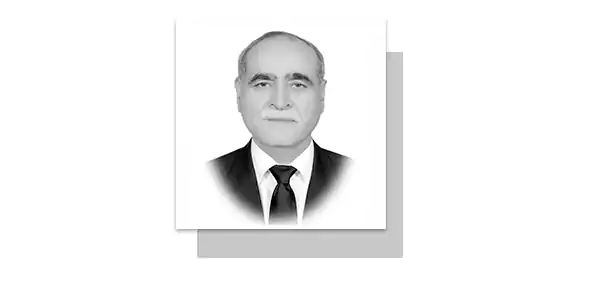
— The writer is Professor of Politics and IR at International Islamic University, Islamabad.