
WHAT does the government give us in return for our taxes? In Pakistan, this question has become a reflex that is repeated in drawing rooms, on talk shows, and across social media with an air of certainty. It often sounds like a final verdict. Yet it is frequently a partial question, built on selective observation rather than a full accounting of reality.
Pakistan’s tax-to-GDP ratio hovers around 10 percent. In most developed countries, citizens contribute between 35 and 45 percent of national income in taxes to sustain far more advanced public services. This comparison does not excuse inefficiency at home, but it does provide context often missing from the debate. With a narrow fiscal base, the state still delivers a wide range of essential services, uneven in quality, often overstretched, but undeniably present.
Public hospitals treat millions every year, offering services free or at heavily subsidized rates. Major surgeries, emergency care, maternal health services, and vaccinations remain accessible even to those who could never afford private care. In recent years, provincial health insurance schemes have further expanded access to expensive treatment for low-income households.
Education follows a similar pattern. Millions of children remain enrolled in public schools without tuition fees, while colleges and universities provide higher education at a fraction of international costs. The quality gap is real and demands urgent reform, but for many families the public system remains the only route to upward mobility.
Security is another largely invisible but essential public function. Policing, counterterrorism operations, border management, disaster response, courts, and national defence require sustained public financing in a region marked by persistent instability. These are services whose absence would be immediately and severely felt.
Infrastructure such as roads, highways, dams, irrigation networks, and urban transport systemsis similarly state-built and state-funded, through taxation and borrowing. Citizens often compare Pakistan’s infrastructure with wealthier countries, but rarely with the much higher tax burdens that sustain those systems.Beyond visible services, the state also provides a social safety net. Subsidies on energy and essential goods, emergency relief during disasters, and targeted cash transfers help stabilize vulnerable households. Through initiatives such as the Benazir Income Support Programme (BISP) and Pakistan Bait-ul-Mal (PBM), financial assistance, medical support, educational scholarships, and welfare services reach millions of poor and vulnerable families who would otherwise remain without formal protection.
None of this absolves governments of responsibility for poor performance. Citizens have every right to question inefficiency, corruption, wasteful spending, and the uneven quality of public services. In many cases, the gap between what people pay and what they receive fuels understandable dissatisfaction. Yet it is equally important to recognize that public hospitals, schools, infrastructure, social protection programmes, security institutions, and other state services continue to serve millions of Pakistanis. The debate, therefore, should not be reduced to whether the state provides anything at all, but whether it is providing enough value, quality, and accountability for the resources it collects.
The deeper problem lies not only in how much Pakistan collects in taxes, but in how narrowly it does so.A significant portion of revenue comes from salaried individuals, documented businesses, and indirect taxes embedded in fuel, electricity, and telecommunications. These taxpayers comply because the system leaves them little room for avoidance.At the same time, large segments of the economy remain under-taxed or effectively outside the netparticularly within informal trade, wholesale and retail markets, underreported business activity, and certain asset-heavy sectors. The result is an economy where visibility determines taxation more than actual capacity to pay.
This creates more than a fiscal gap. It creates a perception of structural unfairness. Many citizens are not opposed to taxation itself; they are opposed to a system where compliance appears concentrated among those who cannot escape it, while others with comparable or greater means contribute far less.The consequences are predictable. Trust erodes and resistance increases. The state responds with indirect taxes and higher pressure on existing taxpayers, reinforcing the very imbalance that weakens compliance in the first place.
Breaking this cycle requires shifting the focus away from rate increases and toward structural expansion of the tax base. That means documentation of economic activity, integration of data across institutions, simplification of tax procedures, encouragement of digital payments, and stronger enforcement against large-scale evasion. It also requires reducing reliance on indirect taxation that disproportionately affects those already within the system.
Equally important is restoring credibility on the spending side. Citizens are more willing to contribute when public money translates into visible improvements in hospitals, schools, transport, and local services. Transparency, accountability, and measurable outcomes are not administrative details but are the foundation of tax legitimacy.Ultimately, taxation is not merely an economic mechanism. It is a reflection of the relationship between citizen and state.
The real question, then, is not whether the government gives anything in return for taxes. Itdoes, though imperfectly, unevenly, and under severe constraints. The more urgent question is whether the system is broad enough, fair enough, and credible enough to sustain public trust. Until that question is addressed, the familiar complaint will remain popular, not because it is entirely true, but because it is not entirely false.
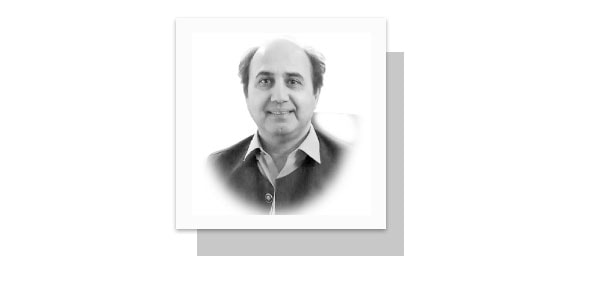
—The writer is PhD in Political Science, and visiting faculty at QAU Islamabad.