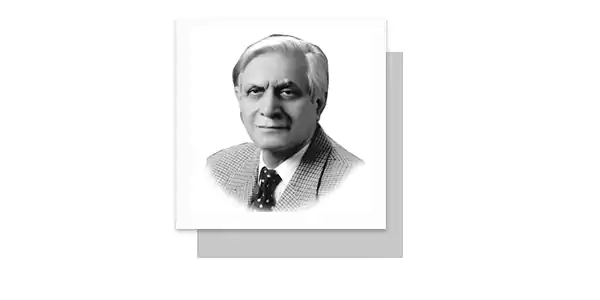
DR Abdul Qadeer Khan was one of the greatest scientists in Pakistan’s history who played a vital role in the development of nuclear weapons. He is viewed as a national icon, statesman, patriotic, nationalist and immensely popular figure who fundamentally shaped the national security of the country. He is affectionately known as “Mohsin-e-Pakistan” (Saviour of Pakistan) and a primary architect of the country’s nuclear programme. The nation called him the “Founding Father of Pakistan’s Nuclear Bomb” because his contribution played a significant role in stabilizing the country’s defence and security.
He was widely regarded as one of the most brilliant and charismatic figures of the 20th century who fundamentally transformed Pakistan’s strategic standing and the country became the first and only nuclear-armed country in the Islamic world. There is no doubt that A. Q. Khan delivered deterrence in an unprecedented manner against the adversary and fostered a profound sense of national pride. His achievements resonated far beyond Pakistan’s borders and were symbolically embraced in popular discourse as the “Islamic bomb”, which gave the Muslim bloc a sense of strategic parity on the global stage.
Abdul Qadeer Khan was an extraordinary scientist who was credited with inventing gas-centrifuge enrichment technology for Pakistan’s nuclear programme. He spearheaded Pakistan’s uranium enrichment programme, establishing the foundational nuclear deterrent that transformed Pakistan into a recognized atomic power. He was the first Pakistani scientist to gain international recognition for his work in metallurgical engineering and nuclear physics. He played a central role in establishing Pakistan’s uranium enrichment capability. His innovations in gas-centrifuge technology laid the foundation for Pakistan’s nuclear deterrence programme, a source of immense national pride. He successfully developed Pakistan’s nuclear capability through local sources and indigenously acquired critical expertise in uranium enrichment, obtaining classified gas centrifuge components and designs through his own technological skills and sources.
Abdul Qadeer Khan was born on April 1, 1936, in Bhopal (British India). He belonged to a Pakhtun family from Tirah Valley, which shifted to Orakzai Agency and later settled in the princely state of Bhopal, long before the 1947 Partition. His family moved to Pakistan in 1951 and he attended St. Anthony’s High School for matriculation and graduated from D. J. Science College with a degree in physical metallurgy from the University of Karachi. He pursued graduate studies abroad, first in West Berlin and then in Delft, the Netherlands, where he received a master’s degree in metallurgy.
During his stay in the Netherlands, he married Hendrina Reterink, a British national who had been born to Dutch expatriate parents in South Africa. He earned a doctorate in metallurgical engineering from the Catholic University of Leuven in Belgium. In 1972, Khan was hired by Physical Dynamics Research Laboratory, a subcontractor of the Dutch partner of URENCO, which was established in 1971 to research and develop uranium enrichment through the use of ultracentrifuges, which are centrifuges that operate at extremely high speeds. Dr Abdul Qadeer Khan died on October 10, 2021, in Islamabad at the age of 85 after being hospitalized with COVID-19. His death left the nation mourning the loss of a scientist widely regarded as a symbol of Pakistan’s nuclear capability and national pride.
Dr A. Q. Khan left the Netherlands and returned to Pakistan with his wife and two daughters, carrying blueprint copies of the atomic bomb and a list of suppliers. He was determined to strengthen Pakistan’s position after the 1971 dismemberment through his extraordinary abilities. The country’s breakup seriously upset him because the tragedy made Pakistan strategically vulnerable. This national trauma created a profound sense of urgency to provide Pakistan with an ultimate deterrent to ensure its survival and prevent future fragmentation. It became the primary catalyst for his determination to build Pakistan’s nuclear weapons programme. On September 17, 1974, he wrote a letter to Prime Minister Zulfikar Ali Bhutto and offered his services to prepare nuclear weapons. In his opinion, the uranium route, using centrifuges for enrichment, was better than the plutonium path. Bhutto helped A. Q. Khan develop the Engineering Research Laboratory, later renamed Khan Research Laboratories, to develop Pakistan’s uranium-enrichment capability.
Therefore, the services of A. Q. Khan in the fields of education, healthcare and community development were extraordinary and unforgettable. For his extensive contributions and achievements, he earned multiple national honours, including Nishan-i-Imtiaz (twice) and Hilal-i-Imtiaz, alongside an impressive array of gold medals and accolades from institutions both in Pakistan and internationally. There is no doubt that the nuclear shield created by A. Q. Khan worked as a counterbalance to India’s regional conventional and nuclear superiority. Pakistan successfully maintains its own indigenous nuclear deterrent and centralized command structures to safeguard its national security. In the final analysis, Dr A. Q. Khan was a mentor, a leader and a catalyst for the development of nuclear weapons, which supported and helped strengthen the country’s national security.
—The writer is a defence and security analyst based in Islamabad.