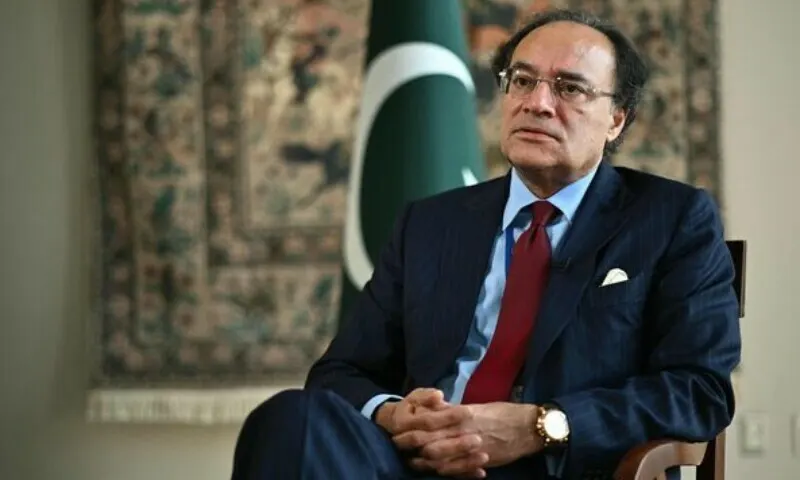

Lahore Chamber of Commerce and Industry has submitted a set of budget proposals for the next fiscal year to Muhammad Aurangzeb, focusing on measures to revive industry, boost exports, taxation reforms and lower the cost of doing business.
The proposals were presented by LCCI President Faheem Ur Rehman Saigol during a meeting with the finance minister.
During the meeting, the finance minister appreciated the detailed proposals put forward by the LCCI. He directed the Director General of the Tax Policy Office, Dr Najeeb Ahmed Memon, to examine the proposals.
Muhammad Aurangzeb informed the LCCI delegation that the digitisation drive within the Federal Board of Revenue (FBR) is being further strengthened through Pakistan Revenue Automation Limited (PRAL). He said the reforms are intended to reduce direct human interaction, facilitate taxpayers and improve the country’s business climate.
The finance minister also assured the business community that consultations with chambers of commerce and trade bodies would continue regularly to ensure stakeholder participation in economic policymaking.
Faheem Ur Rehman Saigol praised the government for maintaining close engagement with the business community and keeping stakeholders informed on major taxation and economic matters. He stressed that continuous coordination between the public and private sectors is vital for restoring investor confidence, promoting industrial development and achieving sustainable economic stability.
In its proposals, the LCCI called for an end to policy uncertainty caused by frequent statutory regulatory orders (SROs) and changing tax interpretations, describing unpredictability as a major factor contributing to de-industrialisation. The chamber also urged the government to reduce the cost of doing business, stating that operating costs in Pakistan are currently 22 to 30 per cent higher than those in competing regional economies.
The chamber further proposed introducing sector-specific tariff structures to support domestic industries facing significantly higher production costs than regional competitors. It also recommended restoring a simple and predictable Final Tax Regime (FTR) for exporters and introducing a fixed tax regime for traders to help broaden the tax base.
Among other recommendations, the LCCI demanded timely payment of tax refunds along with compensation for delays, reduction in withholding tax disparities between manufacturers and commercial importers, revision of Section 113 for low-margin industries, and a review of Section 7E to encourage documented investment.
The chamber also suggested equal tariff and tax treatment for all regions, including FATA and PATA, gradual elimination of advance taxes with taxation shifted to the sales stage, and stricter monitoring of the Export Facilitation Scheme (EFS) through real-time data sharing and post-clearance audits.
The LCCI additionally highlighted the need for export diversification, incentives for value-added and capital goods industries, industry-linked vocational training programmes, promotion of IT and digital services, facilitation of third-country trade through State Bank reforms, and removal of the 18 per cent sales tax disadvantage on packaged dairy and meat products.
Govt bars private OMCs from diesel imports, gives PSO sole authority