LAHORE – A teenage orphan is crushed to death in Multan, the prime suspect was held, produced in court and handed over to police for investigation. Hours later, the suspect is reported to have escaped custody and is killed in a supposed shootout, allegedly by bullets fired by his own accomplice.
The sequence once again placed Punjab’s controversial Crime Control Department (CCD) at the centre of allegations of extrajudicial justice.
The death of Tauqeer Nazir, the principal suspect in the killing of teenage worker Waseem Abbas, has reignited serious questions about police encounters in Punjab, where hundreds of suspects have died during CCD operations since the department was established.
The controversy grown intense because the latest incident follows pattern repeatedly questioned by human rights organisations: an accused person is taken into custody, an escape or armed rescue attempt is reported, and the suspect ends up dead before facing trial.
Waseem Abbas, a teenage orphan from Muzaffargarh, had reportedly been living in an NGO-operated shelter before being sent to work with electrical contractor Tauqeer Nazir approximately a week before his death.
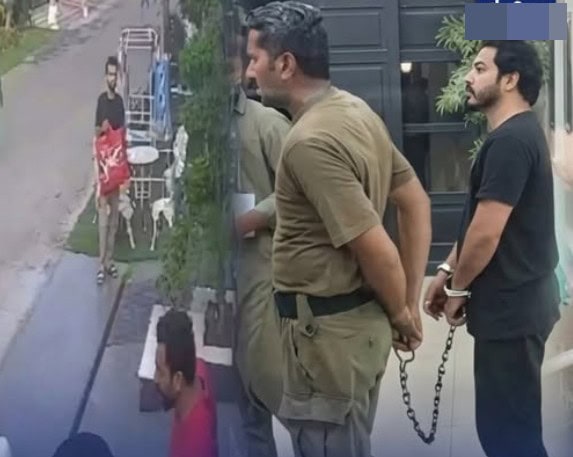
On Monday, October 19, horrifying scenes unfolded in Multan’s DHA/Royal Orchard housing area. CCTV footage reportedly showed the teenager running as a vehicle approached. The car allegedly chased him before striking him with such force that he was thrown against a nearby gate.

Police registered a murder case under Sections 302 and 34 of the Pakistan Penal Code, naming Tauqeer Nazir and Amjad Ali.
Tauqeer was subsequently arrested and brought before a judicial magistrate on Tuesday, where investigators secured physical remand. Reports differed over whether the remand was for three or four days.
However, before the investigation could reach its conclusion, the accused was dead.
CCD’s Escape-and-Encounter Story
According to the Crime Control Department, Tauqeer escaped from Multan DHA police custody on Tuesday night. By early Wednesday, October 21, CCD officials in Bahawalpur reported that he had been killed during an armed confrontation near the city’s bypass.
The department claimed that officers attempted to intercept two motorcycle riders, who opened fire on the police team. During the exchange, Tauqeer was allegedly struck by bullets fired by his own accomplice, who managed to escape.
Police said special teams were searching for the fleeing individual. But the official account leaves several significant questions unanswered. How did a murder suspect, arrested in a high-profile case and recently remanded to police custody, manage to escape?
The controversy took a political turn when PML-N MPA and Punjab Women Protection Authority Chairperson Hina Parvez Butt appeared to welcome the outcome.
“This is Maryam Nawaz’s government; here, justice is delivered immediately,” she said. The statement sparked criticism from lawyers, journalists and social media users who questioned the celebration of an accused person’s death without a trial. The post was reportedly deleted afterward.
Users criticised the glorification of police encounters, arguing that the government should strengthen investigations, prosecution and the courts instead of presenting disputed shootings as examples of effective justice.
924 Suspects Killed in CCD Encounters
Multan incident is particularly alarming when examined alongside the Crime Control Department’s wider record. Punjab established the CCD in April 2025 under the Safe Punjab initiative, assigning it responsibility for tackling organised crime and dangerous offenders.
But the department has faced sustained allegations of excessive force and staged police encounters.
A fact-finding report by the Human Rights Commission of Pakistan documented at least 924 suspects killed in 670 CCD-led encounters over approximately eight months in 2025.
The figures included two women. In comparison, only two police personnel were reported killed and 36 injured during the same period.
Punjab CCD’s Encounter Record According to HRCP
| Category | Reported figures |
|---|---|
| Police encounters | 670 |
| Suspects killed | 924 |
| Women killed | 2 |
| Police personnel killed | 2 |
| Police personnel injured | 36 |
| Encounters in Lahore | 139 |
| Encounters in Faisalabad | 55 |
| Encounters in Sheikhupura | 47 |
| Encounters in Gujranwala | 43 |
| Deaths associated with robbery-related cases | Around 366 |
These figures were compiled largely from press reports and were described by HRCP as a conservative minimum.
One of the key findings by HRCP shows similarities between official accounts of different encounters. The commission observed that police narratives frequently described suspects opening fire first, officers responding in self-defence and alleged criminals being killed during the confrontation.
In some cases, suspects already in police custody reportedly died after officers claimed that armed accomplices had attacked teams transporting them for evidence recovery.
Multan incident has revived scrutiny of this recurring explanation. Critics argue that when multiple deaths follow remarkably similar circumstances, investigators should examine whether these accounts are supported by forensic evidence, independent witnesses and credible records.
HRCP went further in its findings, characterising the alleged pattern as an institutionalised practice and raising concerns about a deliberate policy of staged encounters. Those are serious allegations, which CCD and government representatives have rejected.
The commission also questioned compliance with legal procedures governing investigations into suspicious deaths, including relevant provisions of the Code of Criminal Procedure and the Torture and Custodial Death (Prevention and Punishment) Act, 2022.
It has demanded independent judicial oversight, a halt to disputed encounter practices and accountability for unlawful killings.
Multan suspect’s death was followed by renewed discussion of another incident in Islamabad involving Muhammad Noman, the principal accused in an alleged US visa and admission fraud case connected to the suicide of university graduate Laiba Ijaz.
Noman was reportedly being transported by Islamabad police for evidence recovery when four armed men riding two motorcycles allegedly attacked the police party.
Police claimed that the attackers were attempting to rescue the detained suspect. During the confrontation, Noman was reportedly struck by bullets fired by his own accomplices and later died in hospital. The officers survived the incident, with police referring to the protection provided by bulletproof jackets.
Although the Islamabad operation did not involve Punjab’s CCD, the similarities between the two accounts attracted considerable public attention. Both suspects were linked to serious criminal investigations. Both died before trial. In both cases, police attributed the fatal injuries to gunfire from alleged accomplices.
Despite criticism from human rights organisations, Punjab authorities have defended the CCD’s operations. Government representatives maintain that the department operates within the Constitution and applicable laws, prioritises arrests and uses force only when officers encounter armed resistance.
Supporters credit the CCD with reducing criminal activity and confronting dangerous offenders. Prime Minister’s Adviser Rana Sanaullah has also defended the department, challenging critics to identify innocent individuals among those killed in its operations. He has argued that CCD personnel confront proclaimed offenders and suspects involved in serious crimes who resist arrest.
The central controversy surrounding Punjab’s Crime Control Department is no longer limited to whether it can confront organised crime effectively.