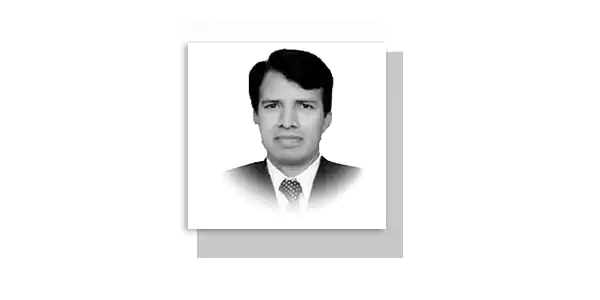
THERE are moments in public life when an individual’s professional journey becomes larger than a personal achievement. The nomination of Commissioner Dera Ghazi Khan Division Muhammad Ishfaq Ahmad Chaudhry for “Tamgha-i-Imtiaz”, Pakistan’s prestigious state honour, is one such moment. It is not merely a decoration attached to an official title; it represents recognition of public service, commitment, administrative responsibility and the willingness to remain devoted to duty when the demands of office are demanding and often unforgiving. The nomination is meaningful because civil awards are intended to recognize exceptional contributions in different fields of national life. Pakistan has a long tradition of honoring individuals for outstanding services.
For Ishfaq Chaudhry, the nomination can be viewed as an acknowledgment of a broader principle: good governance ultimately depends upon the quality, character and commitment of the people entrusted with administering the state. DG Khan Division is unique in many ways. It has a diverse landscape, rich multicultural character and a sensitive law-and-order environment owing to its proximity to provincial borders and the strategically important tri-border areas. The Border Military Police, responsible for policing and maintaining law and order in the tribal and border areas, also works under the command and supervision of the Commissioner. Managing the challenges of the tri-border region, including countering terrorist and other unlawful activities, therefore, places an exceptional responsibility on the divisional administration and law-enforcement agencies.
The Division is also among the most flood-prone areas of Punjab. Five rivers flow through the region, with important confluence points, while the hill torrents originating from the Suleman Mountain Range can cause devastating flash floods whenever heavy rains occur. These geographical and security challenges require the divisional head of administration—the Commissioner—to be an experienced and capable officer possessing competence, commitment, dedication, sound judgment and an unwavering sense of responsibility. Such a demanding assignment requires readiness to work tirelessly and respond effectively to any situation, at any time.
Ishfaq Ahmad Chaudhry, as widely acknowledged by those who have worked with him, is exceptionally well suited to such demanding circumstances. His competence, dedication, hard work and diverse administrative experience over the years equip him to effectively handle the multifaceted challenges of DG Khan Division. Recognition of the services and achievements of officers who perform such demanding responsibilities is not merely an acknowledgement of individual merit. It serves as a powerful source of motivation for younger officers, encourages a culture of excellence and dedication within the civil service and, importantly, strengthens public confidence and trust in state institutions. Such recognition is therefore both well deserved and in the larger interest of good governance and public service.
A commissioner occupies a critical position in Pakistan’s administrative structure. The office is not simply about presiding over meetings, signing files or supervising subordinate departments. At the divisional level, administration touches the daily lives of ordinary citizens. Development projects, law and order coordination especially in Katcha and tribal areas, revenue matters, public-service delivery, disaster response, price control, education, health, agriculture and the implementation of government policies all eventually affect the relationship between the state and the citizen.
The citizen who visits a government office does not see a complicated bureaucratic structure; he sees the face of the state. If that face is indifferent, the citizen loses faith in government. If it is responsive, disciplined and compassionate, confidence in the state grows. The recognition of Ishfaq Chaudhry should be understood within this larger context of public administration. He is known for his hard work, dedication, devotion and commitment to official responsibilities and state obligations. These qualities may sound simple, but in public service they are enormously important. Administration is often a test of endurance rather than publicity.
The DGK Division itself presents a demanding administrative environment. It encompasses areas with significant development, socioeconomic and geographic challenges. Recognition matters because institutions learn from the examples they choose to celebrate. When a dedicated public servant receives national recognition, it sends a message to thousands of other officers that professionalism matters. The greatest award for any administrator is the trust of the people. Medals may shine on ceremonial occasions, but the memory of effective service shines much longer in the lives of citizens. If an officer leaves behind better institutions, more responsive administration and greater public confidence, then his professional legacy extends far beyond the period of posting.
This is the true meaning of recognition. And that is why this nomination is more than a personal milestone. It is a reminder that Pakistan’s future depends not only on political leadership, economic reform or ambitious development plans, but also on dutiful, competent and genius public servants who quietly convert government decisions into practical realities. May this nomination become a source of encouragement for Muhammad Ishfaq Ahmad Chaudhry to continue serving with the same dedication and humility.
—The writer is editor, political analyst & author of several books based in Islamabad.