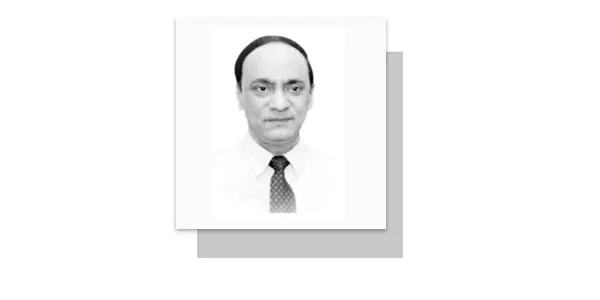

ON 17 November 2006, Pakistan bade farewell to one of its most distinguished and revered veteran statesmen and illustrious leaders of the Pakistan Movement, Mahmud Ali, who departed this world for his eternal abode. While the names of Quaid-i-Azam Muhammad Ali Jinnah, Allama Dr. Muhammad Iqbal and Nawabzada Liaquat Ali Khan are rightly etched in the annals of our national history, there were other eminent personalities whose invaluable contributions to the creation and preservation of Pakistan have regrettably faded from the collective memory of the nation.
Among these distinguished yet largely unacknowledged personalities stands Mahmud Ali—a veteran statesman, dedicated freedom fighter and unwavering proponent of the ideology of Pakistan. A progressive leftist politician from former East Pakistan, the late Mr. Mahmud Ali played a significant role in the Pakistan Movement. His lifelong commitment to Pakistan, its ideological foundations and its standing among the comity of nations remains particularly noteworthy in the country’s political and diplomatic history. Indeed, it would not be an exaggeration to describe Mr. Mahmud Ali as a personification of the very spirit of Pakistan. He devoted his entire life to the service of the country, remaining steadfast in safeguarding its sovereignty, honour, unity and ideological foundations. His unwavering commitment to Pakistan’s unity and territorial integrity makes his contributions worthy of national recognition.
Born in Assam in 1919, Mahmud Ali dedicated his youth to the struggle for an independent homeland for the Muslims of the subcontinent. At a time when a few Muslim leaders from British India’s eastern region had a prominent voice on national platforms, he emerged as a courageous and articulate representative of the Muslim cause. Working alongside Quaid-i-Azam Muhammad Ali Jinnah, he played an instrumental role in strengthening the All-India Muslim League and contributed significantly to the historic 1947 referendum that resulted in the inclusion of Sylhet in East Pakistan. Following independence, Mr. Mahmud Ali continued to play a prominent role in Pakistan’s political landscape. He served as a member of the Constituent Assembly and held important ministerial responsibilities, discharging his duties with integrity and a profound sense of national purpose. A man of principle and conviction, he never hesitated to raise his voice against departures from democratic values and the founding vision of Pakistan. His political philosophy, firmly rooted in national unity, ideological clarity and cohesion, remained consistent throughout his life.
His steadfast loyalty to Pakistan, particularly in the aftermath of the tragic events of 1971, stands as a testament to his unwavering commitment to the country. Regrettably, despite a lifetime of service and considerable personal sacrifices for Pakistan’s unity and integrity, the mortal remains of this distinguished statesman lie neglected at the H-8 Graveyard in Islamabad. The deplorable condition of his final resting place raises an important question about our collective responsibility to honour those who devoted their lives to the making and preservation of our homeland. As we commemorate the 20th death anniversary of Mr. Mahmud Ali, the writer is particularly reminded of the heartfelt letter of condolence that Shaheed Mohtarma Benazir Bhutto, former Prime Minister of Pakistan, addressed to his family following his demise in 2006. In her letter, Shaheed Benazir Bhutto paid him a deeply moving tribute, writing:
“Mr. Mahmud Ali was a true Pakistani, whose commitment to the country and the sacrifices he made for its unity and integrity was a source of great inspiration to the new generation. People like him are born once in generations, and his death is a great national loss. He lived a purposeful life, and played a vital role in the making and preservation of Pakistan. His name will always be remembered with affection and admiration in the history books.” These remarkable words from Shaheed Benazir Bhutto constitute a profound acknowledgment of Mr. Mahmud Ali’s patriotism, sacrifices and enduring contribution to Pakistan. They also underscore the importance of recognizing and preserving the legacy of those whose lives were devoted to the national cause.
It is profoundly unfortunate that a statesman who made such significant contributions to the creation, unity and preservation of Pakistan has not received the recognition and honour he so richly deserves. History bears testimony to the fact that no nation can aspire to greatness if it allows the contributions and sacrifices of its founding leaders to fade into oblivion. By failing to accord the late Mr. Mahmud Ali the recognition, respect and national veneration he deserves, we risk doing a grave injustice to his legacy and to the historical record of our country. It is, therefore, high time that we rise above political considerations and collectively honour this forgotten hero of Pakistan. His unparalleled dedication, sacrifices and lifelong services to the country must be duly acknowledged, and his legacy preserved for generations to come. A nation that forgets its heroes risks forgetting the very sacrifices upon which its existence was founded.
—The writer is contributing columnist, based in Islamabad.