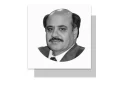
Pakistan Observer in conversation with Mian Iftikhar Ahmed on his entrepreneurial journey, innovation in tyre manufacturing, commitment to Pakistan and future growth plans.
Pakistan Observer: Your business journey began in 1983 with Mian Tyre and Rubber Company. How did the company evolve into Panther Tyres, and what were the key milestones in its growth?
MIA: I started my business in 1983 under the name Mian Tyre and Rubber Company. As the business grew, people advised me in 2012 to bring the company’s name in line with its product brand, Panther Tyres. At that time, the product was already known as Panther Tyres, while the company was registered as Mian Tyre and Rubber Company. Following this advice, I changed the company’s name to align it with the brand. Initially, it was a private limited company. Later, we got it listed on the stock exchange, making it a publicly listed company. Our shares are now traded on the stock exchange, and we operate in accordance with the rules, regulations and procedures applicable to listed companies. By the grace of Allah, we have received a very encouraging response in the Pakistani market. Panther Tyres has become a popular brand, and I am proud of what we have achieved.
PO: Before establishing your business, what was your professional background? Did you come from a business family, and what motivated you to become an entrepreneur?
MIA: My father was not a businessman. I returned to Pakistan in 1971 after completing my engineering degree in the United States. After coming back, I joined a company called Bata Shoes, where I worked for around two to two and a half years as a mechanical engineer. It was a well-established, fully mechanised company, and the salary was good. However, I wanted to understand how industries operated in Pakistan and gain practical experience. Although I learned a great deal, I was not comfortable working as an employee. Eventually, I decided to try my luck in business. My engineering background gave me technical knowledge of rubber manufacturing, which I had developed while working at a footwear factory. Rubber was the main material used there, and I gradually became familiar with its properties and manufacturing processes. This experience helped me identify opportunities in the rubber industry.
PO: What was your first business venture, and how did your experience in manufacturing slippers lead you towards larger industrial opportunities?
MIA: I initially established a small factory in Lahore to manufacture slippers, commonly known as Hawai chappals. I continued this business for approximately five to seven years. However, competition became intense because the initial investment required was relatively small, around Rs200,000 to Rs400,000 at the time. Whenever someone succeeded in a business in Pakistan, many others entered the same market. I realised that, having earned an engineering degree in the United States, I should develop something different rather than compete with everyone else. Since the required raw materials were not available in Pakistan, I imported them from Japan. At that time, EVA sheets were being imported into Pakistan, and local manufacturers used them to make slippers. A dozen ordinary Hawai chappals cost around Rs80 to Rs100, whereas I could sell a dozen slippers made using my own EVA product for approximately Rs400. It was an extraordinary commercial success and generated substantial profits for around six to eight months. Eventually, competitors entered the market, as they often do when a product proves successful. That experience encouraged me to look for the next opportunity.
PO: How did you decide to enter tyre manufacturing, and what challenges did you face when introducing locally manufactured tyres to a market dominated by imported products?
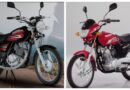
MIA: I realised that establishing a tyre manufacturing factory was the next logical step. At that time, Pakistan had limited tyre manufacturing facilities, although bicycle tyres were being produced locally. I began thinking that if we could manufacture bicycle tyres, there was no reason we could not manufacture other types of tyres as well. A small tyre for a CD 70 motorcycle cost around Rs100 at the time. The market was dominated by imported products from countries such as China, South Korea, Japan and Taiwan. These were established industrial economies, and competing with their products was a considerable challenge. When I first approached shopkeepers, I told them that I had manufactured a tyre in Pakistan and asked them to examine it. They were surprised and wanted to know how I had managed to produce it locally. I visited two or three people in my own vehicle to show them the product. To encourage shopkeepers to give our product a chance, I offered to supply the tyres and allow them to pay after selling them. This helped us establish our presence in the market. Some people in Pakistan are nationalistic and prefer locally manufactured products, provided they meet their expectations for quality and performance. Today, almost all motorcycle tyres sold in Pakistan are manufactured locally. Many large companies have tried to compete with us, but our quality and pricing have helped us maintain our position. I believe this is a significant achievement for Pakistan’s manufacturing sector.
PO: Panther Tyres has established a strong position in the domestic market. What is your experience with exports, and what challenges do you face in international markets?
MIA: We also export tyres, but rising freight charges have become a major problem. In some cases, the cost of transporting a product is higher than the product itself. For example, I export tyres to Saudi Arabia. The freight charge for a container, which used to be around $1,500, has risen to approximately $7,000. Rice exports have also been affected by increasing transportation costs, with freight charges that were once around $4,000 rising significantly. Such increases are unprecedented and make it difficult for exporters to remain competitive. I have also received offers from people in the United Kingdom who wanted me to move there. When I became well known in South Africa, I received a similar offer. They asked me to relocate and offered to arrange a passport for me, but I declined. My preference has always been to remain in Pakistan and contribute to its development. For me, this business is not merely about making money; it is also about serving the nation.
PO: Despite receiving opportunities to work abroad, you chose to remain in Pakistan. What makes you so deeply committed to your country?
MIA: I was born and raised in Pakistan, and my parents are buried here. Naturally, you develop a deep attachment to the soil where you grew up. No matter what opportunities may arise abroad, I have always wanted to remain in my own country. I believe that Pakistan has enormous industrial potential. We have the people, the talent and the ability to manufacture products locally that can compete with international alternatives. Our experience in motorcycle tyre manufacturing demonstrates what local entrepreneurs can achieve through technical knowledge, innovation and persistence. For me, contributing to Pakistan’s industrial development is a source of pride. I want to see local manufacturing grow, reduce dependence on imports and create opportunities for future generations.
PO: What new projects or expansion plans do you have for the future, particularly now that your son is involved in the business?
MIA: Yes, we have a new project ahead. My son is now involved in the business, and I have been telling him that there is still considerable potential for growth in this sector. Pakistan’s tyre industry has opportunities for further development, and I believe the next generation can take the business forward. We have built a strong foundation over the years, from our early rubber manufacturing ventures to the development of Panther Tyres as an established brand. My hope is that the business will continue to grow, introduce new opportunities and contribute to the country’s industrial progress. I believe there is still much more we can achieve in Pakistan, and I want the next generation to build on the work we have done.