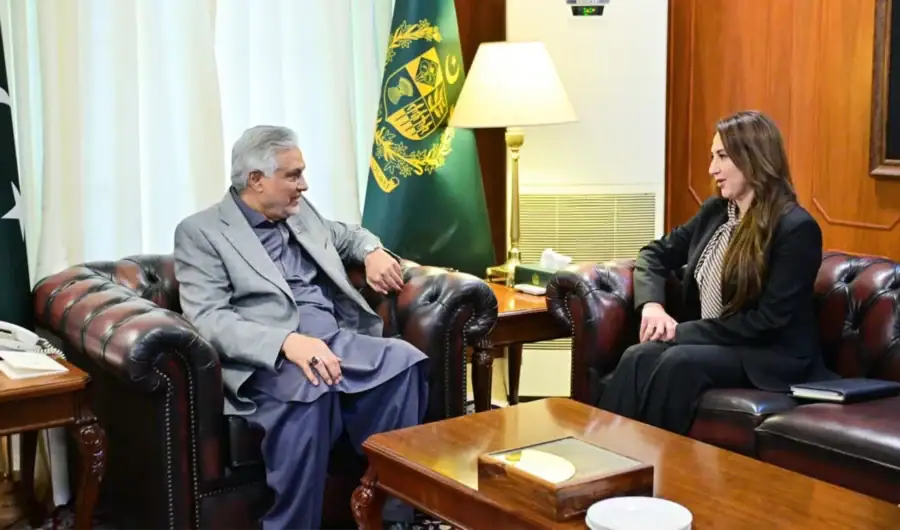

ISLAMABAD – Pakistan renewed its call for diplomatic engagement as fighting between the United States and Iran threatens to deepen instability across the Middle East.
Deputy Prime Minister Ishaq Dar conveyed Islamabad’s position during talks with US Chargé d’Affaires Natalie A. Baker on Tuesday, stressing that negotiations remain essential to achieving a durable regional settlement.
نائب وزیراعظم محمد اسحاق ڈار سے امریکی ناظم الامور نیٹیلی بیکر نے ملاقات کی۔ملاقات میں پاکستان امریکہ تعاون اور خطے کی تازہ ترین صورتحال پر تفصیلی تبادلہ خیال کیا گیا۔
ترجمان دفتر خارجہ کے مطابق نائب وزیراعظم نے پائیدار امن کے حصول کے لیےبات چیت اور سفارت کاری کی اہمیت پر… pic.twitter.com/1muFEcHeZl— PTV News (@PTVNewsOfficial) September 15, 2026
The latest diplomatic efforts come after an earlier attempt by Pakistan to mediate between Washington and Tehran produced a temporary breakthrough in June. Pakistan, working alongside Saudi Arabia, Qatar and Turkey, had pushed for an end to the conflict that began on February 28. The resulting interim arrangement, however, failed to hold as hostilities resumed.
The consequences of the renewed confrontation have extended beyond the battlefield. Commercial shipping through Hormuz has again been affected. Vessels have faced attacks as Tehran seeks to tighten its control over the waterway, while Washington has continued measures aimed at restricting Iranian ports. The resulting disruption has placed additional pressure on international energy markets and supply chains.
Other regional flashpoints have also become more serious. Saudi authorities have reported missile and drone attacks on civilian locations carried out by Yemen’s Iran-backed Houthi movement. Several people were reportedly injured in the attacks, adding another dimension to an already widening regional crisis.
Dar and Baker discussed Pakistan-US relations as well as developments across the Middle East. According to Pakistan’s Foreign Ministry, Dar highlighted the importance of resolving disputes through diplomatic channels rather than allowing military confrontation to continue.
Islamabad had already appealed for the restoration of the temporary US-Iran arrangement negotiated in June. Pakistan has argued that returning to that framework could provide a mechanism for reducing tensions and preventing further escalation. The country has simultaneously reaffirmed its commitment to international law and stressed the United Nations’ role in maintaining international peace and supporting global development.
Deputy PM raised the same issue in a separate telephone conversation with Rafael Grossi, who heads the UN nuclear watchdog and is also a candidate for the next UN secretary-general. Their discussion focused on the worsening regional situation and possible ways to revive the diplomatic process.
Both officials reportedly agreed that implementation of the Islamabad Memorandum of Understanding would offer the most practical route toward easing the current tensions. Grossi also indicated that technical assistance could be made available if it became necessary.
Asim Munir, Ishaq Dar in Türkiye Amid Regional Security Talks