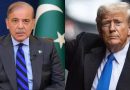
US President Donald Trump has said that a memorandum of understanding aimed at securing a ceasefire in the US-Israel conflict with Iran has been “largely negotiated”.
Speaking after a telephonic conversation with leaders of regional countries, Trump said the proposed agreement would include the reopening of the Strait of Hormuz, though he noted that the deal still requires final approval from the US and Iranian negotiators as well as several other countries involved in the discussions.
His statement came shortly after Pakistan’s army chief, Asim Munir, wrapped up what Pakistan’s military described as a brief but “highly productive” visit to Iran. According to the military, “encouraging progress” had been achieved towards a broader understanding.
Iranian officials, however, have repeatedly expressed distrust towards negotiations with Washington, pointing to previous US military strikes carried out during earlier nuclear talks.
Trump talked to leaders and senior officials from Qatar, Saudi Arabia, the UAE, Pakistan, Jordan, Egypt, Turkiye, and Bahrain. He also confirmed a separate conversation with Israeli Prime Minister Benjamin Netanyahu.
“Final aspects and details of the deal are currently being discussed and will be announced shortly,” Trump wrote on his Truth Social platform.
Turkish President Recep Tayyip Erdogan later welcomed the reported progress, saying any eventual agreement would help restore free navigation through the Strait of Hormuz, although he did not provide further details.
Egypt’s presidency called on all parties to take advantage of the diplomatic momentum and work towards a final settlement.
The latest development capped a volatile week in which Trump initially warned Iran that time was running out to secure a more durable ceasefire arrangement. He later told reporters that he had been close to resuming military action before deciding to place plans “on hold” following requests from Gulf states.
Since then, Trump has alternated between signalling optimism over a possible deal and issuing renewed threats of escalation.
The conflict began on February 28, although large-scale fighting has mostly remained suspended since April 8, apart from sporadic flare-ups.
Meanwhile, the US blockade on Iranian ports remains in place, while Iran has effectively shut the Strait of Hormuz.
Major unresolved issues in the negotiations continue to include the future of Iran’s nuclear programme, Tehran’s role in the Strait of Hormuz, the long-term presence of US forces in the region, and access to frozen Iranian assets.