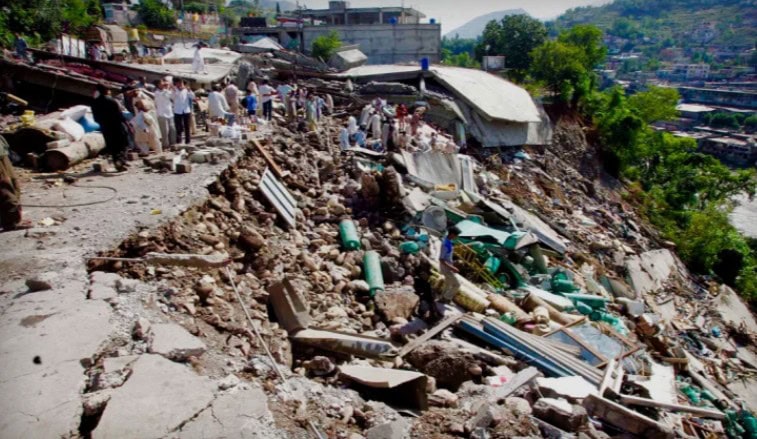

October 8 marks the anniversary of the devastating 2005 earthquake that claimed thousands of lives and caused widespread destruction across Azad Jammu and Kashmir, leaving behind important lessons for Pakistan’s disaster preparedness and response systems.
The 7.6-magnitude earthquake struck at around 8:50am on October 8, 2005, causing massive destruction in mountainous areas. Bagh was among the worst-hit areas, with buildings reduced to rubble and essential civic infrastructure severely damaged.
The scale of the destruction, coupled with the approaching harsh winter, created an immediate humanitarian crisis.
In Bagh, almost every house was rendered uninhabitable, while thousands of people were left without shelter. Schools were also badly affected, with several buildings collapsing while classes were underway. Many children were trapped beneath the debris, adding to the anguish of families already struggling to cope with the disaster.
The earthquake also severely disrupted the civil administration and police infrastructure. With government institutions themselves affected, the military played a major role in restoring road links, evacuating injured people and organising rescue and relief operations.
Army units helped clear roads linking Rawalpindi with Bagh and other affected areas while simultaneously dealing with their own losses. Relief coordination centres were established in Muzaffarabad and Bagh to facilitate rescue and humanitarian operations and coordinate with local and international organisations.
International assistance soon became an important part of the relief effort. US Chinook helicopters were used for rescue, relief and logistical support, particularly in remote mountain areas that were difficult to access by road.
A number of international organisations also joined the operation. Relief and medical teams from the United Nations and other agencies, including NATO, the International Committee of the Red Cross, World Food Programme, Médecins Sans Frontières, Turkish teams, Qatar-based relief organisations and Cuban medical personnel, contributed to the response.
Heavy machinery brought by international relief teams was used to clear enormous quantities of debris, particularly in Bagh city. Cuban doctors, including female medical personnel, provided healthcare in remote mountainous communities where access to medical facilities was severely limited.
The catastrophe exposed major weaknesses in Pakistan’s disaster management system and highlighted the need for stronger institutional arrangements at both federal and provincial levels.
The destruction also underscored the importance of enforcing earthquake-resistant building codes, as many structures collapsed because of poor construction standards and substandard materials.
Another major lesson was the importance of coordination among relief agencies. The cluster-based system, under which United Nations-led organisations and other relief bodies worked together in designated areas, emerged as an effective mechanism for coordinating humanitarian assistance.
The disaster also highlighted the importance of accurate damage assessment and the use of modern information technology to collect data and determine the needs of affected communities.
Relief and rehabilitation strategies also had to take local culture and lifestyles into account. Many residents of the mountainous areas were reluctant to remain in conventional relief camps because they were accustomed to independent living in their own communities. Authorities therefore adopted a financial assistance-based approach to help affected families rebuild their homes.
The earthquake further demonstrated the need for better urban planning, disaster preparedness and early warning systems. Military planners also gained valuable experience regarding construction standards and logistics in earthquake-prone mountainous regions.
While helicopters proved crucial for transporting supplies and personnel, animal transport units and their mule handlers also played an important role in reaching isolated communities when bad weather prevented helicopter operations.
The response also highlighted the importance of national and international solidarity. People across Pakistan mobilised to help earthquake victims, while international organisations contributed personnel, equipment and medical assistance.
Media coverage played a significant role in drawing international attention to the scale of the catastrophe and sustaining focus on the humanitarian crisis.
One long-term outcome of the disaster was the rapid expansion of mobile phone coverage in parts of Azad Jammu and Kashmir that had previously lacked reliable connectivity. Improved communications subsequently assisted rescue, relief and rehabilitation efforts.
The October 8 earthquake remains one of Pakistan’s most devastating natural disasters. Its anniversary continues to serve as a reminder of the lives lost, the suffering endured by affected communities and the need for stronger disaster preparedness, safer construction and more effective emergency response mechanisms.