
December 16, 1971—little said is better. It represents a cumulative failure of political, bu-reaucratic and military leadership.
Given the quantum of forces in East Pakistan and the po-larized political fabric that developed from 1947 to 1971, the outcome was inevitable. The question remains: why did it happen? I witnessed the storm building up in Pakistan in 1969–70, the onset of civil war and the subsequent Indian aggression. Lt Gen Kamal Matin de-scribes it as a monumental error of judgment. Political infighting and conspiracies by politi-cians, soon after Quaid’s death, to remain in power in collaboration with the bureaucracy opened the door to martial law.
The Agartala Conspiracy Case was genuine, not fabricated as often claimed by Bangladeshi and Indian authors (RAW papers, now re-released, indicate it was a legitimate charge). Evi-dence was held with Pakistani intelligence agencies. As ADC to Commander 2 Corps and later G3, I was privy to the events. Unfortunately, West Pakistani politicians pressured the government into releasing Mujib through a roundtable conference. After his release, Mujib became a hero in the eyes of the Bengali population.
Between 1967–69, Indira Gandhi decided to create subversion in East Pakistan after Mujib’s release. RAW, established in 1968, assigned its first head, K.A.O., a special task. Bengali media was infiltrated with support from Hindu elements in East Pakistan. University students, fully funded, became the vanguard. Combined with the media, they shaped public perception. Economic and linguistic fault lines were fully exploited. Pakistan Television in East Pakistan broadcast national songs glorifying Bengali nationalism without oversight, while the West Pakistani public remained unaware of these developments.
During elections, after prolonged campaigning, the Awami League (AL) gained dominance. I was ASMLA of Noakhali District and was horrified by the scale of hatred-based campaign-ing targeting teachers, students, lawyers and the public. The Muslim League and other parties sought our help, but we lacked sufficient force. A severe cyclone devastated coastal areas from Bhola Island to Chittagong suburbs, delaying elections. The army deployed for rescue operations, carrying hundreds of bodies, delivering food miles across devastated areas. De-spite this, Mujib politicized the tragedy, blaming the army for insufficient action.
By election time, the political environment was charged against West Pakistan. Martial Law rules and the Legal Framework Order (LFO) were not adhered to. West Pakistani parties did not field candidates in East Pakistan, except a few Muslim League members. Massive rigging occurred and AL goons terrorized other parties. In Noakhali, with hundreds of polling sta-tions and limited manpower, ballot boxes were stuffed by Returning Officers. AL won all seats in East Pakistan, while in West Pakistan, AL had no representation. The lopsided results allowed Zulfiqar Ali Bhutto to exploit the situation. Mujib, adamant to form the government alone, created a stalemate, while President Yahya clung to the presidency.
On 4 March 1971, the Assembly session was postponed under pressure from Bhutto, against AL’s demand, triggering civil disobedience across East Pakistan. Talks continued until 24 March between Bhutto, Mujib and President Yahya. Although moving ostensibly positively, they were sabotaged by hawks within AL and Bhutto’s circle. Despite advice for a political solution from field commanders and the Eastern Command, Yahya insisted on military ac-tion.
Civil disobedience calls on 7 March led to total administrative collapse. AL goons killed and tortured non-Bengalis across cities, particularly in Chittagong. Bengali troops and officers conspired with AL leadership, creating a scenario that culminated in the March 24 collapse of negotiations. Bhutto abruptly left Dhaka, abandoning talks nearly successful. Intelligence re-ported that AL Colonel Usmani planned to detain President Yahya as a bargaining tactic. Ya-hya left Dhaka secretly and Air Commodore Khandekar telephoned Mujib, saying, “the cat is runaway” (Tragedy of Error – Kamal Matin Uddin).
Under extreme tension, fear and administrative collapse, Operation Searchlight was ordered to restore government writ. Of 11 infantry battalions, only 8 were available; three East Ben-gal regiments rebelled. East Pakistan Rifles troops and recruits also revolted, leaving the cen-ter commander flown to Dhaka. Hundreds and thousands died before law and order were re-stored.
Overnight, a force of 100,000 Mukti Bahini emerged from rebel troops and police. Indian involvement was evident from January 1971 onward. In February, Indira Gandhi an-nounced in Parliament India must intervene due to strategic interests. By April, partial infantry divisions were airlifted and deployed with 14 Division troops to guard 4,000 km of borders, amid intense sabotage and attacks inside East Pakistan. Total Pakistani forces at the onset of war in November 1971 numbered around 28,000, including police and scouts. Troops were exhausted from nine months of civil war, lacking reinforce-ment and supplies, while hostile populations and Indian-backed Mukti Bahini actions intensi-fied pressure. On 4 December 1971, India declared war, attacking Pakistan from six directions, with air su-periority and naval blockade. Pakistani forces, though organized in defensive fortresses, were outnumbered forty to one. Indian forces bypassed defensive points to rush toward Dhaka, which had no troops. Under these overwhelming conditions, Eastern Command surrendered.
The East Pakistan situation can be divided into three phases: political failure, military exhaus-tion and naked Indian aggression. Despite overwhelming odds, Pakistani rank-and-file sol-diers displayed bravery and resolve. Indian involvement and RAW conspiracies over the years are now widely acknowledged. Mujib did not have a mandate for independence; he contested elections for provincial autonomy, which was to be granted but for Indian interfer-ence. Political errors by West Pakistan leadership and government constituted classical trag-edy and criminal negligence.
Nearly half a century later, the people of Bangladesh recognize Indian interference under AL governments subservient to RAW. Today, Bangladesh is correcting its course. Pakistan must respect its sovereignty and foster maximum cooperation, economically, defensively and dip-lomatically. Security for Bangladesh and Pakistan is complementary, countering Indian ambi-tions. Open borders, low tariffs and enhanced connectivity must be pursued. India will con-tinue its efforts; vigilance is required. Reports indicate Indian military and political hawks contemplate further invasions.
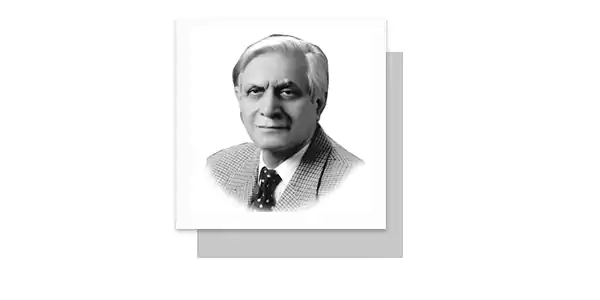
—The author is a Brigadier Retired, a decorated officer with 32 years of active combat experience, 30 years in corporate sector as MD/COO. A column writer, Researcher and TV analyst.